Technical
Everything on model trains, model railroads, model railways, locomotives, model train layouts, scenery, wiring, DCC and more. Enjoy the world's best hobby... model railroading!

William asks readers:
“This may sound like a stupid question; however, I bet there are many modelers that are thinking the same thing. I look at a layout and I see dotted lines, straight lines, helix curves, etc. I never see a chart to help you determine which lines are which! If a line is going from one level to another often times you cannot see where it picks up. Doesn’t anyone have any suggestions or solutions?”
Add your comment.
Club member Malcolm R sent in this tip to share:
 There are various methods for connecting wires ranging from suitcase connectors that pinch into the wire, to the popular screw-type terminal strips. Some hobbyists prefer using spade lugs. If you don’t have any spade lugs you can put a little solder onto the end of the stranded wire and bend it to form a “J” shape to install on the terminal.
If your intention is to use multiple connector wire, then stagger the splices. This will to help prevent short circuits by keeping the wires visually apart. You can use electrical tape, heat shrink tubing, or some liquid electrical tape (get it from an automotive store – there are several brands available). Liquid electrical tape can be messy to use but works well. It will drip and take time to harden, so care is needed. Some brands come with a brush, but you might prefer to use a toothpick for applying it in delicate places. Seal the can securely between uses as it will dry out if air gets in.
Add your reply to Malcolm’s post.
Club member Russell sent in this tip to share:
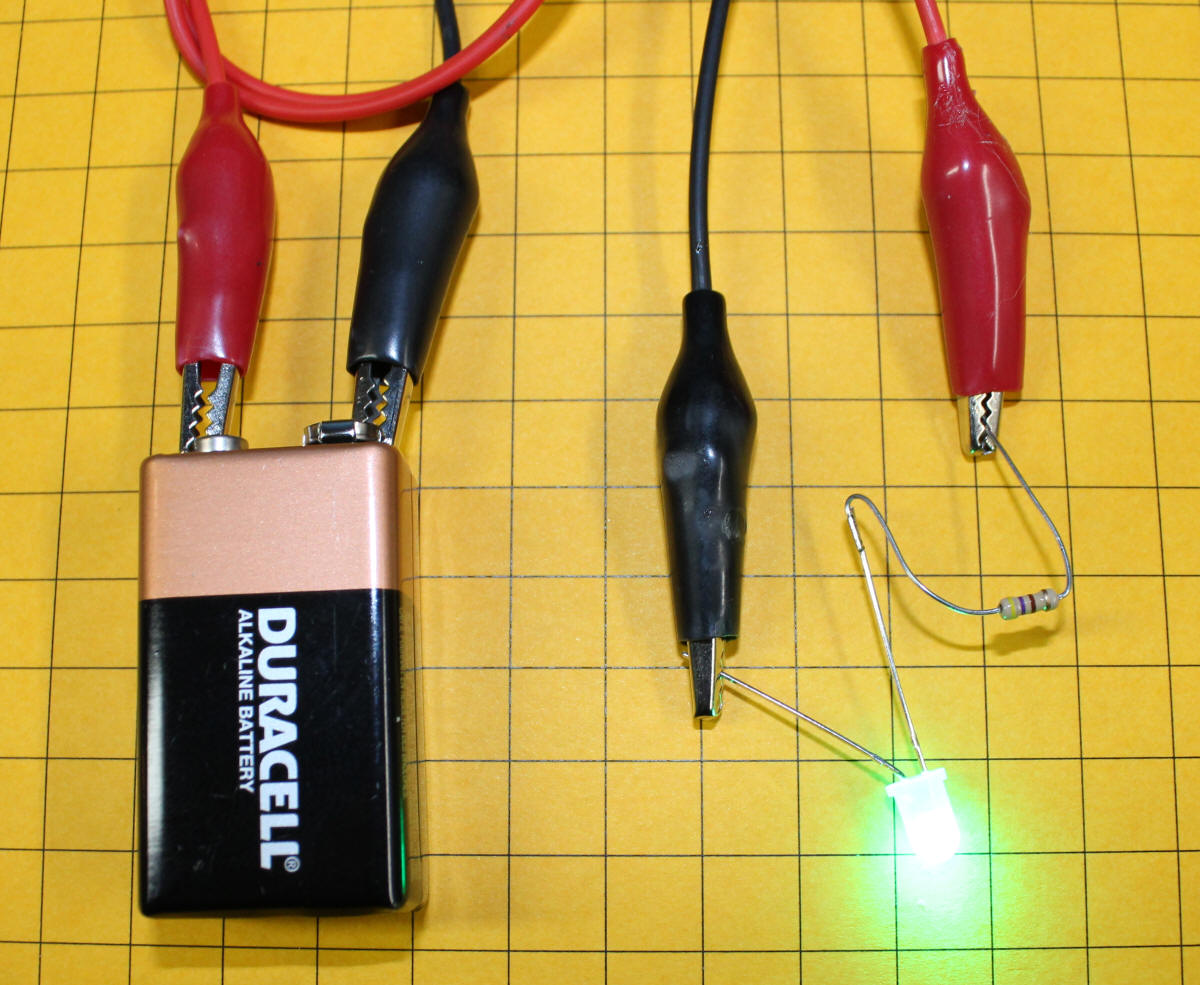 Light the indicators in the track can be a handy way of knowing which way a turnout gets thrown. You can buy tiny LEDs that are small enough to be unobtrusive, but can still be easily seen. If you think this looks unprototypical (with LEDs in the track), you could install them on your bench work fascia, next to the turnout, or perhaps in a building, or even have them as lights on a pole that respond when the turnout gets thrown.
The LEDs can be positioned between the track rails after both rails and the frog are gapped beyond that point. Small tubes can be used to carry the wiring from the LED up through the foam sub-roadbed. A small blob of Walthers Goo will keep them in position to avoid interference with couplers or other parts on the trains passing above them.
You could use this with electrically powered turnouts, which would save installing relays, or needing a second set of contacts. Some operators find manually controlled double slip switches confusing, so this could be helpful with that too.
For DCC help and advice http://www.dccmodeltrains.org
Mark has a question you might be able to help him with:
“I want to raise a layout to ceiling height. What is the best way [motor] to achieve this ?? My grandsons keep on about having a setup in the garage, but I have not the room.. Any suggestions?”
Add your comment.
Art asks you for help:
“Does anyone else have issues with Peco coil turnout motors not functioning, only working to one side after awhile. And/or does anyone have any better set up so they switch and operate more efficient on Peco turnouts , N scale. Respects. Art”
Add your suggestion.
Bob sent in this question for readers:
“I’m re-doing my N Scale layout and I plan on using KATO Unitrack. My question is: How many feeder tracks do I need per 10 feet of track? This will be DCC controlled. I’ve been told that it’s not like using Atlas and others as the connectors on the Unitrack carry the electricity better. On my old layout I had feeders every 2 feet, sometimes closer. I was thinking a feeder every 5 feet. Too far? Thanks.”
Add your suggestion.
Tony has a question for others in the hobby:
“I have an HO NCE Power Cab and a Hornby R8247 Decoder for lighting/accessories. Can any one help with programming for a simple on/off operation for the layout scenery lights please.”
Add your comment.
Sergio asks readers for advice:
“I am a Marklin train enthusiasts. Is there a reliable software to capture all data of a layout… locomotives -coaches – the history of the pieces its origin number of loco – etc? I once bought a program off the internet but it wasn’t reliable. Your answer appreciated.”
Add your comment.
Peter asks readers:
“I have some old OO scale dc tenders with only one single wire to the ring field motor. Can anyone tell me how I can wire them to dcc using a Hornby decoder. Thank you.”
Add your comment.
Ewan sent in these tips to share:
This can happen when the soldered pieces get moved prior to the solder solidifying, or it could be because there wasn’t enough heat. To avoid this, you will need to hold the pieces in position until the solder completely solidifies. You will need enough heat for the solder to completely liquefy and flow between the surfaces.
What if the solder will not melt properly or flow?
This will happen when the soldering iron is not hot enough, or when the tip is dirty.
This can be avoided by having the soldering iron at full temperature and keeping the tip cleaned and tinned.
Add your comments.
Ravin has two questions for readers:
“Hi every body, if any one knows how to build a power supply including speed regulator for HO scale lay out please let me know. Many thanks.”
“Hi every body again what are the operating voltages for HO scale engines? Please let me know thanks.”
Comment Below
Ed asks others in the hobby:
“I’m looking for some 3 pronged connectors for my electric switches on the switch itself. Bachmann sell one type that comes with a 10 foot cord for 13.00. I just need the connector with a little bit of wire. I can add my own wire on the connector. I think 13 dollars is a little high priced. Where can I buy them cheaper?”
British Rail Stock
Mike asks:
“Is it possible to purchase HO stock in HO SCALE,or can I only buy oo stock.”
Add your comments.
John wants help from others in the hobby and asks:
“Hi everyone out there in train world. Where can I get a circuit diagram for operating light signals in sequence using relays please?”
Add your comment to this posting.
Russ seeks guidance from others in the hobby and asks:
“I am using a 060 Tank locomotive to test my atlas turnouts. When working slowly it stops – when working faster it can derail.
As it goes through the points the loco seems to rise a little. What am I doing wrong?”
Add your comment to help Russ.
Marc asks readers:
 Hi, Just wondering if anyone else uses LED’s to upgrade loco headlights? I use super bright white for my Diesels and they look amazing. They’re so bright that they actually light up scenery etc like the real thing when running in the dark. I love them, and think they’re heaps better than standard lights, and far more realistic.
Add your comment.
Jason sent in these soldering tips to share:
When soldering nickel silver rails to PC board ties both surfaces need to be thoroughly clean and oil free. You can used an acid based flux for cleaning the surfaces, which will help produce a good looking, reliable solder joint.
When doing this you are not building an electronic circuit, so using an acid based flux for turnout construction is okay. Unlike with electronic circuitry, the soldering joints will mainly provide mechanical strength, so that the completed track can easily be scrubbed clean using a wire brush to remove the acid residue.
The word “acid” sounds frightening, but the acid in acid based flux is really quite mild, and as long as you use a wire brush to thoroughly scrub clean the track, you shouldn’t have any problems.
Add your comment
Gil asks others in the hobby for advice:
“Where can I purchase spare parts for N gauge Bachmann Plymoth Shunter – Bachmann only want to sell me a complete chassis – $40.00 – all I want is the Drive Wheels that merge with the worm gear- they are kidding – no spare parts now means I have a perfectly good engine that can’t now be used.”
Comment below.
Richard has a question for readers:
“My layout is not wired yet. However I have all analog engines, I would also like to buy DCC engines. How can I run both? I have analog transformers now , should I also buy a DCC transformer? Can I wire my set up to be able to run both type engines? Thanks for any help.”
Add your suggestions.