model train layout
Everything on model trains, model railroads, model railways, locomotives, model train layouts, scenery, wiring, DCC and more. Enjoy the world's best hobby... model railroading!

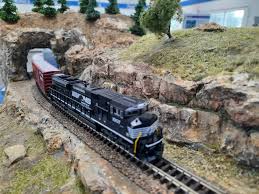
What may have started as a sketch on graph paper became a fully immersive miniature world — complete with weathered buildings, working signals, and a freight schedule that runs like clockwork. But what really makes this layout tick isn’t just the time spent. It’s the smart choices, the small details, and the lessons learned along the way.
Here’s what sets this layout and other great layouts apart — and what you can borrow for your own build.
Before a single track was laid, the builder spent months refining the track plan. The goal? Operational interest. That meant:
? Tip: Use free layout planning software or graph paper to test ideas before committing. A well-planned layout saves years of frustration.
This layout doesn’t just look good — it feels lived-in. From cracked sidewalks to rusted water towers, every scene has a backstory.
? Tip: Start with one scene and build outward. Think like a movie director: what’s the story here?
DCC powers the layout, but it’s the reliability that impresses. The builder used:
? Tip: Label everything. Future-you will thank past-you when troubleshooting.
Three years is a long time — and costs can add up. This layout used:
? Tip: Don’t underestimate what you can do with cardboard, paint, and patience.
The layout isn’t just for show — it runs like a real railroad. With a timetable, switch lists, and car cards, every session feels purposeful.
? Tip: Even a small layout can benefit from operations. Start simple: pick up and drop off cars with a reason.
Three or more years might sound daunting, but this layout and others prove that steady progress and smart choices lead to something truly special. Whether you’re just starting or refining your fifth layout, the key is to build with intention — and enjoy the journey.
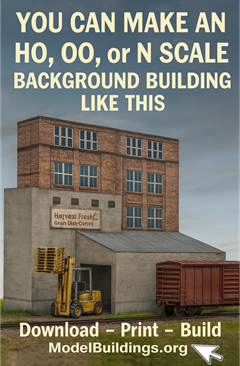
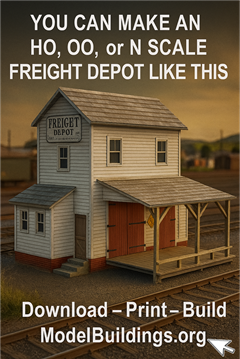
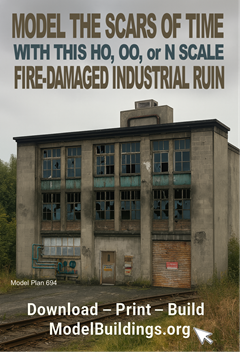
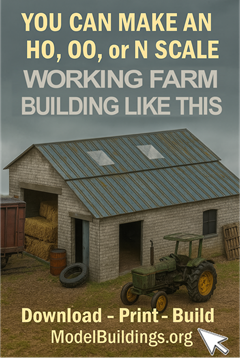
Want to see more layout tips, scenery tricks, and downloadable scale model buildings? Visit modelbuildings.org
The reason some model train layouts turn out better than others often comes down to realism and aesthetics. To look realistic and not “toylike,” a layout should not be too predictable in design. A mainline running close to the edge of a standard 4ft x 8ft space and then curving at the end to form an oval will look “toylike” unless there is clever scenery or props to disguise the predictable track configuration. Where possible, it usually looks more realistic to include gentle curves (just like on a real railroad) and position the mainline at a slight angle from the edge of the benchwork. Hiding the curves with tunnels or hill cuts effectively distracts the eye from the fact that the train is running around an oval.

Another alternative is to make the layout point-to-point. Real railroads work this way so why not yours? Unless your whole purpose is to run the train in a continuous loop, a point-to-point layout featuring two separate industries or towns that exchange goods is the most realistic way you can operate. Remember, though, to figure out how to turn the locomotives around at each end. A turntable, wye, or reversing loop may be necessary but they also offer additional challenges as well as interest and convenience. The available space is obviously a big factor to also consider.