Technical
Everything on model trains, model railroads, model railways, locomotives, model train layouts, scenery, wiring, DCC and more. Enjoy the world's best hobby... model railroading!

JP asks:
“Several years ago I purchased the TRIX 66111 lighting set in Geneva, intending to use it with 2 WALTHERS EAF sets I had bought previously here in Australia. Much to my displeasure, I discovered upon arrival back home that the TRIX lighting set didn’t include any instructions at all as it (most unhelpfully) merely came with a slippet of paper indicating that the instructions came with the TRIX 66106 Oxygenstahlkonverter set (which I of course don’t have…).
I have held off building the 2 Walthers kits while attempting to secure a copy of the instructions from somewhere (I’ve tried TRIX directly on at least 3 occasions, as have several hobby shops in Switzerland, Belgium & Germany – all without success).Would anyone by any chance still have the instructions from the TRIX 66106 Oxygenstahlkonverter kit & provide me with a scanned copy? Thanks in advance!”
Comment below.
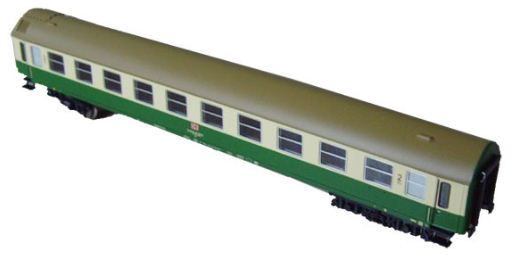
Charles would like help from anyone with experience putting lights into passenger cars and asks:
“I would like to install interior lighting in some of my HO scale passenger cars. Is there a set of How To instructions that I could use as a guide in doing the installation of the lights?”
Add your suggestions below.
Douglas
“I just purchased a used Lionel KW transformer. Both sides work great. My question is; is there a test for the train horn? I cannot get it to work. I have a new diode if i need to put it on but I want to know for sure that is the problem before I do that work. Is there another area I should look before replacing the diode? Thanks.”
Experienced model railroaders can comment below.
Les is new to DCC and wants some advice from those in the know:
“I’m building my first DCC layout and am thinking of using another transformer for the accessories (lighting, etc). Is this going to save me any amps for the engines? It’s a 12 X 8 feet layout and I have 9 dcc engines out of a turntable. I’m using a Hornby Elite system with Sapphire Decoders.”
Add your comments below. Also use the Facebook and Twitter links to share this blog with others.
Tips on model train ballast
Keen model railroader Mike Williams contributes:
For those who are tired of the more traditional DC method of train operation, DCC Digital Command Control is always a viable option. DCC requires precise wiring, and it is a bit restrictive in some ways.
When building any train layout you will need to run wiring throughout your benchwork, and if you are not careful you will end up with your benchwork being immovable. For example, if you wire your table in such a way that the wires cannot be disconnected, or at least the circuit boards dismounted, you will have a bit of trouble taking your setup to a train show.
As far as your locomotives go, the first things you will need to take care of are the DCC decoder installations. Typically you will only be doing this on one train, but if you have more then you will need to make sure you have a DCC decoder for each of them. Most model trains will have the ability to be disassembled, and the decoder can be installed.
Mike is an enthusiatic model railroader who enjoys model trains and writing.
Eric is having problems with his Hornby points and asks for assistance from readers:
“The Hornby Point motors I have tried do not seem to be man enough to operate the Hornby points in both directions. Has anyone else experienced this problem or am I doing something wrong?”
Add your feedback or suggestions below.
Mike writes:
With digital command control (DCC) decoders are used to control each locomotive. A model railroader can set the decoders address and control speed, special effects and motor performance etc. Most manufacturers provide programming instructions.
Your DCC decoder may need quite a bit of work on your part if you want it to work properly. DCC decoders need to be programmed which some people find confusing.
The thing is that the systems can be very different. Unless you can build your own decoder you will be forced to use someone else’s settings and they may not work for you. Nonetheless, have a look at the DCC decoder schematic and see exactly what your DCC decoder can support.
Luckily there are some DCC decoders that come with the option of DCC decoder programming, such as the NCE and Wangrow systems. In some cases it can be a long and complicated process, but there are several.pdf files out there that will assist you in changing the command station manufacturer’s settings. Some people will find this to be a bit too complicated, but there are others that will actually welcome this complication for the chance to run their railroad in the way that they see fit.
The process of controlling the DCC decoder can be made a bit easier with software intended to control the DCC railroad. There is some software that you could pay up to fifty dollars for, and there is some software that will be completely free. One example of this would be the MRC Prodigy interface for DCC controlled trains.
For added control you can always include DCC accessory decoders, which provide more options than your standard DCC decoder. For the most part these are stationary, and while they are expensive, are quite worth having. Some of these have options for auto-return, lock-block, locked route control, system reset, smart default ops, and many other settings. There are a number of reasons why one might prefer to have one of these, aside from having a control complex.
For instance if you have your train on display and don’t want anyone else to be able to exercise control over it, then you can have the DCC accessory decoders set certain parameters into it. The ability to lock-block will be especially useful in this case.
The only thing you really need to note is that this is not going to be easy by any stretch of the imagination. In some cases you will need to be familiar with computer programming languages, and there are some model train enthusiasts that know more programming languages than some of the seasoned computer technicians. This is can be a big challenge, but it might just be one that you are willing to take on. Are you ready to exercise complete control over your model train set? If so, then prepare to be amazed by the advanced programming and the control of DCC accessory decoders.
The important thing is to be comfortable with the operating system you use. Do not let anyone else in the hobby pressure you into changing from DC to DCC. Some people are comfortable with what they are familiar with and see no need to change to a new system just because someone else raves about it. Both systems have there merits.
Mike writes on a variety of subjects from internet marketing to model trains. Mike is a keen model railroader and has his own model train layout.
Raymond has a question for knowledgeable model railroaders and asks:
“I,m working Dcc and using Peco OO Track SL100. Can a reader piont me into the right pionts to use, and should I use insulators on one side off the track before the pionts? I will have the NCE POWER CAB set up and NCE smart booster SB3a. I would not like to lay track then have to uplay to put isulators in. Regards Raymond. ps my locos are over 20years old and run OK with decoders tcs t1 on test track.”
Comment below.
If you answered yes to that question, then perhaps you are able to help others by answering some of their model railroading questions on this blog? On the other hand, you could keep all your knowledge and experience to yourself and not share it with those who could really benefit from your thoughts and who would appreciate your suggestions. It is really your choice, but please remember this blog is operated as a free service and it does rely 100% on the contributions from people like you. We want to keep it free, but to do that we need regular contributors who are prepared to answer some of the many questions that get asked. The alternative is for us to pay someone to answer all the questions, but then we would have to charge a subscription to the blog and we don’t really want to do that.
So, if you can help by answering some of the questions on this model train blog, then please do.
Colin wants to hear from readers with any knowledge of valve gears and connecting rods:
“I am rebuilding several oo flying Scotsman chasis which is all new stuff. My problem is the valve gear and conrods. Fitting the valve gear into the pistons seems straight forward, and fitting the spacer bearing between the conrod and valve gear which is secured with a small screw into a brass stud which is located in the centre, driving wheel 4-6-2 seems not to difficult. Now the conrods and rivets which in turn fit into the front and rear wheel either side of the driving wheel. When all assembled it won’t turn freely. Now I have soldered the rivets into the conrods, could this be the problem? These rivets are not easy to solder in. I hope I have explained the problem well enough for someone to answer.”
Comment below.
John (not the one in the earlier post) has sent in this HO question for readers to hopefully answer. You can comment below.
“I am trying to wire an Atlas #200 snap relay for trackside signal lamps using red and green LED lamps. I have followed the directions in the package but I am not sure were to install the resistors. Also the LED need to have a positive and negative feed. How to you know on the AC side of the power pack which is positive and negative?”
David has a question for readers on locating a faulty rail connection. David says (in his words):
“This question comes from a complete idiot where electrics are concerned! Is there an electrical meter I can purchase which will quickly locate a loose rail connection which in turn is causing loss of power to the track? Would a continuity meter be the answer or am I talking nonsense? I have never used a multimeter if indeed that is the answer so I am hoping for something even an idiot like me can use. Any help would be greatly appreciated.”
If you can assist David, then please add your comments below.
Ray asks readers:

"Does anyone know of another method of contoling Semaphore Signals? I use RR&Co 7 Gold with Digitrax Chief to control my DCC system. I use SE8c controllers for my signal lights. I chose not to use the SE8c for the semaphores because I can't get the Tortoise drives under my middle and top track levels and clear the trains below. I am using the SMC4 boards with RC mini servos that tuck under easily. The SMC4 operates the semaphores with (3) addresses and 'throw commands only'. I have had to use a (3) aspect signal for the first two addresses and a (2) aspect signal for the third. However,the SMC4 works only upon an actuation signal with no memory. This causes some problems. Does anyone know of another method of contoling Semaphore Signals, or do they know of a smaller stall motor drive to replace the toroise?

Comment below.
Neil asks readers for advice:
“I am looking for marker lights for on the front of the boiler and piping details under each side of cab for top of the line Norfolk and Western J type O locomotive. I want to upgrade my N&W J type Williams by Bachmann locomotive as I have done on my Lionel model. It took a LOT of guts to drill holes in the Lionel boiler to mount the marker lights. The piping details had to be slightly modified in order to fit under the sides of the cab, but the results were well worth the effort.”
John has a wiring question for those in the know.
“1. I’m using fastrack- 8 switches on layout. Some of the switches do not operate very quickly. I’m powering my layout with A ZW Trans with two power boosters.
2. When I have two trains on track I cannot get them to go the same direction. Do I need a separate transformer for the track. It is all connected through with switches?
If you can help, Thanks”
John has a question for experienced model railroaders on wiring a loop.
“What is the best way to wire a loop to permit complete automatic operation? No electric switches to turn to reverse polarity. All automatic. and N scale.”
Comment below.
Jim has a question for readers on powering turnouts and asks:
“I have 4 turnouts in my HO layout that need to be powered and the transformer that I have does not have a power outlet for accessories. How do I get power to the switches for the turnouts and what voltage should they be powered with? I also am in the process of building my benchwork and would like to know where the best outlet for the pink insulation board to set everything on.”
Have a go at answering Jim’s question below.
David is have problems with power to his HO layout and asks readers:
“I have one track. It’s a big square 30ft by 11 ft track. I run 2 diesel sp engines only with sp pass set all lighted on brass rails. It runs very slow and the engines run off of a bachmann ez command 16 volt transformer. The farther away from transformer the slower they go. I have a sound decoder in 1 engine. Why are they so slow. I have a 3rd sp middle engine but I can’t use it to complete my whole pacific set because then it hardly moves at all. They run better on an older style transformer, but then I will lose my sound and I love my sound so that won’t do. Can someone help. Thanks.”
Comment below.