Everything on model trains, model railroads, model railways, locomotives, model train layouts, scenery, wiring, DCC and more. Enjoy the world's best hobby... model railroading!
Hedley asks readers:
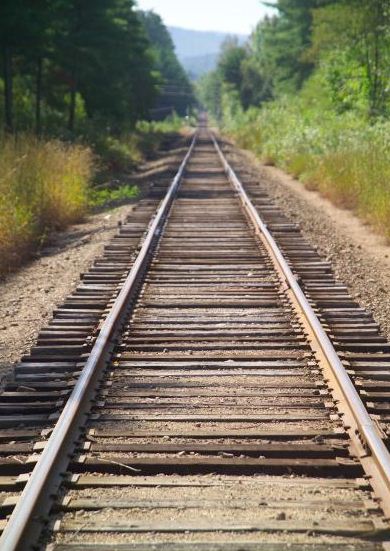 “What’s the best way to keep my track in top condition so my HO trains run smoother? I have used a fine sand paper, but a railroading buddy said rubbing alcohol is better. I’m confused – should I use sandpaper, or rubbing alcohol, both, or something else?
Dave asks readers:
“I see advertisements for printable structures here and elsewhere but they always seem to come from England. I live in USA and can’t seem to find the paper sizes and thicknesses necessary to complete them. Legal paper can substitute for A4, but not the referenced card stock. Anyone have ideas on how to get around this problem?”
Robert comments… Dave, the buildings advertised on this site are designed in Australia and are based on buildings from the USA, Canada, UK, Australia, New Zealand, and other countries. They are designed to international paper size A4 which is very similar in size to US letter paper. It is very easy to adjust the printing size on a home printer if needed. Most people use ordinary home printing paper, however you can substitute other paper or card stocks if preferred. There are no hard and fast rules… it really comes down to personal preference.
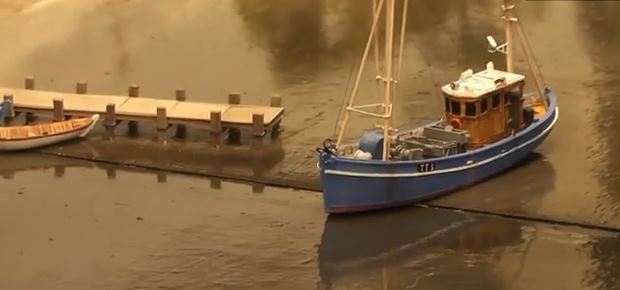 There are several ways to make artificial water for a model railroad, and some are more permanent and realistic than others. Epoxy resin products are a popular choice for many as they dry hard and clear (although color can be added to the mix). Regular epoxy resin is available art & craft stores in a twin bottle pack. One bottle contains resin and the other is the hardener which causes a chemical reaction when mixed together. The mixture warms up and dries rock solid. When dry it cannot be molded or melted, but it can be sanded. There are also several branded products available for making artificial water including Realistic Water, and E-Z Water.
 Making the water look real
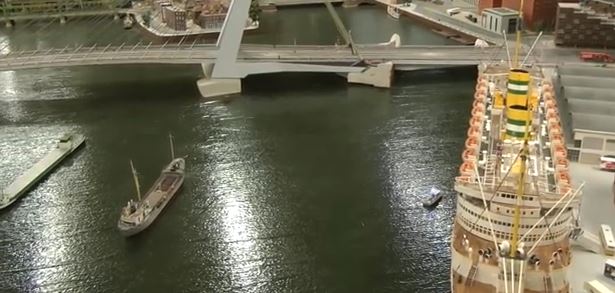
In real life water changes color due to reflections on the surface, and/or the clarity of the water, and/or the depth, and/or the movement/stillness, and/or the rocks/debris/sand color on the bottom. So water is not always blue (as you can see from these model railroad photos).
Rivers often have a high particle content so look brown in color. On the other hand a river might be relatively clean, but be discolored in places due to outfall pipes from factories or input flows from another stream. So to look real the clarity and color might not be consistent.
More info on making water for model railroads.
Model the bottom first
When creating a water area on a model railroad, the first job is to model and shape the bottom remembering that is unlikely to be perfectly smooth. Little stones and vegetation can be added depending on the intended water depth. The bottom will require painting prior to pouring the resin mix. The color choice is important and needs take into account the various factors mentioned earlier. Greens, browns, and blue tones are a common choice. Boats, watercraft, vegetation etc is often added to the liquid resin before it hardens. Plants such as fallen branches, reeds, brushes, grasses etc. can be added along a river bank.
318 people voted in last weeks poll which asked: How near to completion is your railroad?
Results were:
>> My railroad is an evolving process and will never be complete (29%)
>> I’m only in the planning stage and am yet to get started (24%)
>> I’ve started construction, but am less than 50% complete (24%)
>> My construction is more than 50% complete (8%)
>> I’m almost finished construction (4%)
>> The construction stage is now complete (3%)
>> Unfortunately I don’t have a layout yet (8%)
This 2 minute video shows the simply process of constructing scale model shipping containers for positioning next to railroad track, on flat cars, or stacked behind industrial buildings or work sites. They look so real with all the rust marks, scratches, shipping logos etc. There are 40 designs in the series ranging from 10ft through to 20ft and 40ft containers.
Jim asks readers:
“I have a DC HO layout after redoing part of the layout a short has developed which only allows me to power up to about 1/3. If I go beyond this I get a short. If I back down the power the train will slowly start to run. I have already checked over the layout for shorts. My question – could a turn out be causing the problem?”
Richard asks readers:
“I want to build a couple of mountains on my HO scale layout. How do I know what height to make them so that it doesn’t look ridiculous when I eventually put them on the layout?”
Doug from Northern Australia asks readers:
“Hi, I run HO DCC (NCE 5 amp) and am trying to wire up an MRC auto reverse module. I have a simple loop running back onto a main line, through a set of left hand points (switch) and each time I set the points to the left it shorts out. I have isolated all ends of points, but still the same. I am using insulfrog points. If I run the loco around the leave the points straight ahead the diesel has enough weight to run through the points (downwards) without derailing (carriages would not do so).”
Richard asks readers: “I am having trouble finding traction tires for Tyco “Chattanooga” and O-8-0 tender drives. Please help!”

 Here are two more photos of Richard’s layout. A third one was posted earlier.
The first photo shows Richville; a Village at the foot of the mountain; Town Center with Shops and a Filling Station; Holiday Homes on the lake shore; and Richville Station.
The second photo; a crossing via Bridges over a Canon.
The layout also features the “New River Mining Company” pictured in the earlier posting.
Herb asks readers:
“I’ve been having derailment issues and a railroad friend of mine claims locos and cars are less likely to derail on Code 100 track, compared to the code 83 track I am using. Is that true? I don’t want to rip up my track if I don’t have to.”
Robert comments: Readers might also like to comment on any differences they’ve personally observed with code 83 vs code 100 in regards to: track thickness, detailing, short circuits, ease of installation.
Not so many people as usual participated in last weeks poll which asked: Do you have relatives (parents, brothers/sisters, uncles/aunts, cousins/nieces/nephews, sons/daughters) who are or were model railroaders? The 240 participants voted as follows:
>> NO (65%)
>> YES (30%)
>> I don’t have a layout yet (5%)
Roy asks readers:
“Is there a way to remove ballast and flex track? I want to replace flex track with Kato track.”
Unfortunately Roy doesn’t give any details of how his track and ballast are applied on his N scale layout. Hopefully he will add a comment to this post giving more detail.
 Richard sent in this photo of his Richville & New River railroad to share. The mining company can be seen on the right.
Obviously readers will have preferred brands and retailers when it comes to buying model trains, parts and accessories.
Gio is into O scale and asks:
“Do members know of hobby shops or online retailers that are reliable as far as stocking and prompt delivery no hassles competitive shipping rates?”
Perhaps Gio might like to add a comment to this post and tell people where he lives, or at least which country.
Here are 2 brief questions from readers.
John asks: “How do I wire multiple OO point motors up thanks.”
Julie asks: “Does anyone have experience using EL wire to represent long runs of florescent lights? Any advice on doing it?”
Phil asks readers:
“I have been out of the hobby for about 18 yrs now. I am planning my next layout and am confused on everything I read on DCC, except that DCC seems to be the way to go. With all of my older HO locos is it better to convert them to DCC, or start all over again from scratch and build up another roster of locos with DCC already included? Thanks for the time to respond.”