Accessories
Everything on model trains, model railroads, model railways, locomotives, model train layouts, scenery, wiring, DCC and more. Enjoy the world's best hobby... model railroading!

 Ryan models HO and asks readers:
“I heard automatic couplers are the go. Are they hard to convert to, and should I do wheel sets to? I’m not sure some of my cheaper cars are worth the effort. Thanks guys!”
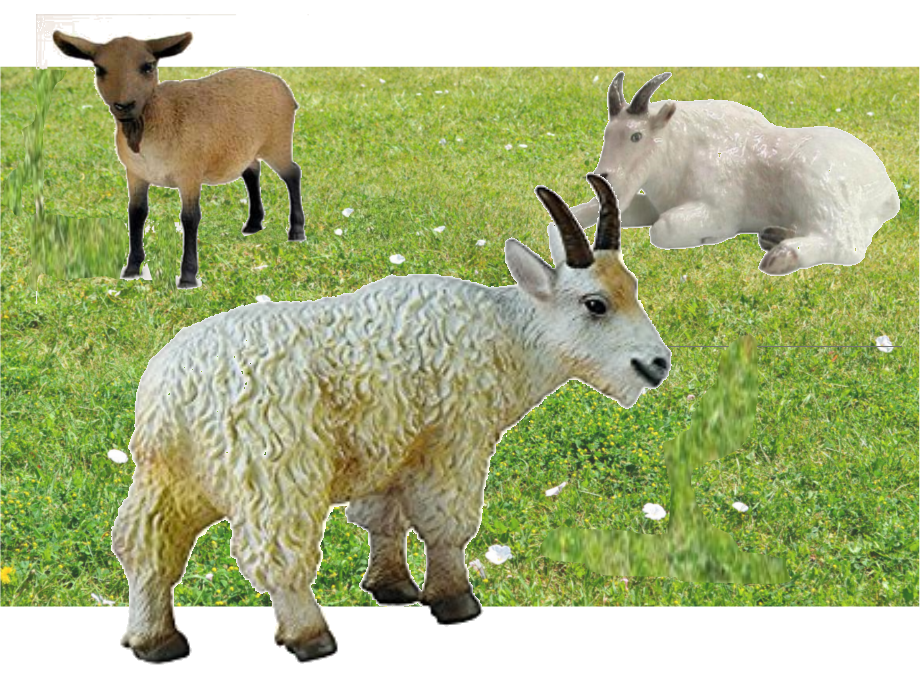 To look real a model railroad usually has an assortment of scale model people and animal figurines strategically located in appropriate positions on the layout. Dave has some specific requirements:
“Does anyone know where I can purchase HO scale figures of pronghorn antelope, mountain goats, bighorn sheep, and/or longhorn cattle?”
David from New Zealand kindly sent in this article to share –
Description of Conrad point motors and their suitability for my N gauge layout
 I have recently returned to railway modelling after more than 50 years and I spent quite a lot of time researching the current marketplace before buying any equipment. Having decided on N gauge (N scale in USA) because of space limitations, I set up a very simple test bed with some sections of Peco track and some turnouts, both insul-frog and electro-frog.
One of my aims was to have ALL the turnouts motorised, and the other was to use electro-frogs except possibly where no electro-frog version of the turnout was available, e.g. Peco ST44/ST45 curved turnouts. (I discarded these in the final layout as the radii were too small). So the hunt was on for point motors which could also switch electro-frogs, and which were affordable in quantity.
There’s no getting away from the fact that the Peco point motor is designed for OO/HO. It will fit under an N gauge turnout but the movement of N gauge turnout blades is only 3mm. Therefore it is difficult to get accurate and reliable operation with N gauge, particularly when you add a microswitch unit to the motor. A Seep point motor works on the same principle and with those, the built-in frog switch only just works because of the limited turnout-blade movement.
Testing the Conrad
During my investigations I came across a couple of short videos about the Conrad point motor, so I bought a couple of motors and tested them. The basic design of the Conrad motor is to use a stiff wire directly up through the baseboard into the tie bar. This works OK with OO/HO turnouts (and probably O gauge as well, but I have no experience there) but again, it doesn’t work too well with the short travel of N gauge turnouts. However, one of the videos shows the use of a crank and I can confirm that this works brilliantly. The crank reduces the motion of the Conrad slider bar from 7mm to 3mm, and it’s easy to adjust. The Conrad motor includes a frog switch so you don’t have to buy any extra parts to operate electro-frog turnouts. I have successfully installed 31 Conrad motors on my current layout and I’m very happy with them.
How do the Conrads work?
They are based on a 12V DC motor turning a crown wheel, with a slide bar engaging the shaft of the crown wheel. They are NOT slow-acting like a Tortoise or a Cobalt motor, but they are not nearly as “violent” in action as a solenoid. Limit switches cut off the motor power at each end of the travel of the slide bar. The electrical design allows operation on AC or DC. In AC mode, the wiring is identical to that of a solenoid motor, but you can get away with a simple SPDT switch in place of a passing contact switch.
In DC mode, you use two power supplies (+12V & -12V), and here you get the greatest advantage – you only need ONE control wire plus the common return. If you don’t have a dual DC power supply, you can always use a single 12v supply and a DPDT switch to reverse the voltage supplied to the motor, but there again, you would probably use the AC method instead.
Size: The Conrad motor is 70mm long, 25mm wide (38mm over the mounting flanges), and 26mm deep. The slide bar is 47mm long overall and moves about 7mm. The shallow depth means that these motors are well suited to being used on “upper levels” where you need clearance for trains running underneath them.

The crank: The above sketch shows what I mean by the crank. I use the thicker of the two pieces of wire supplied with the motors. This is 55mm long. The hole in the baseboard serves as the pivot for the crank. The photos below illustrate this in practice – on my test-bed. You don’t need to remove the over-centre spring from the turnout. I still make an elliptical hole under each tie bar just in case I want to use a solenoid motor at a later date.

Pricing and availability
The Conrad motor (part number 1396900) is available from Conrad UK (conrad-electronic.co.uk) at £9.99, including VAT but not including shipping. Conrad UK will not ship internationally so the VAT does not come off. From Conrad.com (Germany), they are available with a quantity discount, coming down to €6.93 when the VAT has been taken off for export. The snag is that there is a €55 shipping charge, which looks horrendous. However, if you buy a quantity, the pricing comes out roughly as follows (but don’t hold me to it as rates can vary): 10 cost roughly NZ$33 each, 20 cost roughly NZ$17 each. The most you can order while staying below the NZ$400 limit is 27 or 28.
Thanks David. If you have an article you would like to share with others, please submit details to the Blog Moderator using this link http://www.model-train-layouts.net/Submit-An-Article.html
 Alan models O scale and wants advice from other Lionel enthusiasts:
“I purchased a used Lionel 6-12915 Log Loader; Lionel #164 Log Loader. It is in good shape and all electrical parts function perfectly. The problem I have relates to the chain drive system. The chain on the right side is loose with a significant amount of slack in it such that two of the three spades flop down from the weight of the log and the log falls off. I need to know how to adjust the tension on the loose chain so that all of the three pairs of spades will lift the logs up into the loader section. Any assistance will be appreciated.”
Patty asks readers:
“Is there a way for an amateur to change couplers? And what are the best kind? I have two different kinds in HO and would like to have all the same. I am a real novice at this. Thanks in advance.”
Dave models HO and want to add some animal figurines to his layout:
“Can anyone point me to a provider of HO scale pronghorn and bighorn figures?”
Club member Troy asks readers:
“I have just worked why I have been having a few problems with train stability on my HO track. I think the weight of some of my HO flat cars is too light and needs increasing, but I don’t know by how much. Is there an easy way to tell if a car is too light? What’s the best way to add weight, where, and how much? Thanks to everyone.”
Bill models HO scale, 100 Gauge track and asks readers for their opinions on turnout brands:
“Is there a better quality turnout than Peco? Of all the turnouts that I have, I have three medium turnouts where the train is constantly derailing. I have gauged them and checked all alignments and they look fine, but you hear a thump as the train passes over them. I’m ready to tear everything apart and replace those Peco turnouts.”
John is hoping a reader will be able to point him in the direction for sourcing some loco parts:
“Is there a list of detail parts for the following HO locomotives: GE U30c, GE U3ob, GE U28b, FM H-24-66 Train Master, EMD DD40, EMD GP35, EMD GP30, EMD SDP40, EMD FP45?”
Roy has a question for readers:
“Does anyone know where I can purchase N Scale model vehicles from the 1880’s to the 1930’s? I would prefer already assembled.”
Perhaps Roy could add a comment below this posting confirming whether he is looking for USA scale models, European, or maybe vehicles seen on roads in other parts of the world.
Paul asks readers:
“How can I uncouple my HO rolling stock from the locomotives and each other since they all have non magnetic knuckle couplers?”
Ivo asks readers:
“I’m reasonably new at this, but I already have a lot of HO life like cars. Would no#5 Kadee couplers work ?”
Jerry asks readers:
“I have quite new HO DCC Broadway LTD Switcher with excellent sound and also great movement. It responds forward and back, then suddenly sound remains normal, but I lose all throttle response. I love this little Diesel Switcher. Does anyone have a suggestion to this problem? Thanks.”
Doc asks readers:
“What model RR paints are available now that Floquil and other brands have become hard to get?”
Hubert asks readers:
“I’m working on an HO scale MDC (Roundhouse) 4-4-2 engine and need to find some long rivets for the valve gear. Does any one know where to buy replacements for them?”
This 2 minute video shows the simply process of constructing scale model shipping containers for positioning next to railroad track, on flat cars, or stacked behind industrial buildings or work sites. They look so real with all the rust marks, scratches, shipping logos etc. There are 40 designs in the series ranging from 10ft through to 20ft and 40ft containers.
 When you take a look at a real railroad, or a model layout, you’ll likely see a variety of railroad freight cars (rolling stock) stretching the length of a train. You’ll probably spot standard hoppers, some boxcars, and some well-cars (used for transporting shipping containers and truck trailers).
In early times the industry used a lot of flat cars for moving lading (an older word to describe the freight). The early designs where reasonably basic, but as the years went by the equipment became bigger, and heavier, so there became a need for more sophisticated ways to transport larger loads and cargo of a more specific type (such as chemicals, perishables, dangerous goods, vehicles etc).
So today, a wide range of freight cars are in service replacing the once common boxcar, which railroads typically used for hauling non-liquid loads and general freight during most of the 20th century. However, if your model railroad is not modeled on the present day, then it’s likely your trains will still include plenty of traditional boxcars.
Michael has a question for readers:
“I see that Athearn are advertising N-scale models of a 4-8-8-4 Big Boy and a 4-6-6-4 Challenger. These do not have couplers at the front end. At the same time Bachmann are advertising a 2-8-8-4 which does have a front coupler, looking a bit larger than scale but obviously useful. My question is, is this coupler used only for double-heading, or is there any circumstance in which a 2-8-8-4 might haul a train tender-first?”