Accessories
Everything on model trains, model railroads, model railways, locomotives, model train layouts, scenery, wiring, DCC and more. Enjoy the world's best hobby... model railroading!

Dave has a question for others in the hobby and asks:
“Why are decoders so darned expensive? Especially sound decoders? The technology has been out a long time but the prices don’t seem to be coming down at all!”
Add your thoughts to Dave’s posting.
Thomas would like advice from readers:
“I am new to the hobby and I am using HO kadee style couplers. I am having trouble with the cars coming uncoupled when running. Help please.”
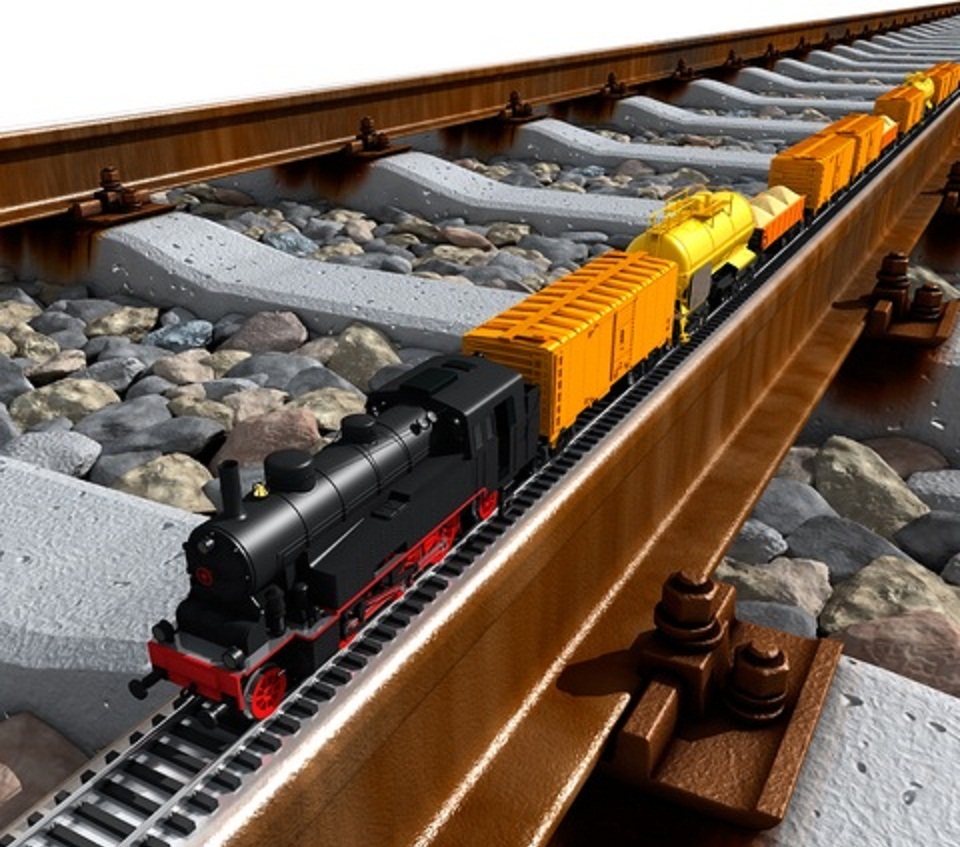 If you are new to model trains, consider investing in diesel locomotives as some in hobby claim they run better than similarly priced steam engine counter parts. Others in the hobby might disagree. You have the option of cargo and passenger cars, with complete kits available.
The rails come in various options, but many prefer nickel silver as it ensures better conductivity.
Scenery can be a big investment if you don’t make most of it yourself… it’s fun making scenery!
Always invest in the best engine as you can, and then go on to build the required landscape. The idea here is to create a perfectly running model railroad, otherwise all your efforts on creating a classic model might go in vain.
There are several excellent resources available for beginners (and experienced) hobbyists, including the “Best Selling” Model Train Help Ebook. Model train enthusiasts can also benefit greatly from access the numerous resources inside the online Model Train Club.
Ryan has put together this helpful tutorial for avoiding derailments on a model train layout. The video includes some excellent layout scenes. Feel free to pass it on to friends. Enjoy!
Jeremy (an eight month member of the online model train club) sent in this piece of advice:
Many folk in the hobby don’t particularly like horn-hook couplers and often can’t wait to replace them with knuckle couplers. The view of many is that knuckle couplers are more realistic and they work really well with magnetic uncouplers.
Converting to knuckle couplers takes time and some effort and patience. If you are going to do this it is best to convert your rolling stock one at a time. Some mix them in consists until they are all eventually converted.
Regardless of what train couplers you use, they need to be mounted at the right height for them to work correctly.

If a coupler is sitting too high, then you can lower the coupler by inserting a shim between the bottom (of the car floor) and the coupler pocket. If, on the other hand, the coupler is too low, then you can add a washer (or two) between the truck and the car base.
You might have to replace the truck assembly (or the wheels), if the coupler is mounted on the truck, particularly so when a coupler is too low. My last tip is to buy a coupler height gauge – very handy!
John is a great contributor to the hobby and likes to share his ideas to help others. Here is John’s latest suggestion:
We accumulate a lot of parts of various items as we build our layouts, and the smaller the part is, the more underfoot it is until it’s needed, then it seems to disappear as if by magic. One way around this is to put all small parts in a box, and the low-cost alternative is to use an empty MILKBONE Brand dog biscuits box, the 10-lb. Value Pack. Like most MILKBONE products, the box is very sturdily built, and measures 11-3/4 inches high, 10-1/2 inches across the top, and 8 inches deep, and can hold a lot of small parts such as track pieces, building air conditioners, terminal joiners, figures, model train wheels, weights for freight cars, detailing items, etc.

At very least, you’ll know where the part is if you put it in the box, though the exact part you absolutely need is probably near the bottom.
But a word of caution – make sure the box is empty before you use it for your small parts, as it contains very precious cargo. Just ask any dog!
If you have experience in the hobby and would like to help or guide others, submit your ideas using the Ask A Question link at the bottom of the page.
Liter has a question for anyone with Z scale experience:
“My current Z scale engines and rolling stock all have Marklin type couplers. Unless you purchase Marklin equipment, these couplers seem to be unavailable from other suppliers. For example, Micro Trains and AZL seem to have there own types of couplers. My question is: How many kinds of couplers are there and how can I be sure the new pieces of non-Marklin equipment I might buy have compatible couplers?”
Comment below.
Jonathan has an HO layout and is wanting advice from anyone with experience with couplers:
"I have IHC 85 pass. cars w/plastic trucks and McH knuckle type couplers. These wheels (#33) seem to drag when on the track but roll freely if rolled by hand. Does anyone have any ideas?"
Add your suggestions using the comments link below.
It is really handy to be able to easily move your layout (or sections of it) if required. Most people discover this when they move house. Moving the furniture is easy, but moving a layout can be problematic.

This informative manual describes how to build a mobile model train layout, so you don’t have to begin again when you move house. You can read how a modular train layout can save you money as well as taking up less space.
You’ll really enjoy this! It includes photos, tips and a layout plan included. Get it now for free when you join my online Model Train Club.
Jim asks readers:
“Has anyone seen an uncoupling tool for N scale? Micro Mark has them for HO but not N scale.”
Sal asks readers:
“How do I wire Rail King O crossing gates to Gragraves track? The instructions only talk about Rail King track.”
Comment below.
A reader asks others in the hobby for advice:
“I do a lot of scratch building of HO scale rolling stock. One of the problems that I have is finding eyepins for my old time tank cars. I use 60mm wire for the hand rails and I am looking for eyepins (for stanchions) that are about 1″ – 1 1/4″ long with a 62 or 63mm hole to accomadate the handrails.”
Add your comments below.
1. Are they trouble free

2. I am running DCC Insulfrog or Electrofrog?

3. Any special tips
Comment below.
Adrian from New Zealand asks readers for help:
“I have just started my layout and am using Peco track sl 100 streamline. I also received code75 sl110 rail joiners, but I can not get them on the track (too tight). Can someone help me please?”
Comment below.
Randy has a question for readers:
“Where can one find examples or pictures of CNW rolling stock in the 60’s? I am modelling my home town in Nebraska and want to do a 60’s layout!”
Comment below.
1) Is there a difference between brands of locomotives and especially cars regarding the weight and the wheel trucks - do higher cost cars weigh more - or are all HO cars light as a feather? Is there any difference in precision with the spacing and traction by the wheels?

2) Is there a tool or technique for assuring smooth transitions between track sections especially turn outs to detect diversion in any plane or rough projections that will cause derailment?
Please assist Ray if you can.
Craig wants advice from readers please:
“I have an older Overland Models 8-40cw drive in which the gear box covers are cracking and breaking due to weather and temperature, and I am wondering where in the world may I find replacements, now that Overland is no longer being produced. All help will be greatly appreciated.”
Comment below.