DCC
Everything on model trains, model railroads, model railways, locomotives, model train layouts, scenery, wiring, DCC and more. Enjoy the world's best hobby... model railroading!

Robert is away today so I have posted this reader question in his absense.
A keen model railroader asks readers for an answer to this question:
IS IT POSSIBLE TO INSTALL A SOUND DECODER ON-BOARD THE DIESEL ENGINE DCC?
If you would like to contribute your answer simply click on the comments tag below.
Adele
For many model railroaders the big problem with DCC is leaning how to use it. For example, with DCC it is possible to run two trains head on into each other. So, learning basic DCC operation is an important first step.
With DCC operation there is the problem of modifying old locos to run with DCC and fitting DCC chips to DCC ready locos. Remember too, it can also be difficult to return non DCC locos that have been modified to run on DCC back to DC control.
However, there are many advantages in DCC operation on a model railway layout. A DCC system removes the need for complex point work involved with operating more than one train on a model railroad layout. It also eliminates the problem of crossing the circuits by changing the points, or accidentally running two trains at the same time because one of the trains was isolated or you the wrong point was switched.
On a model railroad layout both DC and DCC refer to the method of powering and controlling the movement of the train locomotive. DC stands for Directional Current. DCC stands for Digital Command Control.
The Advantages Of DCC Over DC
DCC control has almost done away with the need for isolation sections. With DCC you can have a single siding full of locomotives and only the one you want to move will move.
In the past to run more than one train you needed a second controller and a second loop of track. If you wanted to cross from one loop to the other it involved moving the first train in to an area where it could be isolated. The train was usually moved to a siding before a second train could be moved on the first trains loop. To then move the first train on to the second trains loop you would have to put the second train in an isolated section and then move the first train out and on to the second loop.
Here is another opportunity for readers to share their knowledge of model railroading. A couple of questions from a fellow railroader for you to consider – can you help this reader:
“I’m trying to get as much information possible on getting sound on N guage. I’m just getting started on model railroading, and have chosen to do it the DCC way..I’m told that SoundTraxx and Digitex are doing some things, and it is possible on some N locomotives, steam and deisel with some decoders. “
The reader asks:
If you can help this reader then please feel free to contribute your thoughts.
Model train clubs are a great source of model railroading news, information and ideas sharing.
Staff at your model railroad hobby store probably have contacts at the local model train club and may be able to put you in touch with the model train club members. Most model railroading enthusiasts are more than helpful and gladly give you the benefit of their experience and introduce you to others with a similar interest in the model railroading hobby. This way, you can learn insider secrets and model railroading tips and tricks.
Don’t think that everyone in a model train club is experienced. Most model train clubs enjoy a mix of long-time experienced railroaders and new model railroad club members. It is a good place to learn, because most model train clubs encourage the exchange of ideas between club members. They swap train photos, show train films, discuss model train techniques, network with other model train clubs and even have guest speakers from time to time. Joining a model railroad club can be truly rewarding experience in terms of what you can learn, the people you meet and the fun you have.
DCC stands for Digital Command Control.
It is a system that allows model railways to independently operate multiple locomotives, functions (speed, sound, lighting, direction, movement) and accessories rather than control of sections of track. This is achieved by locating a decoder in the locomotive that listens to information in the track.
I have added a new section on analog and DCC operation in the newly released 3rd edition of my Model Train Help ebook.
Happy Railroading!
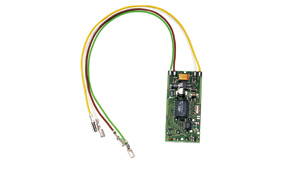 When purchasing a locomotive with a decoder installed, look for the wording “DCC equipped”, or “Factory installed decoder”, or “W/DCC”, or wording like that.
Be careful though, because the words “DCC Ready” usually means that the locomotive is capable of having a decoder installed and that one is NOT already installed. I repeat, “DCC ready” usually means there is NO decoder fitted, but the wiring inside the locomotive is terminated with a socket, ready for addition of a “Plug and Play” decoder. This is an easy installation, no soldering.
If you are still unsure whether or not a locomotive has DCC status, you can try this test. Place the locomotive on the program track of a DCC system. See if the command station can read CVs… and if it can’t… then no decoder is fitted. Also, without a decoder fitted, the loco would “hum” with the throttle set at “0”.
If the locomotive responds to the throttle on a DC system, then either there is NO decoder, or the locomotive may have a decoder that has analog operation enabled.
If in doubt, it is always best to get clarification from the hobby store staff, or from the manufacturer or person supplying the locomotive.
Get all the latest model railway news and views from the world of model trains. Stay up to date in the most enthralling (ok I’m biased) hobby in the world… model railroading!