Trackage
Everything on model trains, model railroads, model railways, locomotives, model train layouts, scenery, wiring, DCC and more. Enjoy the world's best hobby... model railroading!

Jim R models OO gauge and posted this question:
“I am about to install Kato Unitrack and am confused with what distance to put the feeders apart? I read every 6 track lengths on one webpage, and then read of another guy who ran power drops every 6 foot, and of some else who had 10 foot of track with a single feeder. I don’t know what to believe.”
Online Train Club Member Tom posted this question:
“Two weeks ago I unpacked my new Bachmann loco and ran it over several days for nearly 25 hours give or take. The loco wheels and pickups are already very dirty despite cleaning the track several times. How often should I clean the track, axles and pickups? I’m running DCC.”
Stan has this question for those in the know;
“Let me begin by saying I’m relatively new to model railroading, and have a great deal to learn. I started out with a Bachmann HO set, that came with a very basic (I think it is a #44211) power pack, which has a red cable that connects to the power pack with what looks like a 3.5mm male connector, and an EZ track connector at the other end.
I have recently purchased a MRC 1370 power pack, which has screw down contacts, rather than female plug connectors, as on the Bachmann power pack.
How do you recommend I connect the MRC 1370 to the EZ track? I do intend to eventually use both power packs.”
OO scale train enthusiast Brian asks:
“Is it possible to go across a doorway using a hinged section?The electrics side is not a problem. I just wondered if the rails would catch on uplift? I am abit long in the tooth and disabled so crawing under it not an option. I am hoping someone has done this before.”
Another Online Train Club Member Steve posted this question:
“I’ve finally got most of my track down. I used Bachmann EZ Track. Now that it’s down I wouldn’t mind having a go at ballasting. A friend warned me against it and suggested maybe just painting it to add realism. Has anyone ballasted EZ track with any success or is it a crazy idea?
Online Train Club Member Henry J sent in this question for readers:
“Maybe the old brain isn’t working right (not an uncommon occurrence :), but I’m confused about understand the differences between a single slip and a double slip and what each does?”
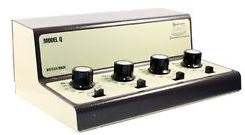
Brian sent in this question:
“I just bought a Gaugemaster Q 4 Track controller. When I switch it on makes a buzzing sound. Is this normal?
Thanks. Brian.”
Ron asks:
“Is Atlas N scale and EZ track interchangeable? Yesterday I purchased a Bachmann set 24X44 with 8 rolling stock.”
Charlie sent in this question:
“What can be the tightest radius (in inches) of an N scale circle? I want to create a ‘pizza box’ layout but I want it to run reliably.”
Online Train Club member Erik has this question for fellow hobbyists:
“I want to clean some old oxidized track as I want be solder droppers on various part of the track. I had a go scrubbing it using a small stiff wire brush with borax powder and some sugar soap. I’ve only done a couple of pieces as it is such a slow job. Is there a easier and better way to bring the shine back? I thought about using a fiber glass pencil, but I think it would be messy and will wear away to fast. I thought someone might know of a ‘secret solution’ of chemicals I could use to make the task easier?”
Add your comment below if you can assist Erik.
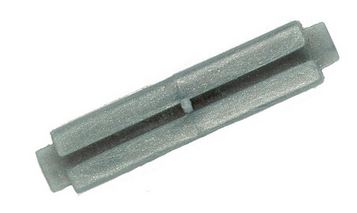 Maurice a keen member of the Online Train Club Member used the ‘ASK A QUESTION’ link to submit this question for readers:
“If I have a DCC setup, then why would I need to use insulated joiners?”
Bob wants to hear opinions from readers on the cost of flex track:
“In my old house I had a 4×16 layout. It was built in. We moved in April and I had to destroy it. My new basement is huge and I have set about designing a 10×16 foot HO layout. My prior layout I built using flex track on cork glued to plywood. I just recently priced HO flex track and it was $ 15 for 24 inches , this looks pretty expense if I have 2 scale miles of track on the board. Is this reasonable or am I just looking in all the wrong places?”
Add your thoughts using the COMMENTS link.
Online Train Club Member Ray is interested in HO scale and is hoping someone will explain track and wheel codes for him:
“It’s not hard for me to get confused these days, which probably explains why I am still confused with this different wheel and track codes and how they go together.
For example Code 83 track? Code 88 wheels? or Code 100 track? Code 110 wheels? Are there advantages choosing one over another, what works best etc.? Can someone explain things in simple terms for me please?”
H.O. enthusiast John has this question:
“My track is down and now I want to pretty it up with stone ballast. I have sieved a crushed quarry bi-product and now have bottles of this fine stone to use. I also have the dust to fill in between the sleepers to save the fine stones. How do I glue this ballast down so it won’t move. Keeping it away from points / switches is a well known problem. A common kitchen sieve was used for the screening process.”
Online train club member Perry posted this question for fellow railroaders:
“I am almost to the point of laying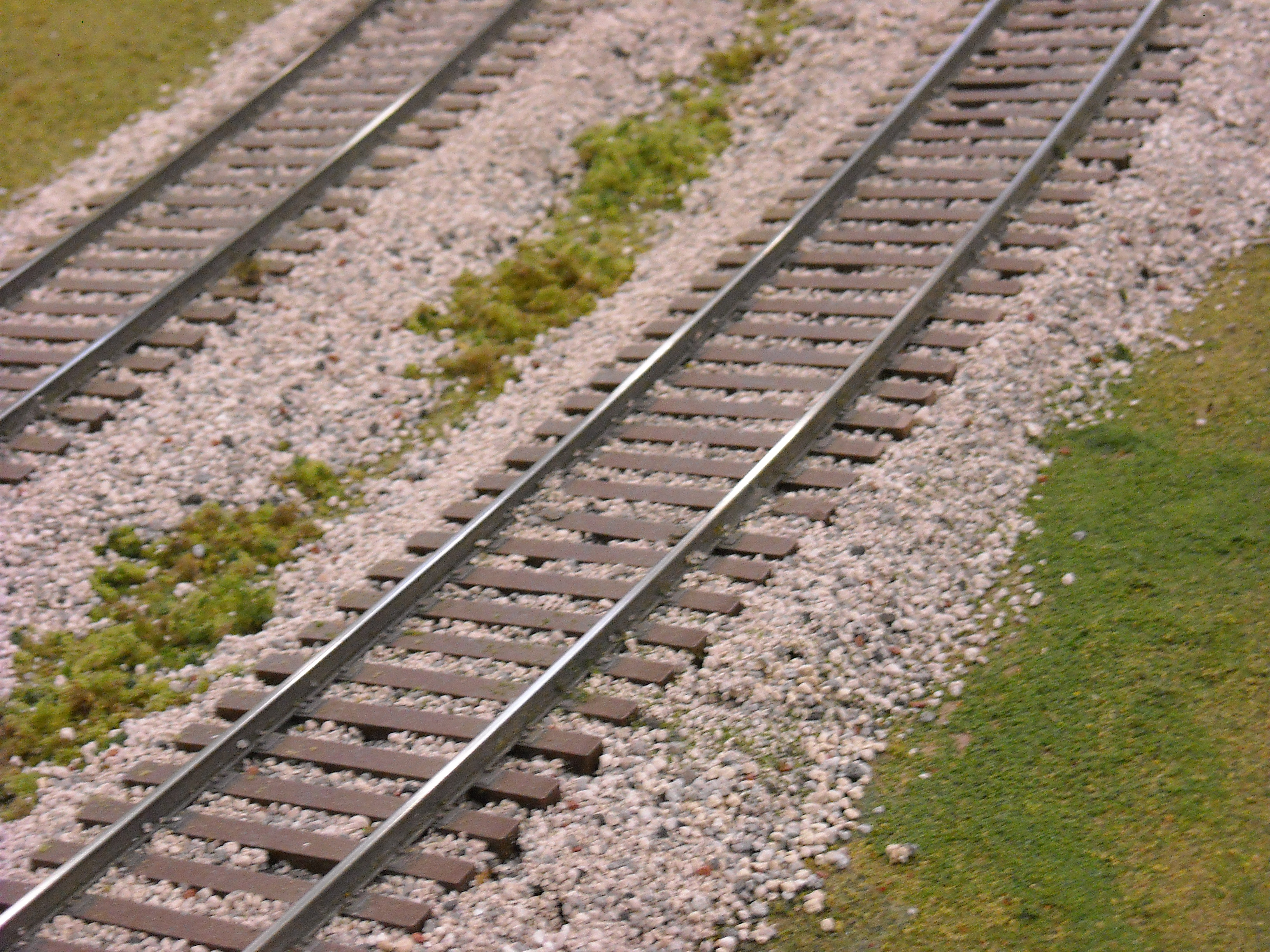 my first area of track and wondered if I need to glue it as well as pin it down? Someone told me I only needed to fix it directly to the board. I’m using 12mm thick marine ply. If I need glue – what should I use?
Use the COMMENTS link to add your thoughts.
The ASK A QUESTION link is under every post if you have a question you would like published.
Dave has this question:
“Does anyone know of anything that can be done to reduce dead spots when a loco passes thru crossing slow speed. Seems like the smaller the angle, the worse the performance (i.e. a 19 degree is much worse that a 12.5 degree crossing).”
Don is into HO and asks:
“I used to understand grades, but not now. What is the best or most grade you can use going up hill and how many inch’s per foot for each one?”
Don here is a handy grade calculator for you http://www.modelbuildings.org/free-track-grade-calculator.html
Don, sorry your other question wasn’t published as it required more clarity and details.
Fred models N scale and sent in these questions:
I like the Kato controllers but would like to place them on a different level than the power packs.
Does a someone make, or show how to make, an extension cable to accomplish this (instead of the standard direct connection)? I guess my real question is does someone sell the proper male & female plugs.
I believe my last question was confusing.
Instead of plugging them into the power pack/transformer directly, I’m looking for a cable that will run from the transformer to the 24-840 switch.
I am controlling 2 turnouts at once in a single situation, but that is on the output side, I’m looking for a cable running from a 22-014 power pack to the row of 24-840 switches on their input side. This is so I can put the controllers on a different level than the power packs.