Everything on model trains, model railroads, model railways, locomotives, model train layouts, scenery, wiring, DCC and more. Enjoy the world's best hobby... model railroading!
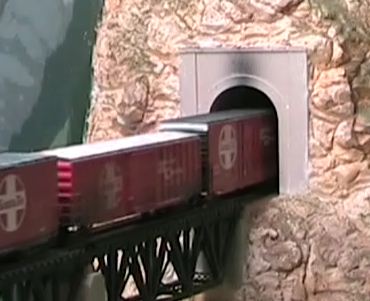 There are various ways to construct scenery. This method for making mountains has been sent in by Harold who has been following this blog since 2005, and who has been involved in the hobby for 35 years:
Model railroads are deemed incomplete without background scenery. Build landscapes at home to reduce costs. A simple mountain with a tunnel can be built by following the steps below.
Add your comment below.
More MODEL TRAIN TIPS
384 model railroaders responded to our last poll which asked:
Do You Repair Your Own Model Train Stuff?
Results were as follows:
– In addition to doing ALL minor repairs including dismantling and cleaning motors etc. I ALSO install and replace decoders, program decoder functions (29%)
– As well as ALL minor repairs I dismantle and clean motors, replace motors, and clean gears (22%)
– I do minor repairs, AS WELL AS some repairs such as removing train body, replacing bulbs, resoldering loose wires (22%)
– I do some minor repairs eg. tightening screws, clean wheels, touch up paint, traction tires, replace couplers, sliders or pantos (15%)
– I don’t do my own repairs (8%)
– I also do repairs for others (4%)
Jim asks readers for advice:
“I run DCC on my layout. The ho scale train will run then it will stop then power back up… then run… then it will stop… and power up. What is the problem thanks?”
Add your comment below.
Bob asks readers for advice:
“I have a very old and running Lionel Commodore Vanderbilt train set – locomotive, coal car, fuel car and caboose. I need to replace the transformer – what do you recommend?”
Comment below.
Bobby want to hear reader’s opinions and asks:
“I am in the U.S., and have acquired a OO gauge Hornby London 2012 train pack R2961 (no track or transformer). The loco is designed to run on variable 12V DC power supply. I have a Bachmann HO transformer #46605A. Will that operate this train without harm?”
Add your comment below.
Jack has a request for readers:
“I am in need of a wiring diagram for the Ringling Brothers American Flyer Whistle. I need the complete diagram, the wires on the bottom of the whistle have been removed and I want to restore this whistle.”
Joe asks readers for advice:
“I need a wiring diagram showing the connections for 3 LGB semaphores automatically stopping and starting trains in a simple loop; non-dcc; train power from the track via a transformer. Can someone please help.”
Answer below.
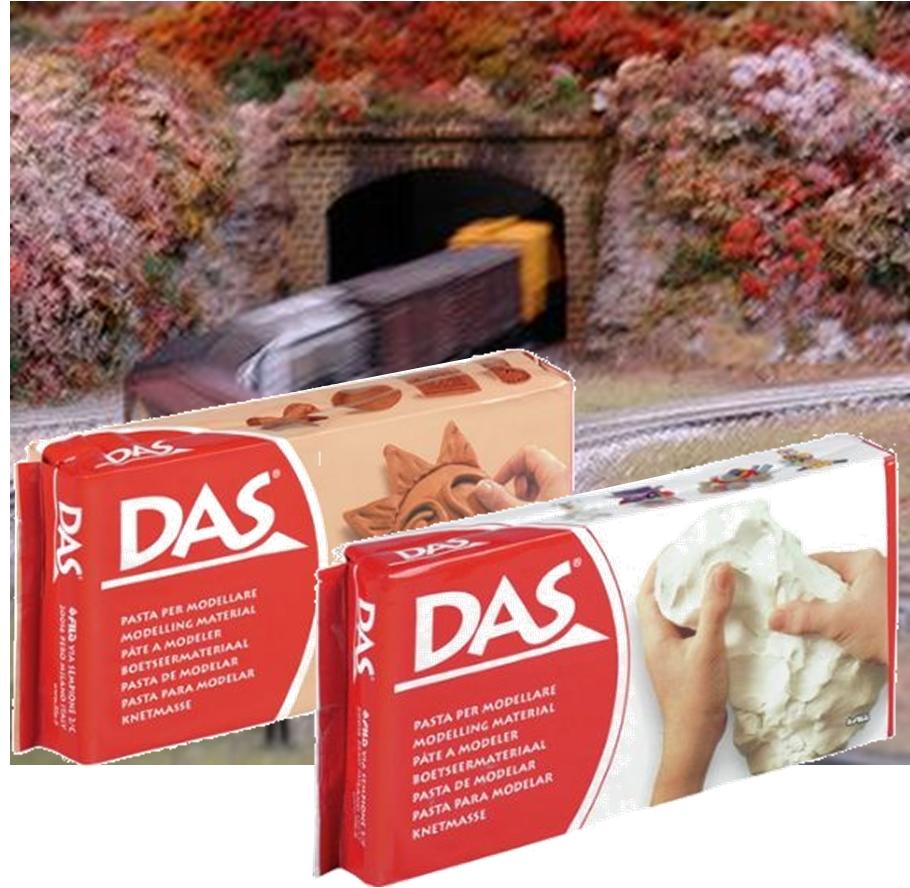 I don’t generally promote particular brands or products, but this is product I have used with success. Das is a cold-cure modelling clay ideal for constructing the base for groundwork e.g. indoor floors, areas of outside land etc. It is also useful for constructing buildings and structures. No baking is needed (it air dries), it is easy to smooth, and can be painted (it comes in white or a terracotta color). White is probably best if you are going to paint it in light color shades.
I would be interesting to hear what other products people use, and what uses they have for Das or other clay products. As I said at the beginning, I am not here to push any one brand over another, so if you can suggest something better I would be interested in your comments.
Add your comment below.
Sam sent in these thoughts:
“Many people erroneously believe that electrically controlled model railroad networks can’t provide speed control, backward and forward movement and many other sophisticated controls that DCC compatible model railroads have but this assumption is very wrong. If it is so, why are some of the best laid layouts these days controlled with DCC? The answer is simple; setting up electrical layouts with complex setups and sophisticated operational setups is a task that consumes several hours and massive technical skills. DCC on the other hand is easy and can be setup effortlessly although it is a little expensive.”
The techniques used for achieving good looking and reliable solder joints are not difficult to master. Yes, it will require some practice, but anyone can do it.
There key points for creating high quality solder joints on track are:
1. Keep your works surfaces and tools clean.
2. Use acid based solder paste flux.
3. Purchase a good quality soldering iron (with a replaceable tip). A small diameter solder – a .020 inch or smaller works best.
5. For soldering track a 35W to 45W pencil type iron works well.
Our recent poll asked model railroaders: What type of railroad do you prefer to model, a prototypical railroad that exists (has existed), or a fictional railroad that you (or someone else) has created?
Hundreds responded and the results were as follows:
– Fictional (71%)
– Prototypical (29%)

Smooth operation is critical for the efficiency and profitability of real railroads. Applying these techniques can also make the hobby of model railroading even more enjoyable.
Article supplied courtesy of the online Model Train Club.
Whether you are operating your model railroad just casually for fun, or whether you are trying to replicate actual operations of a real railroad, there are various factors to consider. After all, there is no point in just having trains backed-up with nowhere to go. A real railroad would come to a standstill (and soon go broke) without properly managed train operations. Even on a model railroad, complete disorder and confusion and quickly develop without properly organized train movements. Factors to take into account include:
Line Capacity:
Yard Capacity:
Equipment Capacity:
Crew Capacity:
Although most railroads would like to operate at 100% capacity (to maximize profits), it is not usually feasible or economic to do so. A target of 70% to 80% is usually more realistic. In fact; industry practices generally require standards to ensure fluidity of operations and to avoid major operational issues at track choke-points.
Various factors can influence efficiency and the practicality of running a line at full capacity including:
To try and increase the operational capacity above an effective level can be problematic. It could be achieved by deferring maintenance, but this could affect future capacity if there is a signal breakdown or derailment that could have been prevented with regular maintenance. It could reduce the railroad’s ability to react to a situation and/or increase the recovery time following a delay or stoppage. This could affect reliability, customer satisfaction, and potentially impact the profitability and reputation of the railroad.
Efficient train operation therefore needs to (among other things) :
These are the kinds of day to day challenges facing a normal real-sized railroad, so why not apply similar conditions to your model railroad layout? Replicating real life conditions can add considerable operational interest to a layout and make the hobby so much more enjoyable!
Article supplied courtesy of the online Model Train Club.
 The further away you stand from an object in the real life, the duller (or grayer) and less clear it appears. The viewing distance for models doesn’t usually vary much with their scale, so the smaller the scale, the duller the colors need to be. You can achieve this scale effect by mixing colors (full-strength) with varying amounts of light gray, white, or gray-blue.
Keep a note of any special paint mixes you make up. This is really helpful if you think you might need the exact same color again. You can do this by spraying or painting the color onto a scrap of white card and recording the details alongside.
There are more scenery ideas in the members area of the online Model Train Club.
Donn asks readers:
“I have 4 Bachmann diesels, all with on board dcc, and I want to add sound. Is there a printed how to manual or something to show step by step instructions? I am new to this. Thanks”
Comment below.
Chris has a question for readers:
“I am about to build a unit of our local suburban railway station,and have reasonable dimensions of buildings etc. but I am finding it difficult to transfer these to OO scale can anyone help? Thank you.”
Comment below.

The tortoise is constructed with a precision gear drive mechanism which is coupled to a low-current motor to stall out safely avoiding coil burnouts and cut-off contacts.
Tortoise motors are slow motion motors that will deliver realistic slow motion movements for your locomotives and their patented technology avoids burning out of the layout. The tortoise motor is an essential accessory in your railway layout if you want to achieve realistic slow motion movement. The gear drive mechanism of a tortoise motor puts less stress on your locomotive’s engine and can prolong the lifespan of your model railroad network with minimum maintenance.
The Tortoise motor is designed to be mounted below a model train layout with a spring wire transmitting linear movement through the layout baseboard and the roadbed to a turnout throw-bar. Your turnouts need to be inspected for free points movement and there needs to be a clear area below the layout so you can mount the machine.
The Tortoise motor is very versatile when mounting it, however it should be noted that when a turnout binds it will not switch smoothly. You will need to make a small hole (or slot) directly below the throw-bar. This hole is usually positioned between the rails, however is could be outside the rails if you prefer. The hole size of should be twice the total turn-out throw (a 1/4-inch size in HO). Also, you will need to drill a small hole in the throw-bar so your spring-wire to get through.
There may already be a rivet in the turnout throw-bar for this purpose. If your turnout already in place, you can drill a tiny (.032 inch to .040 inch) pilot hole in the center of the throw-bar. Also drill through your roadbed and the baseboard. Then calculate the combined thickness of your roadbed and baseboard before marking your 1/4 inch bit with some tape (or you could use a drill stop). The next step is to use your pilot hole as your guide to drill up through the baseboard and your roadbed. Take care not to break through and damage your throw-bar. You may need to bend the throw-bar away slightly from your roadbed to avoid damage. The last step is to remove any leftover roadbed (use a hobby knife) and then clean up the hole.
Andrew sent in this hobby tip:
“Perfecting your soldering skill is essential to own a stunning model rail network because spotless work not only looks good but also provides adequate grip and a flawless running platform for your engines and cars. You need a 100W gun and resistance soldering tools for the jobs such as installing etched metal kits while rosin core solder will help you to do a fantastic job. You also need a sanding block to clean the parts before the solder job and the joints must be cleaned after the job as well.It works for me.”
574 model railroaders responded to our last poll which asked: How complete is your model railroad?
Results were as follows:
I haven’t started yet (17%, 100 Votes)
5% finished (I’ve just started) (17%, 98 Votes)
15% finished (13%, 72 Votes)
25% finished (15%, 88 Votes)
50% finished (19%, 111 Votes)
80% finished (15%, 88 Votes)
100% finished (4%, 17 Votes)