Everything on model trains, model railroads, model railways, locomotives, model train layouts, scenery, wiring, DCC and more. Enjoy the world's best hobby... model railroading!
“I have HO rolling stock from kits from 60 years ago to more recent times and would like to make one pass through standardizing the couplers. I like the appearance of the Kadee couplers on the older kits, but there are so many varieties of Kadee couplers, I’m lost. What is the difference between different Kadee couplers? Why would I choose one Kadee knuckle coupler style over another?”
If you can assist David, please use the green feedback and comment link below.
Readers can comment below.
A reminder to readers: My two new model train ebooks are now available at http://www.model-train-layouts.net/ . They are a follow-on from my “best-selling” Model Train Help ebook.
Eddie has a question for readers on DCC sound and asks:
“I have several Bachmann Spectrum steam locos, all with DCC. I would like to add sound to them .2-8-0, 4-6-0, 4-4-0, 2-4-4 forney and a rail bus. I have tried several dealers but none have answered me. Do I have to change the DCC chip or can I just add a sound chip to it? I would appreciate any help with part numbers etc. I am new to DCC so any help would be great.Thanks.”
If you can help Eddie, please comment below.
Jody will be very interested in one of the sections in my new ebook being released soon as it deals with micro layouts (among other things). However, in the meantime, Jody has a question for readers:
“I am a miniaturest working in very small scale. I would like to make a train layout in the smallest possible scale. How tall are the houses, etc for z scale? I cant seem to find any measurements for z scale trains, and I have been unable to see one for myself. Also, do they make any working trains in dollhouse scale? I am guessing this scale would be about a half inch for the engine, but I’m not sure. Anybody out there who can help? Thanks.”
Add your suggestions or comments below.
I have been very busy over the past year or two working on two new e-books for the model railroading community. They are now finished and are a natural follow-on to my popular Model Train Help e-book.
If you are planning to build a model train layout, or plan to work on your existing layout over the next few months, then you’ll find these e-books really helpful and inspirational. Have a look at http://www.model-train-layouts.net/
If you haven’t already got the Model Train Help e-book, then grab that first so you’ll register on my customer database. These two new e-books are totally different and are not a replacement. They are a natural follow-on to Model Train Help.
Jay shares his comments on DCC:
With DCC:
You have, Constant lighting, programmable consisting, acceleration, motor control, Effects lighting, and the ability to address each locomotive even if they are on the same block, and many more features.
With DCC & Sound:
You have all the above plus the actual sound of the prototype locomotive, I am addicted! Warning: Once you run you system with sound, you may become spoiled! Too much realism? Yes, and that is great!
Comment below.
John wants to build an HO layout and asks:
“Can I build an HO layout on a 36″ X 80″ platform? If so Where do I buy the layout plans?”
Comment below.
Here is a problem that affects many in the hobby. Geoffrey asks readers for advice:
“My locos have a habit of stopping dead I don’t know why. I clean the track regularly, but cleaning the wheels on the locos is impossible because they wont turn. Dismantling is not on unless I know what to look out for. So I need some advise please.”
Add your suggestions below.
It doesn’t sound like Tom has bought my Model Train Help ebook yet… and needs to.
However, in the meantime, perhaps someone would like to give him some suggestions:
Tom asks:
“I have my desiginated space for a layout established, but now where and/or how do I start. I have a list of things I want on my layout, but no idea how to get started. Help!!”
Add your suggestions below.
Jay has sent in some thoughts on the advances in model railroading:
The newest equipment available today has all of the best perks for good performance:
Can motors:
The big advantage that can motors have is that they are pretty much sealed, and keep out dust and dirt. They also have higher torque at low speeds, and are over all much smoother, and draw a lot less current.
Flywheels and dual flywheels:
Flywheels really make a locomotive run smooth. They will carry you over dirty spots in the track and give the locomotive the effects of “Momentum” starting slower and stopping slower or a bit of coasting.
All Wheel Pickup:
What could be better than having all of the wheels do their part in conducting to the energy in the track? The more the better to get over turnouts, crossings and dirty track. It really aids in smooth operation.
Chris has a good question and is hoping someone can advise him:
“Can someone point me in the direction of suggestions for storing model layouts. At present I have mine hinged so that it can fold up vertically, but am interested in other ideas.”
Readers can add suggestions below.
Chris might also be interested in reading this earlier posting about Colin’s HO Farrer Siding Foldaway Layout
http://modeltrainsetshelp.blogspot.com/2009/02/ho-farrer-siding-foldaway-layout.html
Over the next few days I will publish some excellent ideas contributed by Jay the “super tech”. So keep watching this space!
In the meantime here are a few words from Jay…
You touched on a subject near and dear to me, as I have been buying and selling used trains for over 24 years. I do consider myself an expert at repair in most model trains, in fact I like to say that if I can’t fix it, it can’t be fixed. My background is a development engineer in electro-mechanical systems. I spent 18 years at the Hughes Research Center in Malibu Ca.
I buy lots of used train items, and hardly ever pay retail. Even though I try to be careful in buying used equipment, I expect that I may have to fine tune or repair the stuff. I love the old heavy die cast HO equipment, and like to bring it into the modern world with sound and re-motoring etc.
I have entered the DCC/Sound world about three years ago, and love what is out there, great stuff. I use a laptop and JMRI to program my decoders. I have the North Coast Engineering and digitrax systems to run DCC. I also have a very large collection in HO, HOn3, and G-scale including six live steamers in G.
I have installed sound into G, HO, HOn3 & N-Gauge Locomotives using the PBL system the sends the sound signals to the locomotive down the rails.
The PBL system is becoming outdated, but it is an excellent system to use. The real challenge is combining DCC & PBL systems into my layout, as one conflicts with the other, I have a selection switches in order to run both systems. With the PBL system, you can put sound and lighting into a locomotive for around $10 each, not too bad compared to DCC with Sound. I have so many locomotives, that I don’t expect to ever run them all with DCC, but the PBL will allow me to run them at a much lower cost.
Being retired, I do spend a lot of my time working on trains, I still buy, sell, trade and collect trains because I love it, I can’t stop. I will be selling some stuff soon on Ebay, as I decided to thin my collection a bit, under the handle “Jayofto”. Keep up the good work!
Robert comments…
Thanks Jay, for sharing your thoughts with other model railroaders. We need more people who are prepared to help others in the model railroading community. Unfortunately sometimes we are inclined to be secretive and keep our ideas to ourselves. It is a shame, because so many people who read this blog would benefit greatly from the ideas of others. And, I know there are a lot of very experienced and talented model railroaders out there.
Remember, to watch this blog in coming days for some of Jay’s ideas that he has kindly contributed for publication. Share this on Facebook and Twitter using the buttons below.
Dave has an unusual problem with his HO trains that he is hoping someone can help him solve:
“I have a limited edition Gresley Brittania from Hornby, the Royal loco with the white roof. It, and my other trains have been in storage at my parents place as I now live in Phuket (Thailand) and have not yet had opportunity to bring them over safely. On a recent visit to Australia I went through all my stuff. While in storage the whole thing, especially the electric motor in the tender became infested with ants. Rubber bushes and tyres no longer exists, steel tyres have fallen off the wheels, and more. Is it possible to fix? How would I go about it?”
Comment below.
Also, remember you are welcome to share postings on this blog with your friends using the Twitter and Facebook buttons below.
Kevin is interested in converting to DCC and asks readers for advice:
“I have absolutely no knowledge of DCC. My current small layout is using DC power, but I am thinking that as I want to expand my layout etc. I should look into DCC. What is needed? And, is this a good thought. I only have 2 locos at this stage so to either sell them or convert would not be a major hassle. I would also like to use Bachman track as I do have some at present and like it’s style but find that it is most dificult to locate 3 foot lengths. Do thay make it and where would one be able to check it out.”
Comment below.
Michael has a question for readers:
“I started with a G scale set but have now realised there are a lot more (accesories) and trains for HO modules. There are some Bachmann and Marklin set I’m interested in buying. My question is can they be interchanged as they are both HO scales?”
Comment below.
Timothy has a question for experienced model railroaders and asks:
“I just retired few months ago after almost 30 years with postal service, I decide to make train model for my hobby. Here is question, I’m going use my old bedroom door, layout size is going to be 36 in wide and 80 in long, what you would recommend size for gauge for that size. Also which train set I should use for first time?”
Add your comments below
Remember if you see something you like on this blog and you would like to share it with friends in the hobby then your welcome to use the facebook and twitter buttons bellow each posting.
Also if you have a website you make like to add the RSS feed in the top right hand column. To add a live feed of this blog to your own model train website.
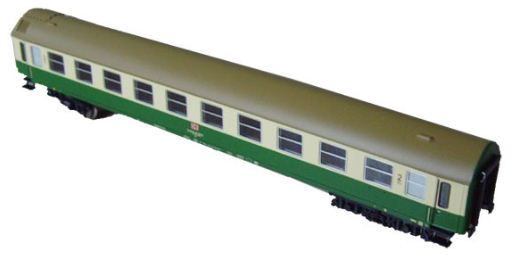
Charles would like help from anyone with experience putting lights into passenger cars and asks:
“I would like to install interior lighting in some of my HO scale passenger cars. Is there a set of How To instructions that I could use as a guide in doing the installation of the lights?”
Add your suggestions below.