Everything on model trains, model railroads, model railways, locomotives, model train layouts, scenery, wiring, DCC and more. Enjoy the world's best hobby... model railroading!

Make sure any vehicles and rail crossings are from the right era. One idea is black washing the grilles and hubcaps to add depth and realism. Using a small brush you can also paint tail-lights, parking lights and door handles if needed.
Then consider taking the cars apart and install drivers and passengers. Nothing looks more fake on a layout than vehicles seemingly driven by invisible ghosts! You can purchase miniature figures in male, female and child variations all molded in ‘flesh’ color. The arms must be attached by gluing. Then the figures can be painted. Sometimes, the figures won’t fit between the steering wheel and the seat. It sounds a bit cruel but you simply cut the legs off with pliers and they fit just fine.
Use flat (rather than glossy) model paint to make painted clothing and hair look real. Keep things to the right scale relative to the trains. More ideas in my Model Train Help ebook.
Phil also has a G scale layout and asks:
“I have put down my LGB copper track on hard plastic form (cannot remember manufacturers name). I will now fasten every other section to this base. Unfortunately this layout is under some trees and accumulates leaves and debris. I am looking to glue the crushed stone and gravel. However, no-one seems to be able to help me with this process. What adhesive should I use and how do I accomplish this? Im looking to maintain the layout with the least amount of work. I would move it but it works around and over my Pond.”
Add your comments below and remember to use the Twitter and Facebook links under this posting to share it with friends.
David has a G Scale layout and asks readers:
“How do I connect my LGB motor points to my Bachmann dynamis via a ESU point controller. I would like to understand the wiring diagram as the LGB points only have two connections and you have to reverse the connections to open and close them.”
Add your feedback below.
It is good to hear so many are returning to the hobby. I’m sure this blog will be a big help.
John ask:
“I am going back to model RRing after over 30 yrs and putting the rock down for the tracks has been time wasting. I thought about doing this. Take clear packing tape, sticky side up, then place the flex track in the center of the tape. Once the track is secure, then put the roadbed rock down on the tape. I have not tried it as it, due to moving, but has anyone else tried this? Glue would then not be necessary.”
John, there is some good advice on track ballasting in the model train help ebook.
Ian wants to hear from others in the hobby who have experience with couplings:
“Hi everyone. I have just come back to model railways again but I have found a problem. I have quite a few trains and rolling stock but I’m unable to interchange my coach stock as most of them are different couplings. Is there a standard fitting that would fit all?”
Comment below.
Jim has a question for readers and asks:
“I have an old Tyco analog locomotive that I received for Christmas as a child. It is in excellent shape and I would like to use it on my current layout. My set-up runs on digital power. My question: Can I replace the trucks on the locomotive with new digital ones? If so, can I buy just the trucks as opposed to buying a new locomotive and swapping the trucks?”
Add your feedback below.
Ian has a comment and question on coal stations. Perhaps readers would like to share their views on the subject. Use the comments link below this posting.
“Why did the German railways use such a clumsy way of replenishing their coaling stations? According to all the model makers, the coal was delivered in gondolas/open wagons. Plucked out by a crane with a clamshell scoop, then dropped into the overhead coaling station. The dregs would need to be scraped up with shovels. Australian/British/US stations were easier to load: a long ramp to drop the coal straight in from hopper cars, or a hoist which ran up the back.”

Mike wants guidance from others in the hobby on lubricating trains.
“I am somewhat new to this. What parts of the engine need oil/grease? Do the cars need oil/grease? Is there a diagram I can use as a guide? Thanks.”
Add your feedback below.
Also rember to subscribe to the free RSS feed of this blof. See little orange symbol in the right column.
Roy asks readers:
“What is the smallest radius for a six wheeled bogie diesel engine in N scale.”
Add your feedback below.
Les is new to DCC and wants some advice from those in the know:
“I’m building my first DCC layout and am thinking of using another transformer for the accessories (lighting, etc). Is this going to save me any amps for the engines? It’s a 12 X 8 feet layout and I have 9 dcc engines out of a turntable. I’m using a Hornby Elite system with Sapphire Decoders.”
Add your comments below. Also use the Facebook and Twitter links to share this blog with others.
Tips on model train ballast
Ron is a newbie who needs some advice from those who have been in the hobby for some time. Ron asks readers:
“I am fairly new at this hobby. I have built a new layout using DCC controls. I have a number of engines and cannot reset the controller to the new engine codes. I have followed the manufactures directions but obviously doing something wrong. Any help appreciated.”
If you can assist Ron, then please use the green comments link below to add your feedback.
Remember, you can also use the Facebook and Twitter links below each posting to advise friends of what’s happening on nthe blog.
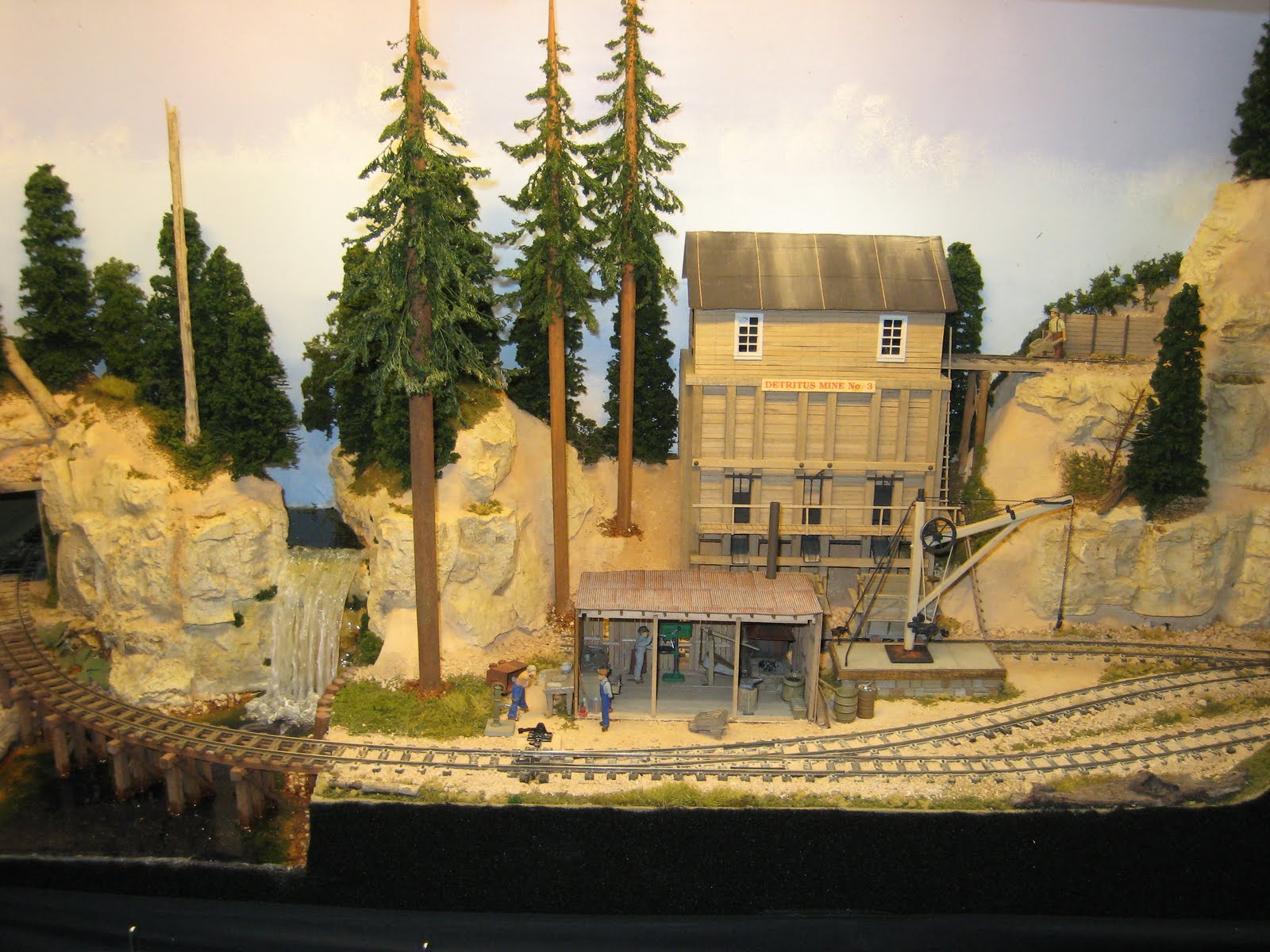
Many model railroaders scratch build their structures using balsa wood. To add a wood grain effect, use a metal dog comb, and run it along a test piece of balsa. This should produce marks on the balsa like wood grain. The trick is to use a comb that is the correct scale width.
Visitors to your model railroad layout will not always spot the little details straight away, but the longer they watch the trains operate, the more chance they have to notice the elements that add amazing reality to your layout. Their faces will instantly light up, as they suddenly spot something interesting that captures their imagination.
More clever model railroad tips.
Joe has a question for those who have been in the hobby for a while.
“Does anyone make an attachment for a six axle engine that will keep the wheels on the rail after hitting a high spot are a turnout? I was thinking maybe someone would make a derailler that fits under the carriage and guide the truck? Thank you for your help.”
To assist joe use the green Comments link below to add your feedback.
You can also now share individual blog postings on Twitter and Facebook. See the links under each posting.
Here is a new free service for readers. I have added an RSS Feed link at the top right of this blog. Look for the little orange symbol with the word “Post” next to it.
The orange rss feed symbol means you can add a direct live feed from this blog to your web site or to your personal computer. So when something on the blog gets updated you will automatically know. You will be up to date with the latest model train questions, answers and tips.
If you (or your club) has a web site, then consider adding the RSS feed from this blog to your site. It will keep your web site fresh and regularly updated without you having to supply all the content yourself.
If you scroll down this page you will see that this blog gets updated very frequently, so it is well worth adding the RSS feed to your model train site. It might even help with your search engine rankings, because this blog is a popular and respected site. The RSS feed looks like this http://modeltrainsetshelp.blogspot.com/atom.xml
If you are unsure how to add an RSS Feeed Reader to your computer desktop, then there are several youtube videos explaining how to do it. It is really easy. Here is one video I found that will show you how http://www.youtube.com/watch?v=NLKZrsotvsQ
Joe has a mathematical question for readers:
“What is the calculation for converting HO measurements to S measurements?
For example, if I see an HO layout I like and wish to convert it to my S layout.”
Add your feedback and comments below.
Kim has a very brief question with not a lot of details and asks readers:
“How do you take the ringfield motor out of the frame of the tender please?”
Perhaps Kim could use the green comments link below to add some more details to help reader answer the question.
Scott wants to mix 0 scale MTH with Lionel and wants advice from others in the hobby:
“Is it worth it to wire my new layout to be able to run mth trains with my lionel trains since I have not started laying my new layout yet. I have all lionel and no mth stuff yet, but I am thinking about setting up to run both. Mth does have some nice stuff and I like the feature of being able to add my voice to the engines and to be able to play music through them, especially for a christmas train layout. I need input on this please.”
Comment below.