Everything on model trains, model railroads, model railways, locomotives, model train layouts, scenery, wiring, DCC and more. Enjoy the world's best hobby... model railroading!
Here is your chance to help others in the hobby. A reader is hoping to hear from anyone who has experience using a sprayer to distribute cement and asks:
I have been a work cementing down the ‘earth material’ as my base for the grass that I will be laying on top for my layout. However, the directions on the cement state that I need to use a sprayer to distribute the cement over the earth material so I can sprinkle the grass material on top.
I bought the sprayer and it sprays a nice fine mist when I tested it out with water but the cement does not come out as nice, even when mixed with water.
I am using the earth and grass materials because it was cheaper than using the grass mat you can buy. Now I know why it is cheaper!
It is very tedious work and wondered if anyone has any suggestions that might make this process a little easier.
Use the green comments link below to add your helpful suggestions.
Pat was some ideas from anyone in the hobby who has experience with adding lights and action to a layout and asks:
“I am helping to build a model railroad scene for my 5 year old grandson. He wants lots of lights and action. I am not quite sure how to do this. I am unsure of how many transformers I need and how to wire the scene. Are there rules to follow?”
You can help Pat and his grandson by adding your thoughts to this posting. Simply click on the green Comments link below and register (if you haven’t yet done so). It takes just 2 minutes to register and then you can participate in future model train discussions.
A reader asks for help from experienced railroad hobbyist’s and asks:
“I have two HO F7A Santa Fe engines with horn type couplers. All of my rolling stock has knuckle couplers. How do I change the horn type?”
Add your Comments to this posting.
RJ asks:
“How do you fix/repair a stalled/stuck drive gear set, on an older Bachmann steam locomotive?”
Add your feedback using the Comments link.

My interest in trains started when I was 7 years old and stayed in Bloemfontein, which was in the early 1950’s.
I was scholar at Grey College in Bloemfontein and was in Grade I and after school used to go to the Boarding Establishment to have a meal and complete my home work very much an after care situation, but I had better things to do than sit and do homework as soon as I had my lunch I would wait for the right opportunity and would board the bus for town and head straight for the Bloemfontein station and in those days steam ruled the rails in South Africa and Bloemfontein was a busy centre with trains back and forth all day long and plenty to see and was a hive of activity all day long.
I would sit on the wooden benches and just watch the giant engines flashing through the station as they ran either northwards or southwards, some stopped whilst others just went through slowly with their loads. The locos which were predominant at the time were the Class 16E, 15E, Class15F, class 16DA and the Class 23 if my memory serves me right and I would love to go and talk to the driver and fireman as they sat in their giant stead’s awaiting the signal to change and move on with their journeys.
Often I would walk down to the engine sheds and just watch these magnificent engines standing in the sun gleaning, with steam hissing out everywhere whilst they were being serviced prior to their trips, and had also made the acquaintance of some of the drivers who worked on the their engines and was always as a little boy, mindful of the dangers that lay in these yards and as I now think back and my mother would have had a heart attack if she knew where I was playing truant, but that was my world as little boy in my school uniform and little peak stripe hat. Just imagine a 7 year old walking beside these giant engines looking at the wheels and the fronts and anything that interested me as I loved to watch them go about their duties shunting rakes of engines from one line to another or shunting coaches into the station for their next trip to who knows where too.
My wish in life was to drive one of these monsters and become a crack engine driver of a mainline train, but this was not to be as the Lord above had other plans for me in mind.
I often would catch the train to Kimberley with an elderly couple who adopted me (part time) as their own son was tragically killed in a freak gun accident, and remember one particular trip behind a class 15F as we went from Bloemfontein on the way-sider stopping at all stations to collect parcels and cans of milk that were put in the cool wagon which was a wagon with netting filled with coke (not the drinking kind) over which the cold water ran and this kept the milk cool for the duration of the journey, until it reached it’s destination and would be collected by the diaries concerned , however the Class 15 F was a wonderful locomotive, the grey hound of the railways and was used on most goods and passenger trains at the time out of Bloemfontein.
I remember to this day the “stack talk” that was emitted from the engine as we raced towards Kimberley as dusk fell over the veld, the smell of steam and smoke filling the compartment which was wonderful plus the a blur of sound and scenery as we raced towards our destination and those were the days of magical rail travel.
I then moved to Johannesburg for a year and lost my wonderful world of trains, but my father would take me to Zoo Lake where I would ride the miniature train that was there. Being in school in Meyerton I often travelled by train to school and back and remember going past the airport Palmietfontein and being hauled by the Class 15F to Vereeniging and getting off the train and being pick up by the school lorry a Gutbrog to be taken back to school with my luggage etc.
But my luck was about to change, as a year later, I moved back to Bloemfontein and then to Boarding school at Worcester where I attended school in the Cape, whilst my parents moved to Cape Town.
That was when my love affair with trains really got started. In Worcester the hostel and school was a mere 500yards from the line much to my liking as I was now able to observe all train movements going South to Cape Town or going north past the school.
It was my clock as at certain times certain things happened and if my memory serves me correct on Tuesdays the dynamite train would arrive at 2.45pm and reverse into the siding to allow the axles and bearing boxes to cool down, whilst on a Monday and Thursday the old blue train would arrive at Worcester at +-3.00pm and it was like clock work whilst the Orange Express would arrive at Worcester at +- 5.00pm and the Port Elizabeth train at 8.00pm and on a certain day at +-5.00 pm the Rhodesian Mail would be going north whilst all trains stopped at Worcester going to Cape Town from early morning +-5.00am and 9.00am and then headed for Cape Town.
Another hobby was to sneak out of the hostel and go and sit along side the bridge and write down the numbers of each coach as they went north and on their return we would be able to see how long it would take for the carriages to come back to Cape Town. It would happen to the locomotives as well, call it “train spotting” if you would in an older version.
Occasionally you would see the odd Class 25 heading to Cape Town for a major service and see them hauling trains northwards after their services.
Once again my stomping grounds were the old Worcester Steam sheds and also got to know the drivers and would often just sit there and watch then shunting or being coaled and maybe cleaned. Worcester at that time had a number of Class15F and GMAM that worked through to Riversdale area and some smaller engines that did the local shunts.
It was in this period when either a Class 25’s or 23 locomotives steamed hauled trains from Touws River northwards.
In the late 1950’s my parents moved to Pretoria, which afforded me the opportunity to travel by train twice a year, which was a highlight on my school calendar. The trip was a two night trip leaving Worcester at +- 7.00pm and heading into the night and over the Hex River Pass and onto Touws River where the electric Class 4E would come off and be replaced by a Class25 or Class 25 Condenser more likely the latter for the run northwards.
Morning would find one self just past Beaufort West and the rest of the day would be spent walking up and down the train in the corridor or sleeping in the hot stuffy afternoon as we sped through the Karoo with a Class 23 hauling the train and at 5.00pm would arrive at Kimberley and heading into the night and morning would find us behind the Class 3E near Johannesburg, but one thing that comes to my mind is the meals on the train, the crockery, stainless steel cutlery and the white table clothes together with wonderful meals that were put out by those dedicated kitchen staff and walking over the open end balcony coaches and feeling the wind and soot in your hair and to be able to see the locomotive pounding the steel rails and the headlight piecing the dark with the glow of the fire bouncing in the night sky above the cab of the engine and the sound of the blur of staccato stack talk as we sped north.
From Johannesburg the three coaches were attached to the Metro train and the rock and rolling really started as we sped to Pretoria at speeds, which were quite frightening at times.
Then in early 1959 my parents moved to Pietermaritzburg and then did a number of trips on the Orange Express from Pietermaritzburg to Worcester for some three years.
Once again the train in it’s Maroon and Cream livery looked very good as it rolled into the majestic Pietermaritzburg station which was built in the 1880’s, ahead of the train were two Class 5 E locomotives.
The bells rings and the signal turns green and were off soon winding our way around the hills with Maritzburg twinkling lights sprawled beneath us and soon we head for the newly built Cedara tunnel which is 8 kms long and soon we pop out into the cold midlands night heading for Ladysmith where two or three Class2 E took the train over the Drakensberg with their motors whining as they climbed and braked around the corners and finally arrived at Harrismith in the early hours of the morning where the Class2 E were replaced with the Class15F for the run through to Kroonstad and it was a brisk run, sunrise would find us +- 1 ½ hours from Kroonstad and as the sun came up and the rattling on the doors as coffee was brought to the passengers and eventually we would halt at Kroonstad, where the guards van would be taken from the back of the train to the front which would now become the rear whilst the front had a class 23 locomotive and setting off through the Free State we would go and enjoy a wonderful breakfast like only the Railways could make and oh the that coffee so good.
Around 11.00am we would arrive at Bloemfontein for ½ hour stop and change of locomotives and could have been Class15F, Class23 or Class16E to Kimberly station.
Once again an ½ hour stop and we would make a bee line for a shop that sold the wonderful root beer and on one occasion missed the train and the station master had to take three of us by car to connect with the train at one of the stations further down the line and this old Oom (Uncle) grumbling all the way and that was the last time we ever disembarked from the train, anyway the locomotive would be a Class 25 NonCondenser or Condenser, whilst the condenser was quite and the turbines fans whined liked a jet aircraft, and the smoke was another story plenty of black sooty smoke, but who cared it was the zenith of steam and we never gave it a thought that these engines would one day disappear totally from the railway scene in time to come.
Most the afternoon was spent watching the scenery passing as we went southwards into the Karoo and sunset over them koppies (Hills) as we raced towards DeAar.
Soon it was time for dinner and we would wait for the gong to ring and head through the vestibules to the dinning car and such wonderful meals were served soup, fish and the meat dish with vegetables and the puddings and coffee and off to compartment we would go and sit chatting about this and that and eventually fall into the clean bed that the bedding porter had prepared for us. And soon darkness over took us and we drifted into a deep sleep with the sound of the wheels clicking over the rails and the engine pounding through the night taking us closer to Cape Town.
DeAar which was a prominent junction was reached in the late evening and Beaufort West in the early hours of the morning and this is normally where an engine change takes place for the next segment to Touws River which would have been a Condenser or a Class 25 NC and soon the sun starts to rise as we speed over the Karoo and all to soon the coffee is served and soon we are winding our way down the Hex River Pass with a Class 4E leading us and all to soon the first vineyards appear as the approach De Doorns and soon Worcester is reached.
Those are the trips that I will all ways remember and treasure and unfortunately not many people these days will experience that form of laid back travel some times I would term it luxury but be as it may it was a wonderful time of our lives.
In the early 1960’s I moved to Pietermaritzburg and lost interest in the railways for a number of years with girl friends etc and work but in the late 1980’s renewed my interest in trains and often went to Masons Mill on Saturdays to see long lines of S2 with their van der Bilt tenders, parked forlorn in the veld and many GF’s parked in the sheds whilst if my memory serves me correct there were about 34-36 GMAM parked under the sheds some in steam and a number of class 15CA’s that were used for shunting purposes, one could often hear the GMAM’s double heading going up Claridges Hill on route to Greytown whilst the distinctive bark of the Class 15 CA could be heard shunting at Victoria Road station on the north side Maritzburg as the locals call it. All to soon the sound died and sight of engines died and electric and diesel traction took over hauling the trains.
In the early 1980’s I got involved in the Umgeni Steam preservation and once again the sound of steam was heard in the Maritzburg and Durban areas, at present the Umgeni Stream Society has a fleet of a some eight engines comprising of a GMAM, GF some Class 19 D’s,3BR and some other steam locomotives in operation that operate from Kloof to Inchanga and from Pietermaritzburg to Inchanga on the last Sunday of the month.
So if we do not preserve steam now there will be nothing left of the future generations to see and travel on. So preservation “NOW” is the key word in saving what is left of our heritage of the steam engine and to keep them running as long as possible with the assistance of the public so that people can enjoy a bit of the heritage past of which we are so proud.
I have travelled extensively in Australia by rail and to me there is no other means of travel when one is able to see the country speeding by, you and take in the scenery and meeting wonderful people on the trains and exchange ideas and notes on our respective countries and being ambassador as well.
I was very impressed with the preservation in Australia after seeing some of the railways in operations and talking to it’s members namely Puffing Billy Railway in Melbourne and the Karanda Railway at Cairns in Queensland.
Many of us now operate Model Railways based on the respective protypes that were in operation in the 1950’s 1960’s and 1970’s of South Africa. Trying to relive that fantasy world that we all saw and loved so much but took for granted when we were young and least we forget the railways that took us into this modern age of technology the 21st Centaury.
Then in July 2008 after some 43 years Umgeni Steam railways offered us a chance to travel the steel rails again, this time in the Shozaloza Meyl the new passenger service of rail travel in South Africa, things had changed somewhat the trains the coaches were different very different all steel and compartments were steel with four bunks in the first Class section whilst in the 2 class section the 6 bunk configuration still existed, but we were booked into 1st Class so, we boarded the train in Durban and at Pietermaritzburg were held up for +- 6 hours due a derailment clearing operation and arrived late for the correction to Cape Town and had to be bussed from Heidelberg to Potchestroom a 2 ½ hour bus ride to meet the connecting train which we did and had an enjoyable trip and then at Worcester had to depart the train due to flood damage to the line and arrived in Cape Town by bus rather than by train, after a 2 day stay in Cape Town we boarded the Trans Natal for Durban which is almost a 38 hour trip and two nights on the train and what a trip it was enough to wet my appetite and in November did another trip like this but on the new Premier Class train Durban to Johannesburg and what an experience all the old memories came flooding back to me about the travelling on trains in my youth, beautiful three course meals and silver and crockery and wonderful comfortable beds oh this was the way to travel in future.
Then in May 2009 myself and my wife decided on a round trip through South Africa on the new Premier trains and as said it was wonderful luxurious and relaxing to say the least Durban to Johannesburg then to Cape Town with a week in Cape Town and a trip from Cape Town to Port Elizabeth all the Premier trains luxury personified.
A reader has an AC/DC question for those in the know and asks:
“I have two s gauge diesel locomotives from American Models that are AC powered. I want to convert them to DC power, but don’t know where to start after I remove the electronic reverse unit from the wiring on these. One is a GP-35, and the other one is a SD-60. I plan on installing Digitrax DCC to run them more like the real train. Can someone assist please?”
Add your answer using the green Comments link below.
Hettie has a question for others and asks:
“Is there a wireless digital command control available that is compatible to marklin? Our setup is about 20m long and we have a problem seeing around the corners and chimney wall that’s dividing the room in the attic. Marklin apparently do not manufacture a cordless control to controle the trains anymore. In this day and age everything is wireless. Is there a new product that can be integrated with ho scale marklin products?”
Phil has a Polar Express and asks readers for help:
“How can I make my engine (an o-guage,polar express) to run smoothly at low speed? Also will it help if I remove the rubber tires?
The Polar Express RTR has a couple of extra short straights to make a slightly bigger oval for under the xmas tree. It get’s to the far end of the oval and starts to slow down and almost stop.
I’ve cleaned the track, wheels. I have easured ohms, voltage. I tried a friends loco, does better, but it’s dual motor and alot lighter. I took my loco to a LHS and tried it there and it runs fine. I tried bigger power pack, jumper wire to the other end of the track. I also checked the track connections. I’m becoming very frustrated with it.”
If you can help Phil then add your comments below using the green comments link.
Bill model O/O27 and wants advice from readers on hooking up multiple accessories and asks:
“Is there a piece of equipment that would allow me to easily hook up multiple accessories to a transformer? I have trouble getting so many wires from a power source to the accessories. I am looking for something like a distribution box?”
Use the green Comments link to add your comments.
Stephen has a brief question on trolley direction switches:
“I want to have a trolley just go back and forth on a short section of track (about 5 feet) and switch directions on its own. How do I set that up HO/O & S?
Hopefully he has supplied enough information for readers to add comments and help him?
Use the green comments link below. Richard can add more details using the same link.
John needs help ballasting and asks readers:
“Does someone know of a step by step method of ballasting Bachmann E-Z track? I’m looking for the process using 50% water & 50% yellow glue (I think that is the percentages)”
Add your comments below.
Jose is having electrical problems with his layout and says:
“I have a problem that I hope someone can help me with? I purchased a Aristo craft also fa1. It was on sale because it needed work. Well I love to fix things so I brought it. The problem I found out was electrical. It would short out the transformer.
So off came the cab and I check the motors. The motors attach to a circuit board, Part #22000-68. There are two connections, one for each motor. I set it on the energized track and it shorted.
I then removed one connection and the motor started. I reconnected the other motor and again a short. So I reversed the process. I then disconnected the other motor and it ran. Again I reconnected the two and again it shorted.
Well the next thing I did was to bypass the circuit board. I rewired according to the circuit board connections. Shorted again. I then rewired a basic circuit and both motors ran. I checked and rechecked the circuit board for shorts, rewired according to the circuit board again and again and still it shorts out.
Oh, I forgot to mention that I disconnected the power board from the switch board. I rewired the switch board to the power and motor wires according to the circuit board connections and pop goes the weasel. I am no electrician but I was a mechanic and no a little about basic wiring. I have spent so much time in the garage working late into the night that my wife called me a mad scientist!
Has anyone ever run across this before? Can someone tell me what I can do? I am lost as to what to do next.”
Add your feed or comments using the green comments link below. Register if you haven’t yet done this as you can then participate in future model train discussions. It takes only 2 minutes to register.
Note to Jose and other readers: Please note – feedback and comments are only opinions usually based on personal experiences. It is your responsibility to seek proper professional advice regarding electrical safety matters. We will not be responsible for any accidents, deaths or injuries based on anything that might be said on this blog.
Mike has an important asfety question for readers:
“I have seen some warnings that you can recieve a fatal shock off some componets of a model train layout. I thought we are dealing with relatively low volts(12VAC or DC in HO scale) and low amps(1-3 amps). I understand one needs to be always careful with electricity where is the danger lurking?”
To comment on Mikes posting use the green Comments link below.

Max has a question for those who know about voltages and asks:
“I’m building a z scale layout and need to know if Maklin locomotives and Micotrains or AZL locomotives should run on different voltage? If so, what voltage should I use, and what would happen if I use the wrong voltage?”
Add your comments by using the green Comments link below Max’s posting. After clicking the link you need to register (if you haven’t yet done so). It is quick and easy (takes about 2 minutes), and then you can participate in future model train discussions.
Nick has a question for those who have experience wiring and asks:
“If a wire in any ho scale locomotive falls off, can I reattach it to where it belongs so the train runs again? What do I use to reattach the wire?”
It is a shame Nick hasn’t supplied more details to help those who are trying to help him.
Nick you can supply more details by using the green Comments link below your posting to add more info.
Others can use the same comments link to add a comment or possible answer. Note: after clicking the Comments link you will need to register (if you haven’t yet done so. It only takes about 2 minutes and then you can participate in future model train discussions.
Candis emailed asking me to publish news of a train show in Maryland.
The Great Scale Model Train Show & Railroad Marketplace will be held at Maryland State Fairgrounds, Timonium, Maryland on Saturday October 10 9AM-4PM and Sunday, October 11 between 10AM-4PM.
If you can, then do visit The Great Scale Model Train Show & Railroad Marketplace will be held at Maryland State Fairgrounds, Timonium, Maryland.
Hopefully Candis will be kind enough to send in a couple of photos for publication after the event.
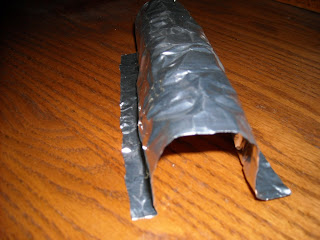
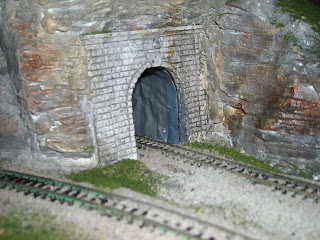
John has kindly sent in these ideas to share with others in the hobby: