Everything on model trains, model railroads, model railways, locomotives, model train layouts, scenery, wiring, DCC and more. Enjoy the world's best hobby... model railroading!
Daniel hasn’t provided much detail, but hopefully someone might havd some suggestions to help him. Perhaps he could add some more details to his post such as solution she has already tried etc.
He asks:
“My lionel sd-40 works on others peoples layout but not mine…any ideas?”
An S scale reader asks:
“I have 3 s scale trains that I am in the process of building a layout. I am looking for a sound sustem.I am told MRC does not make them anymore. Does anyone know of an other vendor?”
Joe asks readers:
“I am old school and running an Nscale DC system on my small layout. Are current keepers compatible with a DC locomotive? Are they small enough to fit N scale? Thank you for your input.”
Don sent in this question:
“When I first started with trains ( adult) size, a gentleman had a layout that 5 or 6 trains in a yard, when one train came in it started the next automatically switching turnouts one after another using reed switches, is any one familiar with this switching?”
Tony M posted this question for readers:
“My question is about adding lights to buildings on my layout. The bulbs I have are 1.5v and my power packs are 19v ac output. My buildings I have that already have lights work ok, but the 1.5v bulbs blow when I hook them up, which is because of voltage difference. I am just a bit unsure how to fix this problem. Do I need a rectifier?”
Chris asks: “I’ve a problem with my HO Atlas (X) cross over in that I get a stall and will not go through. If I power through it sometimes works and others a hesitation. I’m running straight DC with equipment from the 1960-1970’s except for track (Peco & Atlas).”
Franks is hoping someone can assist with this problem:
“I have 2 identical OO gauge BR 0-4-0 Class 06 diesel shunters. At present I have an oval test track. I have fit identical Decoders to both (laissdcc 2 function 6 pin). One runs perfectly well in the direction that the other trains with the same decoder run but one only runs the opposite way. It runs perfectly in forward and reverse but if I turn it round to run the same way as the other trains it will not go in either forward or reverse. Presently I am using a Hornby select controller as I am waiting for the return of my NCE powercab from America. I have tried altering the wiring in the loco all to no effect. Could this just be a faulty decoder or is it something to do with the loco or Hornby select. Any replies would be much appreciated. One very frustrated modeler.”
Brizee is new to the hobby and asks:
“Being a newcomer, what is considered to be the best method of securing N scale Peco Streamline Code 80 flexible track?”
Joseph has this question:
“Guys. I need a straight answer please. When laying HO flex track does it matter how you lay it? It’s about split right now some say out side some say inside some say it don’t matter. Please help I’m really confused. I’m building a 20 x 12 foot layout and I’m looking for the right way and the best way to go about it. Thanks guys.”
Raymond has this question for readers:
“I inherited my fathers 1935 American Flyer Passenger O27 Train set years ago. I have a problem where the front and rear wheels are falling apart. They are made of white pot metal. I cant seem to find any replacements for them. Does anyone have any knowledge of where to purchase replacements?”
Matt asks:
“I need some help with how to power my outdoor O-scale train. I have probably 100 feet of track and I’m assuming the power source that came with my small MTH set will not be sufficient. Can anyone direct me to some help?”
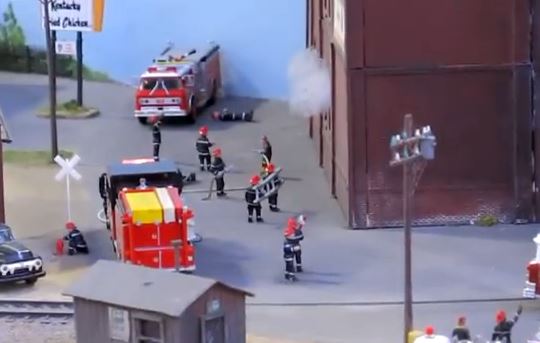
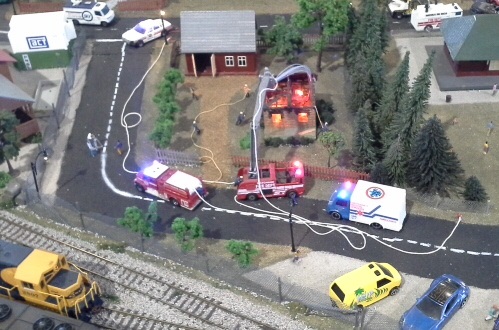
Ron K has N scale and asks readers for advice:
“I want to model a small fire scene in a building complete with smoke, flames, fire trucks etc. Can someone give me some hints on how to make this look real?”
Ron, I included a couple of fire scenes I spotted at recent train shows.
If you would like to have your question published on this blog (10,000 readers weekly), use the ‘Ask A Question’ link below each posting. The best questions get published.
John asks O Gauge readers:
“Has anyone come up with a better check-rail for 0 gauge Gargraves switches (points)? The glued-in plastic ones come loose too easily.”
Art models HO scale and asks this question:
“I bought a diesel train to go along with my grandson’s bachman set. Do I need a different controller for this as it won’t work with the controller the original set came with?”
Derek asks readers:
“Bachmann nickel silver #5 switches and #6 crossovers look good, but don’t operate that well. I’m having problems with derailments when a train enters a turnout. The rails seem to move a fraction, just enough to create a gap. The frogs are okay. The first 4 or 6 engine wheels usually make it over the turnout without a problem. However, problems can happen when the wheels on the following trucks pass over the same spot. They often want to go in a different direction.
I thought I might have a go trying to fix it with my Dremel tool by grinding the stationary rails so as to create a small notch where they touch the moving rails. I wondered about strengthening the springs underneath the turnouts, but I’m not sure if this is a good idea or how to go about it.
I would really appreciate some advice from others who know more about these problems than I do. Thanks.”
The ASK A QUESTION link is under every post if you have a question you would like published.
Graeme has this question for readers:
“Hi I have an N scale Kato sdp40f fitted with a loksound decoder. My question is when I want it to move off there is a 2-3 second delay before it moves, now this would not be a problem except I have it hooked up to two other locos which move off straight away. I’ve tried adjusting start voltage and cvs 2-5-6 as well as cvs 3 acceleration and 4 de acceleration but I can’t get rid of the delay before moving off any ideas on how to make it move off as soon as power is applied other than that it runs great the loksound was Kato factory fitted.”

Roy sent in this photo he captured at the Chiltern Model Railway Exhibition in the UK. This worker looking over the rail certainly adds life to the scene.
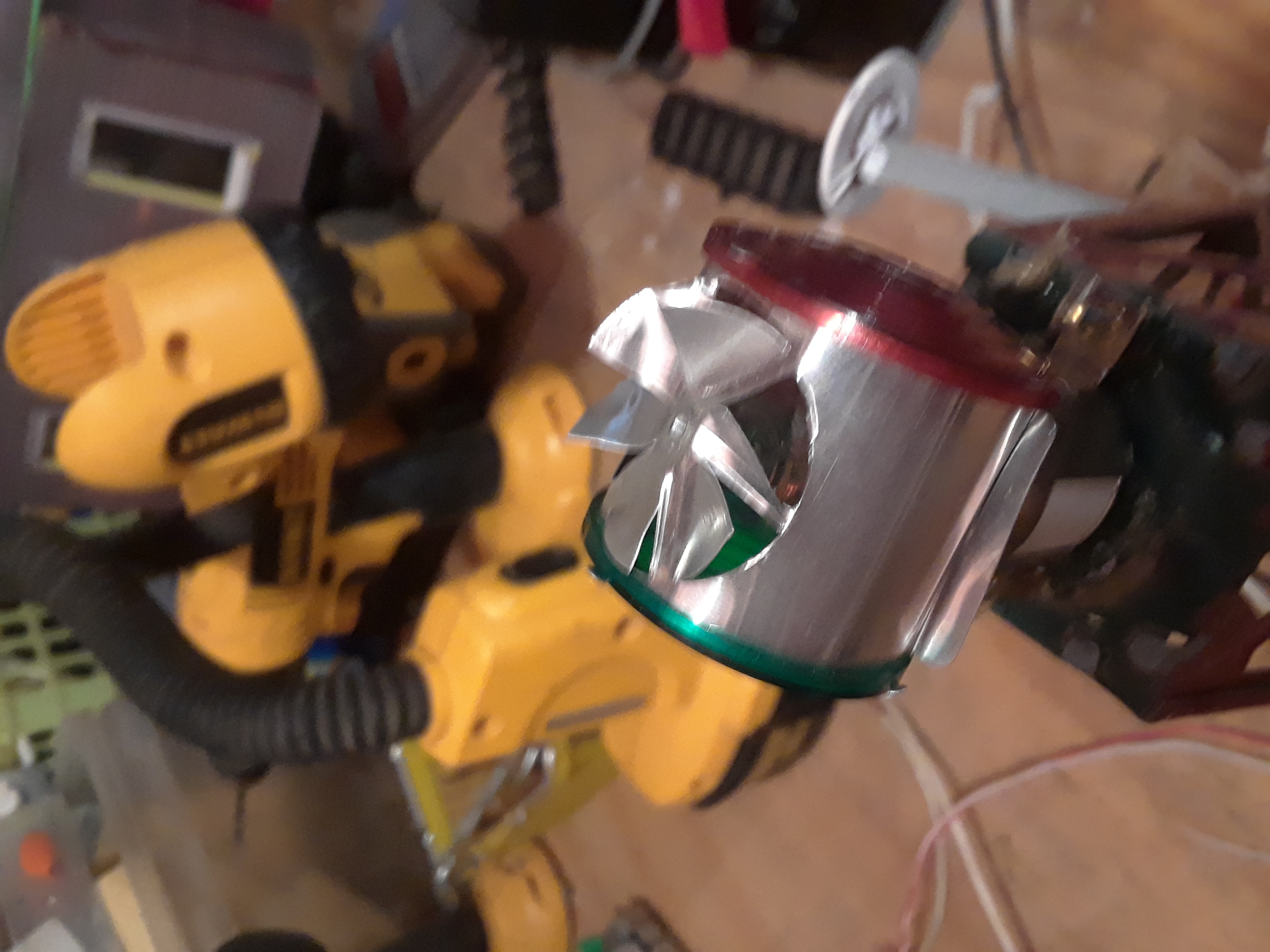
Bob models S scale and sent in this question for readers:
“I have a rotating beacon that does not rotate. No sure how the fins on the top should be angled? The beacon is connected to 18v on my transformer. I have adjusted the vanes but still does not rotate.”