Everything on model trains, model railroads, model railways, locomotives, model train layouts, scenery, wiring, DCC and more. Enjoy the world's best hobby... model railroading!
Scenery Tricks That Make Your Model Train Layout Look Much Bigger – PART 2
Proven Illusion Techniques to Add Depth, Distance, and Realism to Any Model Railroad
No matter how much space you have for your model railroad, it never feels quite big enough. Whether you’re building a compact shelf layout, a spare-room empire, or something in between, space is always at a premium. The good news is that you don’t need more square meters to make your layout feel larger. With smart scenery design and a few proven visual tricks, you can make your HO scale, OO scale, or N scale model railroad appear far more expansive than it really is.
The secret lies in how the human eye interprets depth, distance, and perspective. Let’s explore the most effective scenery techniques used by experienced model railroaders to make small layouts look impressively large.
Use Forced Perspective to Create Depth
Forced perspective is one of the most powerful tools in model railroad scenery design. The idea is simple: objects closer to the viewer appear larger and more detailed, while distant objects look smaller and softer.
On an HO scale layout, for example, you can place slightly smaller trees, vehicles, or even N scale buildings toward the rear of the scene. As the scale subtly reduces, the eye is tricked into believing the landscape continues much farther than it actually does. This technique works particularly well along the back edge of a layout or near a backdrop.
To keep the illusion convincing, make the transition gradual. Avoid sudden changes in scale, and limit fine details in the background to maintain a sense of distance.
Install a Realistic Backdrop That Extends the Scene
A high-quality backdrop instantly increases the perceived size of your model railroad. Painted skies, distant hills, mountains, or city skylines visually extend your scene beyond the physical edge of the benchwork.
Choose soft, muted colors for background scenery, as lighter tones naturally suggest distance. Make sure the horizon line aligns with the viewer’s eye level when standing or sitting at the layout. A mismatched horizon can break the illusion.
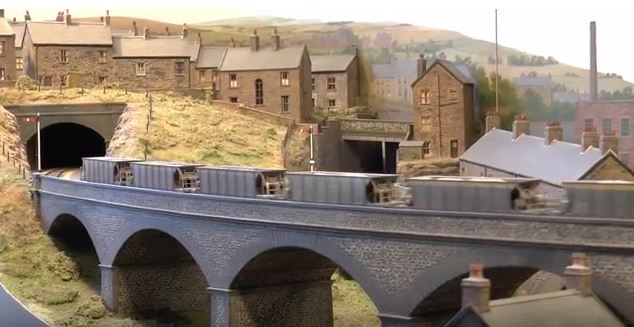
The most important step is blending. Match ground colors, textures, and vegetation at the base of the backdrop so there is no obvious “end” to the layout. When done correctly, the layout appears to flow seamlessly into the distance.
Add Elevation Changes and Layered Terrain
Flat layouts tend to look smaller than they really are. Adding elevation changes such as gentle hills, shallow cuts, embankments, and overpasses gives your scenery depth and dimension.
Even small variations in height can dramatically improve realism. Raised track sections, road overpasses, and rolling terrain suggest a much larger geographic area beyond what is visible.
Layering scenery elements enhances this effect. Instead of lining up trees, fences, or buildings in straight rows, stagger them at different depths. This layered arrangement creates visual complexity and makes the scene feel deeper and more expansive.
Curve Roads and Tracks Out of Sight
Straight lines reveal boundaries. Curved roads and tracks hide them.
When a track or road curves behind a hill, building, or tree line, the viewer assumes it continues beyond the visible scene. You don’t need to model what’s hidden… your brain fills in the rest. This technique works equally well with roads, paths, fences, and waterways.
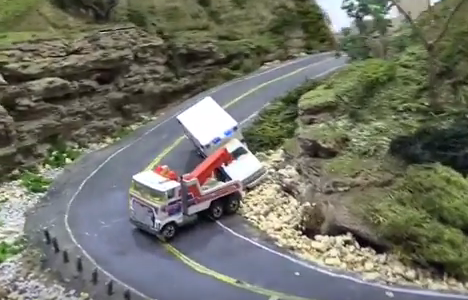
Avoid running roads or tracks directly from one edge of the layout to the other. Let them disappear naturally into the scenery to create mystery and a sense of continuation.
Reduce Detail in the Distance
As objects recede into the distance in real life, they appear smaller, less colorful, and less detailed. You can replicate this effect on your model railroad.
Use shorter trees, smaller vehicles, thinner poles, and simpler structures toward the back of the layout. Reduce weathering and surface texture as you move into the background. This mimics natural atmospheric perspective and reinforces the illusion of depth.
This technique works especially well when combined with forced perspective and a well-blended backdrop.
Add Strategic View Blocks
It may seem counterintuitive, but blocking parts of your layout can actually make it feel larger. Buildings, overpasses, tree lines, and ridges act as visual dividers, breaking the scene into smaller sections.
These view blocks encourage the viewer to explore what lies beyond, creating a sense of discovery and hidden space. Just be careful not to block everything… use these elements to frame scenes and guide the eye rather than overwhelm it.
Use Lighting to Enhance Depth and Scale
Lighting plays a crucial role in how we perceive space. Soft shadows and highlights help define terrain and separate foreground from background.
Warm lighting in the foreground and cooler tones toward the rear subtly reinforce distance. Even consistent overhead lighting, when thoughtfully placed, can dramatically improve how large your layout feels.
Install Low-Relief Background Buildings
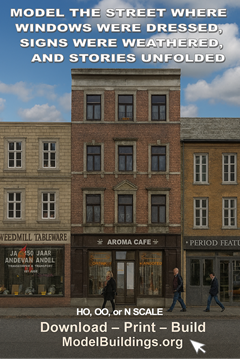
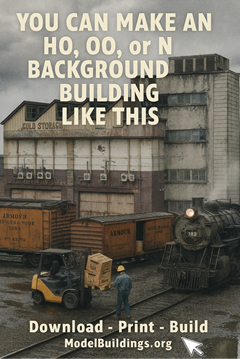
Low-relief or flat building fronts are a powerful way to suggest urban density without consuming valuable space. These thin structures sit against the backdrop and appear to extend deep into the scene.
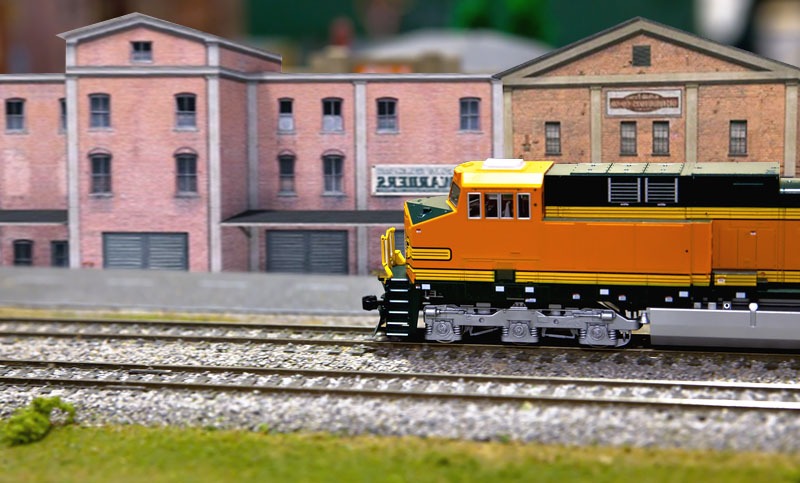
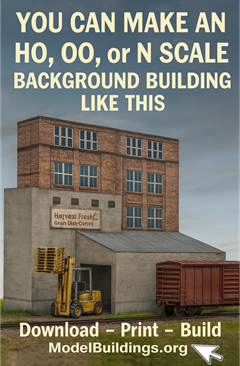
Photo-realistic building designs mounted on lightweight materials such as corflute or foam board can add incredible realism. Details like weathering, stains, and faded signage help sell the illusion of age and distance while keeping your layout uncluttered.
Think Illusion, Not Expansion
Making your model railroad look bigger isn’t about adding more track or structures… it’s about guiding the viewer’s eye. By using perspective, elevation, curves, lighting, and layered scenery, you can create a layout that feels open, expansive, and immersive, even in a limited space.
With these proven scenery tricks, your model train layout can deliver the big-railroad experience… no extra room required.
Subscribe
Login
0 Comments
Oldest
SUBMIT YOUR QUESTION