Construction
Everything on model trains, model railroads, model railways, locomotives, model train layouts, scenery, wiring, DCC and more. Enjoy the world's best hobby... model railroading!

Regular contributor Kevin has helped so many others with their model railroading problems, and now he is hoping someone can help him out:
“I usually model in HO but I have been given an N gauge layout with 2 engines, 3 passenger cars, and 9 freight cars, about 30 meters of new track, plus some set track curves. Now having never had anything to do with N gauge, so I am asking N scalers what is the best diameter for a Helix? I want two and I have a meter at each side of the doorway into a rook 3m X 4.2m. I was thinking about a 2% rise? Also, the cars have Rapido couplers and the engines have knuckle couplers. It looks like I will have to change the couplers on the various cars? If so what are the best knuckle couplers to use? Thanks.”
If you can advise Kevin, please use the COMMENTS link below to add your comment or answer. If you just want to view the comments and answers as they roll in, you can see them by using the same link.

If you haven’t already downloaded and printed out your copy of the Model Buildings Catalog – now’s the time to do it. It’s a handy resource to keep alongside your layout.
This catalog not only includes photos of 160+ plans to download, but also includes some useful construction tips and links to some excellent resources. It’s available now from http://www.modelbuildings.org/Free-Catalog.html
Alan would like help from readers with planning his O scale layout:
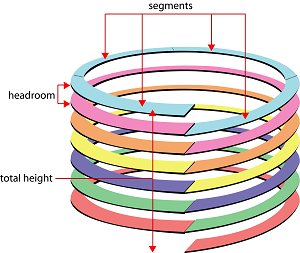
“I am about to build a model railroad helix in o-scale. I have found a woodworking house to cut the segments employing something called a c in C machine. I am opting to use a full sheet of plywood and since I need 10 segments to raise the train four feet, between the purchase of the plywood and the cutting, it is quite costly, so before proceeding I thought I would ask for your insight. Additionally, I request you provide me with an opinion on what O-scale track to use? I intend to run this along my ceiling and need approximately 200 linear feet plus the curved track for the helix. Lastly what radius of curved track would you use? Any assistance/insight you provide will be most appreciated!”
Add your comment below.
 Gary sent in this question for readers:
“I have now used a helix design tool, but need to know how to transfer it to a 4’x8′ sheet of plywood.
Any available conversion to a full size pattern?”
Here is a link to a free helix design tool.
Brock sent in this question for others to comment on:
“I would like to have a goods yard on my British Railways OO/HO layout. Any Advice?”
Unfortunately this question is rather vague so it will be hard for readers to provide good answers. Perhaps Brock could add some more specific details in the COMMENTS under this post.
Wayne posted this question and is hoping for some help from others in the hobby:
“I am building an HO shelf layout. What is the recommended distance from the top of the rail to the valance above where the lighting source will be located? The shelf will be approx. 28″ wide. I am thinking of bringing the valance out 14″ from the wall? Thanks.”
Jim who models HO asks:
“Has anyone ever used Plexiglas as a top for their bench? It won’t dry out or warp causing track problems later. And what about peg board?”
Beginners guide to HO scale and OO gauge trains with 18 “space saving” track plans – details here.
Rebecca asks this:
“My brother loves N scale, and has purchased models and equipment to customize. He is disabled, in a wheelchair and deaf, and tech-shy, so he does no email, but can communicate well by text. His manual nerve damage makes model building difficult. Does anyone know of a model railroad builder, especially in the Sacramento/NoCal area, who might be willing and able to do model work to his specs professionally?”
Plans for background buildings – Click Here
Use the buttons here to share this posting with your model railroading buddies on Facebook, Google Plus, by email etc.
Plans for 8 Houses & 4 Garages – Click Here
Use the buttons underneath to share this posting with your railroading buddies on Facebook, by email etc.
Steve is planning to build that is divided into three modules and would like some words of wisdom from those in the know:
“At long last, I am going to start an HO layout(s). When I was young, my dad wanted to have a layout – he bought a lot of components, but we never got around to it. My kids are grown and grandkids are coming, so I want to do a layout for them. I would like to do the layout in 3 components so that when the time comes, each of the kids can have a layout. The question(s) are how do I start and do you have any suggestions for 1 large layout that can be set up to be split. I have an area about 12×15 for the layout(s).”
If you have a question you would like the Blog Moderator to consider for publication, you can submit it using any one of the ASK A QUESTION links on this blog. Please check and proofread your question before submitting it to ensure it is clear and has sufficient information with enough details to prompt quality answers.
Chip is hoping a reader might be able to supply some advice:
“I plan on building a helix for my HO layout. However, instead of building it circular, I am going to build it in an oval. Has anyone got a formula or a plan that would help me plan out what I need to do?”
Nigel asks readers:
“I am into British 00 gauge-1:76 scale and want to know if you can help me out laying flex-track,on the ‘Woodland Scenics’ incline/riser set. Joining the fishplates to each of the rails, also the best way to open the fishplates wider to fit on the rails. Can some advise please?”
Reader Bob models S scale and asks:
“I have an open helix to a shelf at the moment. I would like to cover the core of the helix and make it look like the train is climbing a mountain. The helix has a flat circular top to finish off too. What would be a couple of methods to accomplish this?”
David is hoping someone can help with this:
“I am working on building a 1970’s HO Badger paper mill on the Peshtigo river. This particular project includes a dam, gate control house and a hydroelectric plant besides the papermill. I am looking for a source of plans with measurements for a dam. Can be any scale, All my photos have zero info regarding the measurements. From what I can determine from the state’s highway department that the bridge crossing the river a little-ways away is 500 feet long. There are no pictures, that I can locate, of the dam itself. There are snippets of the gate house and powerhouse, but none of the actual dam with the gates or mechanisms. Reference sites would be helpful.”
Use the buttons below to share this posting with your friends on Facebook, by email etc.
I often get asked what type of card to use for making model buildings from downloadable plans, so I have put together the following to illustrate the options.
PLEASE NOTE: I don’t want to confuse, or over-complicate the process by suggesting anything other than card from old cereal packs, or corflute… but I do appreciate that some model railroaders and makers of diorama scenes have their own personal preferences on which materials they use. So, the purpose of this is to simply explain some of the options.

So, in most cases you don’t need to go out and buy cardboard, unless you really want to. The cardboard from old cereal packs is what most in the hobby use for 3D buildings, and corflute is the material of choice for most who make “low relief” backdrop buildings. That’s the feedback I have had from hundreds (probably thousands) of happy customers.