Construction
Everything on model trains, model railroads, model railways, locomotives, model train layouts, scenery, wiring, DCC and more. Enjoy the world's best hobby... model railroading!

Daniel models O scale and asks:
“I realize my question is a matter of preference, but would like feedback. Have created a large layout, but can’t decide on a basic overall paint color. Any suggestions or experience would be appreciated”
Here’s some interesting and strange facts worth sharing –
 Here is an example of some background buildings sent in by club member Yanis G for France. Yanis shot the scene at his local train show.

Dan asks readers this question:
“I am currently putting together my first portable layout to display on Canada Day. I am using two 2×8 foot pieces of 2″ styrofoam SM as the layout surface which will run two separate oval tracks. My current struggle is designing a frame that the styrofoam will sit inside of and hold all together plus provide a No Touch zone and derail barrier. I do not plan on adding legs at this stage as time is limited. I will be setting it up on some fold out tables at our town hall.”
To submit a question use the ‘Ask A Question’ link below any post. To add a comment or to answer a question use the COMMENTS link below the post.
John asks readers:
“I am seeking Pros & Cons of using solid 2″ insulation for my N scale layout base please?”
Larry has an HO layout and asks readers:
“I have just made a passenger train station (got the plans from this site) and I’m really happy with it. My question relates to positioning the train platform close enough to look authentic (I don’t want my passengers leaping across a gap to safely board the train), but far enough away so the cars don’t hit the platform. What is the correct clearance?”
Stewart asks readers for advice:
“How practical would it be to lift a 8×3 layout by chains and pulleys to the supporting beams in my garage so I can park the wifes Suzuki Swift underneath? I would get into terrible trouble if I damaged her pride and joy. Would it be easy to lift, will it tip sideways, and how safe would it be? Could I lower it onto saw horses for support?”
Howard asks readers:
“I am getting to old (and decrepit????) to continue crawling under my OO table to get to my control panel. I thought of adding a lift-up hinged panel but wondered about movement, track alignment, connections etc. and how to hide the join. I haven’t built it yet, but I’m sure I can if I know what not to get wrong. Advice appreciated!!!”
Just Released! This video clip might look a hundred years old, but 7 of the scale models seen here are brand new to the series. Feedback on the quality of the 6 existing plans has been very encouraging, so we’ve increased the town size to 13 buildings by adding: the Palace Hotel, Dry Goods & Clothing Store, Barbers Shop, Telegraph Office & Stage Depot, School House, Church, and Land Office. The existing series of 6 western buildings includes: the Sheriffs Office, Bank, Blue Mountain Saloon, Gun Smiths, Black Smiths, and General Store.
Seb is planning to build N scale asks readers:
“A friend has offered me 3 very old solid timber doors for free to use for my layout baseboards. I’m thinking they might be too heavy when all the scenery and track is on top. Your thought?”
Gary is into O scale and seeks help from readers:
“I am installing Lionel # 111 Trestles on 1″ foam on 1/2″ plywood. The design for screwing the trestle upright is difficult trying to get a driver vertical. Bad design, any suggestions. Could it be glued to foam.
Another question. When the track connection is over an existing bottom track , the trestle will be too close for a train to pass. I would like to know how to support the area, when installing a trestle won’t work. Thanks for help.”
 Ben writes:
I see Dale posted a question a week or so ago relating track rust and mentioned the effects of humidity, so I thought I’d write a few words on setting up the right conditions for a layout.
One of the first things is to get the room prepared before constructing any benchwork for the layout. I know it is hard to resist just jumping in and getting started with a hammer and saw, but there are several important things to consider first apart from planning the size, shape, track configuration, scale etc.
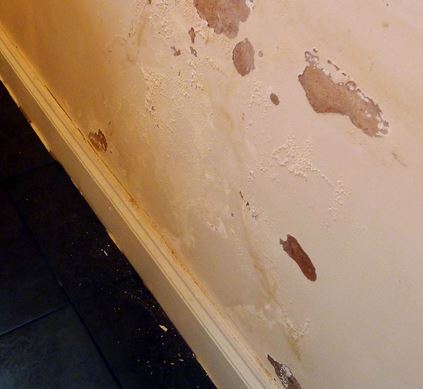
The first job is to make the room dry. Dale mentioned his layout was in the garage and that’s a common location, as is a basement. Unfortunately basements and garages can get damp. If the space is not dry there will always be the risk of the benchwork not being stable, because humidity could cause the timber to swell. When the humidity drops the timber could dry out causing further changes or movement. This can impact on track levels and effect the sub-roadbed.
A couple of coats of waterproofing paint on the concrete block walls will help keep dampness at bay. In a lot of situations, a dehumidifier might be required to control room temperature and humidity levels. Adding insulation in the ceiling and walls will further help to keep the room dry. A drop ceiling can help with insulation and prevent dust from dropping onto the layout when someone walks across the floor on the upper level.
If the basement walls are not already insulated, start by putting up furring strips (a strip of wood tapering to nothing used in construction work) and styrofoam. Although there might only be ¾” of insulation, it will be better than having none. These furring strips can be attached to the basement walls using Tap-Con masonry screws. This will also be a help if your plan is to make your layout multi-level and intend to fix the upper layout level(s) to the wall. Using building adhesive and/or cement nails can fail over time so be careful with the weight loading. Having half your layout crash off the wall or rip wall panels loose can be disastrous. I would rather do a job once and do it right than to have to repair things after they have gone wrong.
If you have basement/garage windows you’ll need to decide whether or not to cover them with drywall or keep them accessible. Doing so would keep direct sunlight off the layout and probably mean you could include a realistic uninterrupted backdrop.
You’ll still need good lighting even if you don’t cover the windows. However, this raises another issue; the placement of the lights to be accessible and so the operators can see what they are doing. One option is to have lighting circuits finish in outlet boxes. Doing this will provide some flexibility as your layout takes shape. The lights can then be placed anywhere on the ceiling and be easily plugged in. The ceiling boxes won’t then need to be located exactly.
Whist on the subject of power circuits, it is a good idea having them along the walls usually under the layout, because running lots of extension cords is a problem waiting to happen. Being able to turn everything off at once when finishing for the day (or night) also makes sense. Having to turnoff several switches is frustrating and could result in something (like a heater or soldering iron) being accidentally left running.
Bernie asks readers:
“Cork seems such an old fashioned product to be using for underlay in 2016. Surely there must be something newer or better, or is cork still the best? If so – why?”
Bryan asks readers:
“This is my first layout – HO – I’m working on so I want to try and get most things right. Is there any advantage in me painting all the benchwork including underneath, or is that a waste of time? Do I need to seal my benchwork before I attempt to lay any track or add scenery? I’m not trying to save work, I just want to get things right if I can.”
Alex asks readers:
“We just moved into a smaller house and I did a lot of damage to my old HO layout deconstructing and moving it. It was harder than I thought it would be. Anyway, I decided to sell off the stuff to friend and start again in N scale because I don’t have as much space. This time I’ll build it in modules, but I’m unsure what’s the best way to join them for smooth rail joins, good connections, and easy dismantling if I do another house move?”
John has a question for readers:
“I’m building a multi level OO scale layout, the first level will be a fiddle yard and the second level will be the main area. I need to know what should be the height of my supports pieces between the first level to the second level, enough for me to access the trains on the fiddle yard on the first level and also to access wires and other things?”
Hank has a question for readers:
“This is my first attempt, I want to do a module in N scale. What I’ve got is a roundhouse with 6 compartments and a non powered turn table. I am open to suggestions on how to plan and then start putting this together. Please keep it as simple as possible, do not send me any complicated diagrams for I’ll give up and my train collection will be just that a collection to show and tell. I would like a main line to the round table and then to the roundhouse.”
Hank there is a very good manual on building modules called “Confessions of a Mobile Layout Builder” available as a bonus here http://www.modelrailwayscenery.org/model-railroad-scenery.html
Garland asks readers:
“I need wall bracket to hold HO track round the wall in my home theater. Do you know where I find some?”