Technical
Everything on model trains, model railroads, model railways, locomotives, model train layouts, scenery, wiring, DCC and more. Enjoy the world's best hobby... model railroading!

 If you have a model railroad question you would like answered, then use the link on this blog to submit your question. If you word your question carefully and provide some useful details, then chances are someone reading this blog will offer a solution. Only the best question will be published. Please spell check your question before submitting it to the blog moderator for approval.
The link to submit your question is on this page.
 It is essential to make use of diagrams in the design of model train circuits because a diagram can help you to do the job with no errors and in the unfortunate event of a faulty circuit, you can go back and refer to the diagram to diagnose the issue. Designing own circuits is recommended only for advanced users because thousands of diagrams for circuits can be found on the internet. Make sure that the color codes for resistors, flashers and electrical supply etc., are accurate from user comments and your own common sense.
Mike wants advice from readers and asks:
I am constructing a 5×10 foot O scale layout with TCC that will be set onto a 4×9 foot dining room table, with a separate power/control free standing console that would be detached and stored separately. What equipment would provide best connectors, reliability and value…and how best to be done? The layout would have some switches, and a few operating devices such as signals. Nothing fancy…just getting my grandkids into playing with trains at a young age.
Add your comment if you can help Mike.
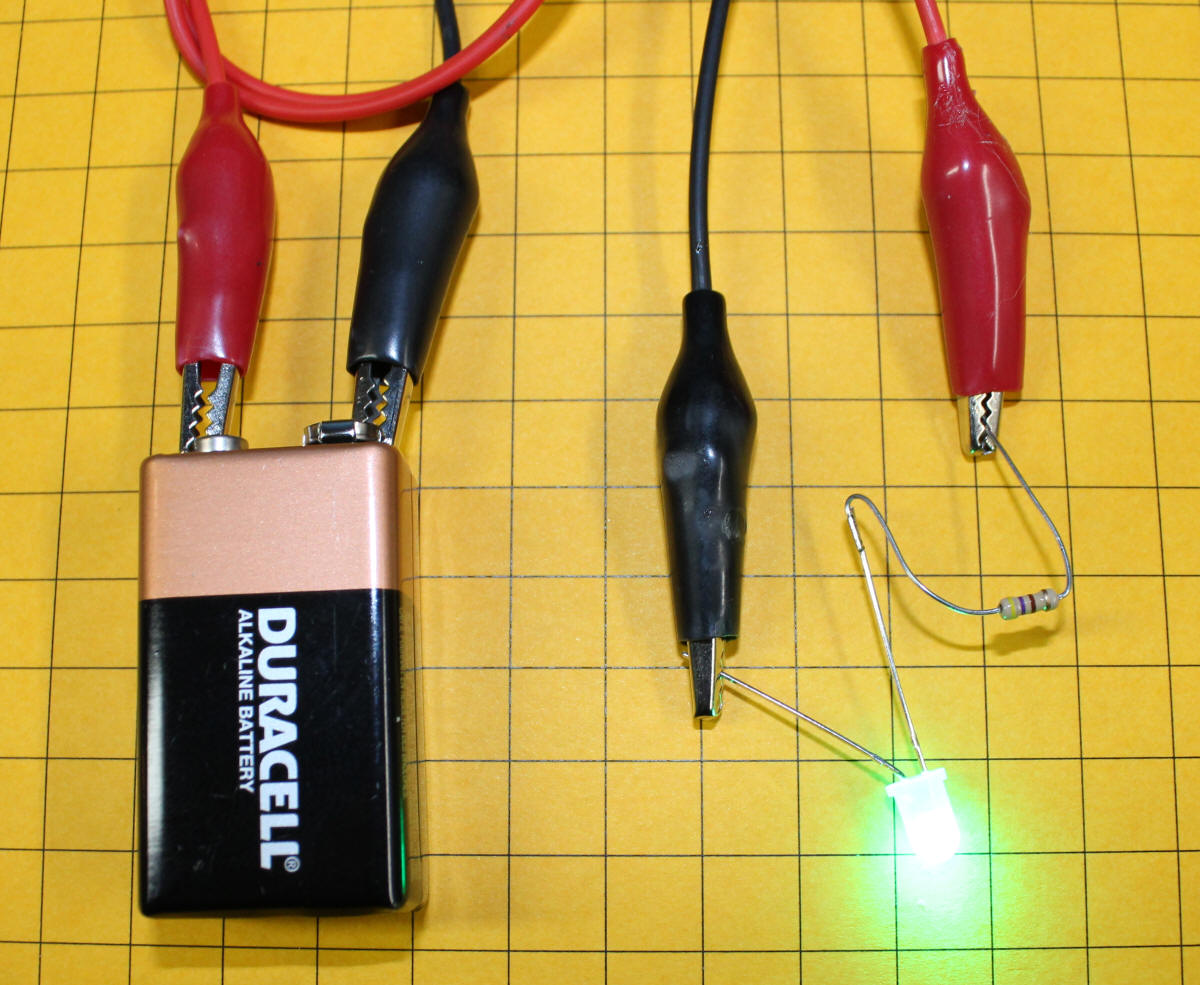 Model train lights are not entirely different from their ancestors except for a few features such as energy efficiency and longevity, thanks to advancements in technology. Most model train lights of today uses LED bulbs, which are far more energy efficient and brighter than filament bulbs, and they are also much more energy efficient. It is recommended using LED lighting wherever possible as it is an investment that can last for several years.
There are several excellent LED resources in the members area of the online Model Train Club.
 Val asks readers for advice, so please add your comment to this posting if you can help:
"I am new at model railroading. I would like to add some lights to my buildings and some movement to add more interest.
I have started with a OO Hornby DCC mixed freight set, I have purchased some grain of wheat bulbs with wires but I am not sure how to wire them up in a series, can you tell me in layman terms please.
Any help with adding movement other than the trains would be greatly appreciated."
Add your comment to this post.
Val asks readers for advice, so please add your comment to this posting if you can help:

"I am new at model railroading. I would like to add some lights to my buildings and some movement to add more interest.
I have started with a OO Hornby DCC mixed freight set, I have purchased some grain of wheat bulbs with wires but I am not sure how to wire them up in a series, can you tell me in layman terms please.
Any help with adding movement other than the trains would be greatly appreciated."

Add your comment to this post.
Ryan has put together this helpful tutorial for avoiding derailments on a model train layout. The video includes some excellent layout scenes. Feel free to pass it on to friends. Enjoy!

It is often wise to solder your wires on the undersides of the track rails when you are actually laying the track. The temptation can be to lay your track down and then add the wiring sometime later, however the result can end up with ugly wires and little blobs of solder protruding from the sides of the track. Track ties can easily get damaged when using a hot soldering iron.
You can pull the tie from the track and solder your wires to the under-side of the rails. The next step is to file before replacing your sleepers. Another idea for concealing wires is to drilling a small hole and then poke the wires through your bench-work.
You can also use some non-corrosive “Plumbers flux” on the rails applied with a cotton bud before you solder. This will help the solder adhere, and will leave you with a smooth finish as opposed to having blobs everywhere. You can then wash the flux away when you are finished so it is not left on the track rails.
Alain asks readers:
“Should I break the rails between DCC and DC and is there a problem with using DC 16V AC track cleaners with DCC locos?”
Steven asks readers for advice:
“I have 2 North Pole Central passenger cars that had an unfortunate experience, they got hung up on the track and fried the wires inside. Is it any use to try to re-wire them or just pull all the wires out so they don’t short out on the track?”
Add your suggestions below.
Stan asks experienced model railroaders for advice:
“I am limited for space. I am building a twice around HO 5′ x 9′ layout. I am planning on several turnouts and on going with DCC. What type of turnout works best … an Atlas Snap Switch or #4 Customline Switch? These turnouts are for spurs so it’s not necessary that I keep an 18″ radius. My concern is with the electrical continuity and shorting?”
Comment below.
Geoff asks readers:
“I have a DCC HO layout which is quite large so I have boosted the power to track to 4amps. My problem is the loco’s will run after pushing them but only for a short distance ie. a maximan 2ft. If I touch them even lightly the sound comes on and off but no movement unless pushed again and then only 2-3ins. I have tried all sorts of things like cleaning the track and so on so you can understand my frustration at building the setup but never had it run properly. I sincerely hope someone can help me rid myself of the frustration”
Add your answer below.
The results of the recent poll revealed 51% of the 1047 model railroaders surveyed operate DCC. I actually thought the figure might have been a little higher than that (38% operate DC and 9% didn’t have a layout yet).
There are definite advantages for both systems, and I would never try and push anyone into DCC if they are already comfortable with DC and don’t want to change. That said; I would recommend DCC operation for anyone starting off in the hobby as the system is very versatile and fast becoming the norm. Whichever system you operate, always remember the whole idea is to have fun and enjoy what you are doing!
George has a question for those with experience on point motors:
“As I am only 11 and been collecting model trains for 2 years, I am not an expert on point motors and since I fitted scenery boards I can’t access points. So I bought an above track Hornby point motor but I needed a Hornby switch to go with it. Which one is it? ON-ON, PASSING CONTACT or ON-OFF?”
Add your answer below.
A reader asks:
“How much space (room) do I need between two HO tracks for a (caboose etc.) throw stand and related items?”
Add your suggestion below.
A readers asks:
“I am having a difficult time finding the proper way to install HO railroad signals. I need to know where, what type and the distance from the point it is controlling? Also the distance from the center of the track to the center of the signal.”
Add your answer below.
Would someone like to help John who asks:
“How do I line up and install Tortoise motors under layout on my own, tracks in place please?”
Comment below.
Charles wants to hear from anyone with knowledge of powering turnouts and asks:
“Most of my HO Atlas turnouts are controlled by manual throws. I have a short in both of my districts where these turnouts are and I believe the short is related to the turnouts. I have seen a number of diagrams for wiring DCC Friendly turnouts that switch power on the rail when the switch is thrown to but none with manual controlled turnouts. This is a major stumbling block since I have over two dozen manual turnouts (they’re all in easy reach).”
If you have some suggestions for Charles comment below.
Ted wants advice from others in the hobby and asks:
“I have a few PK2000’s and suffer gear problems like everybody. However a new problem is the front gear box on my GP9 has seazed. The flywheels turn, the rear drivers turn and the front drive shaft turns,but the front drivers gears are locked. I need to remove the motor and gear boxes, but can’t figure out how to do that. Any suggestions? Thanks.”
To assist Ted comment below.