Trackage
Everything on model trains, model railroads, model railways, locomotives, model train layouts, scenery, wiring, DCC and more. Enjoy the world's best hobby... model railroading!

Ron asked:
“I use Kato N-Scale Unitrack and like it. I’m just not sure about Kato’s #4 Switches, because I have been having some problems. The back end of the switch is confusing and I’ve got several power sections otherwise the engine will stop.”
You can submit a question for publication, but make it as clear as you can so that others can easily understand your question and hopefully provide you with a better answer. There are many ASK A QUESTION links for you on this blog.
Terry’s question for fellow model railroaders is:
“I have been a keen observer of model train exhibits for many years and have finally decided to give it a go. I was given some brass track and wondered if I could mix brass track with nickel silver track? Thanks.”
Include your comments below.
Russell asks readers:
“My trains (HO) run pretty good but wobble a bit in places. They don’t stall much. I have rubbed the track gently with very fine grade sand paper and I think this has helped. A mate of mine here in Australia said I would be better off using rubbing alcohol. Now I don’t know what to do? Should I try both, or just stick with what seems to work already?”
Submit your question for publication below.
Daniel is desperate for suggestions:
“Last week I was proud of myself for the job I did unaided on my track work. My layout is HO and I’m using Digitrax Zepher by the way. I wired everything myself (I thought I was really clever!!), and ran a couple of locos on the different routes and tested different turnout combinations. I powered things down and went to visit my daughter for the weekend.
 Yesterday I powered everything up again and NOTHING! I thought maybe a short when the track status blinked. I then searched for a stray track nail and double checked each connection, but couldn’t see any issues. I just don’t understand how everything was working perfectly one day and not working a few days later?
I disconnected and reconnected the track wires from different sections, but I still have the same problem. I just can’t understand why it worked then it didn’t. I’m almost tempted to go visit my daughter again for the weekend and try powering up again next week. Maybe it will magically work again? Help please?”
Ron Bailey sent in this question:
 “I am working on my OO gauge layout in my garage and will have a reverse loop. I have been told about the Digitrax AR1 automatic loop. I am wondering how to wire things as there are a couple of dead end sidings in the loop? A portion of the loop is the main line so I was curious how the reverse loop would operate with these sidings?”
Drawing credit: digitrax.com
Lana posted this question. To view the answers, or submit an answer, just click on ‘Comments’ under this post.
“My cars sometimes derail on my ez Bachmann track turnout. The problem doesn’t happen every time. Often the engine loco follows the set switch direction but a car behind travels up the switch curve. What’s causing this please?”
Have your question published. Send it to the Blog Moderator using the ‘Ask A Question’ link below any of the postings.
Super-elevation on real railroads is when the outer rail of the track is elevated so as to compensate the centrifugal forces that happen when a train passes through a curve at speed. Sound complicated? Let me explain it another way.
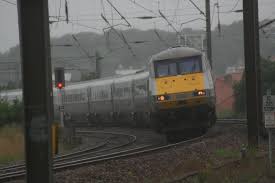
Super elevation is basically the difference in elevation (height) between the two edges of railway track (or a road). It is normally seen where the railroad (or road) has a curve; raising the outer rail (or the outer edge of the road) to provide a banked turn. This allows a train (or vehicle on a road) to traverse the curve at a higher speed than would otherwise be possible.
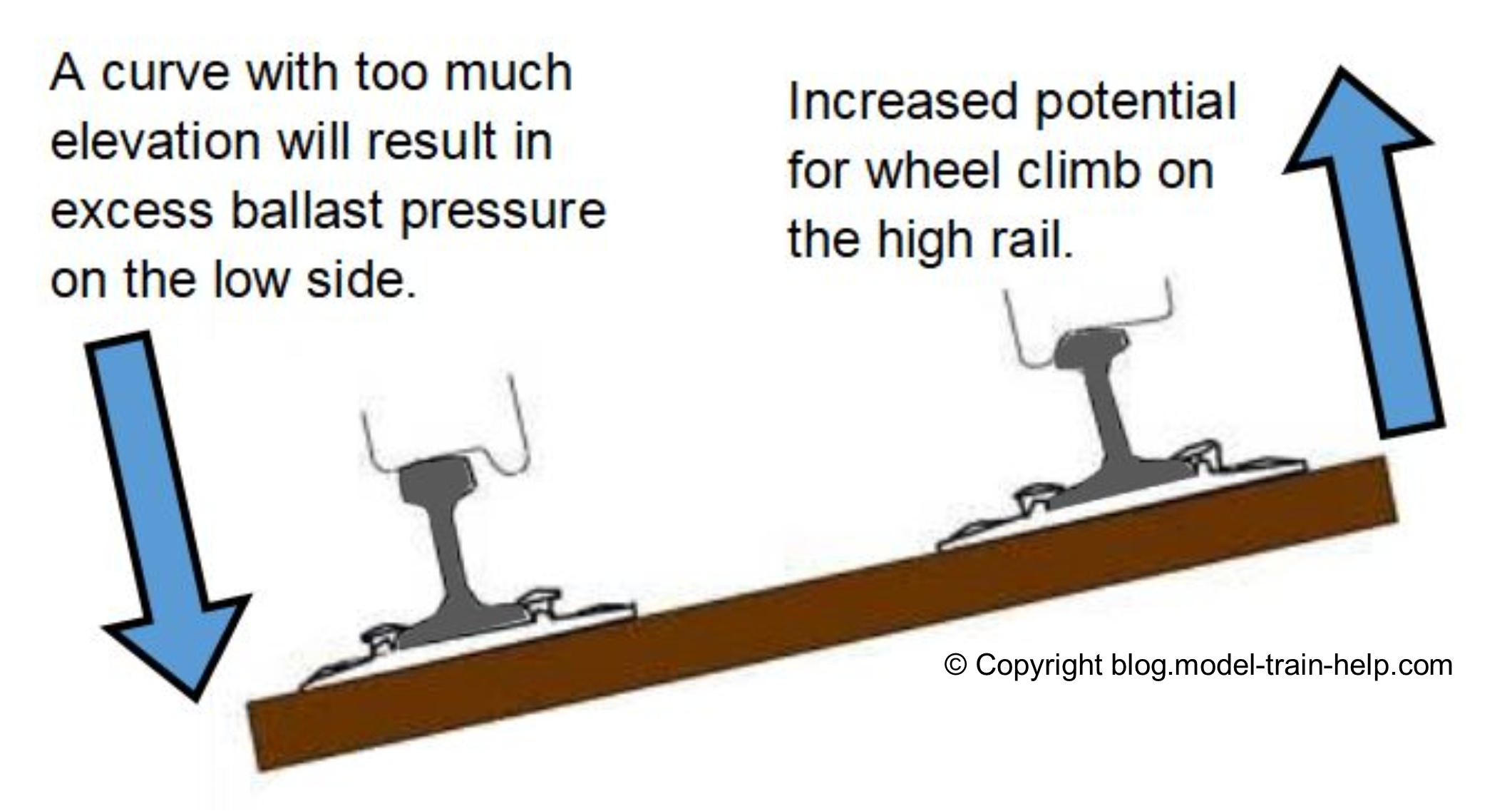
Having such a system neutralizes the effect of lateral force. It provides better load distribution on the two rails and reduces wear and tear of rails and rolling stock. In addition it provides smooth running of trains (and more comfort for passengers), and if designed and operated correctly, should result in fewer derailments.
However, excessive elevation in curves can increase the risk of derailment. When running significantly under balance speed, or operating on over-elevated curves, a significant portion of the vertical weight of the car is transferred to the low rail. The wheels can lift off the higher rail.
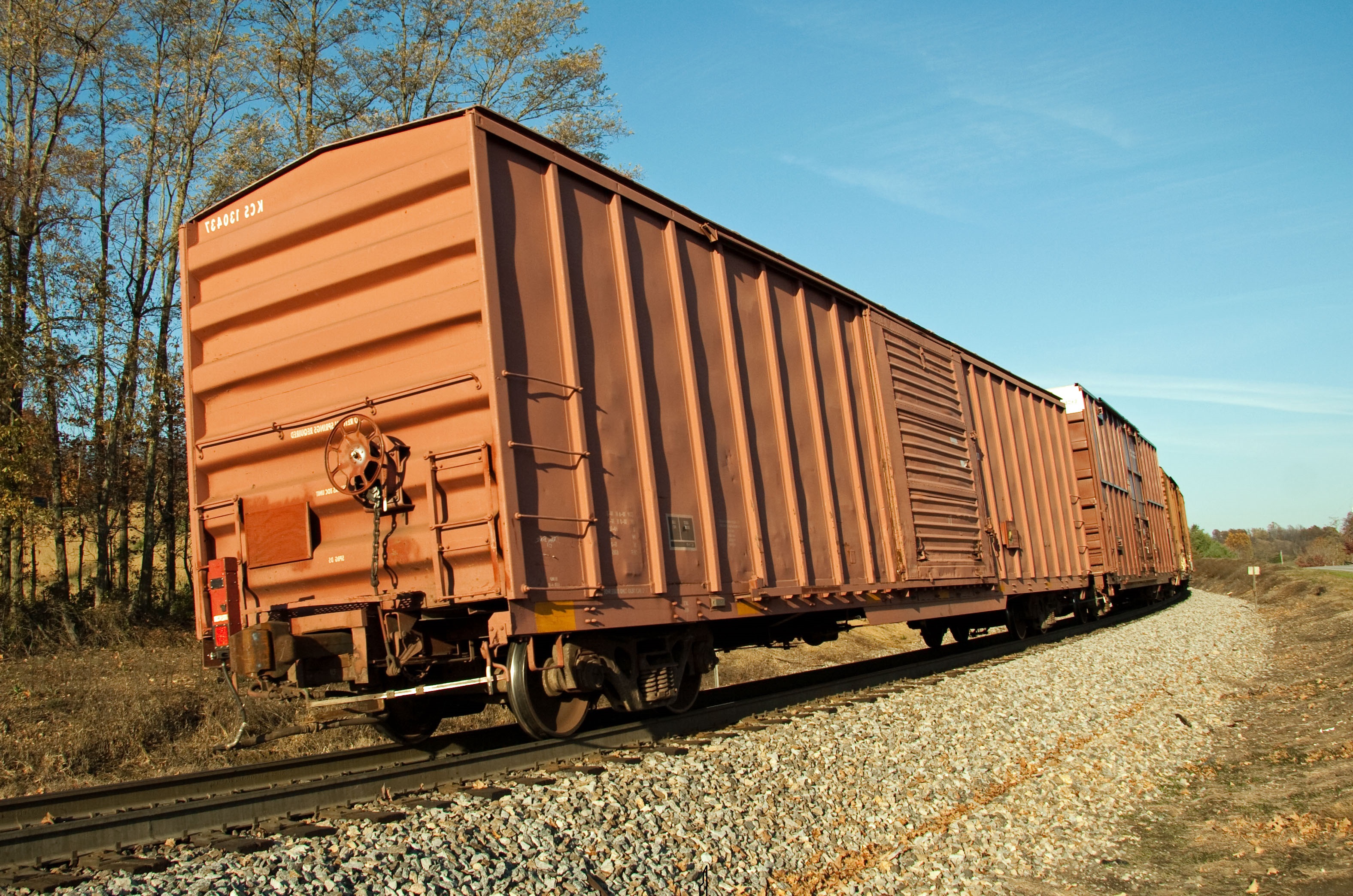
The following diagram provides a good perspective on the process of super elevation on a real railroad. Super-elevation should happen gradually as the train proceeds over the length of the track entering the curve (entry easement). Maximum super elevation would be reached when the train is into the curve. The train would then ease back down to level as it comes out of the curve and proceeds along the length of track exiting the curve (exit easement). Following this process, the train is able to stay at speed whilst navigating the entire curve.
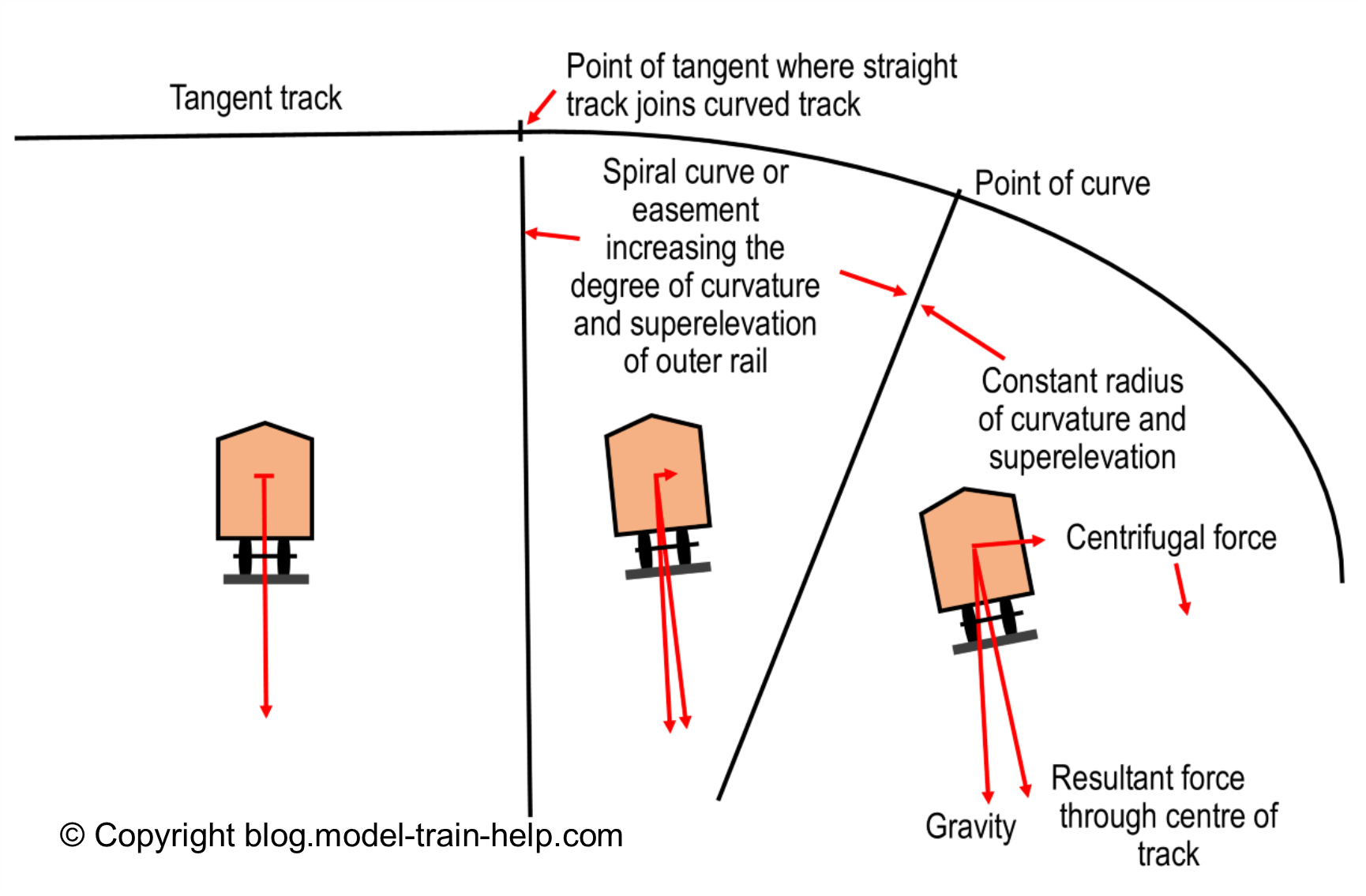
A smooth transition from a tangent to curve
 That’s how the system works in the real world, so modeling the same process on a model railroad makes sense as it will add impressive realism to train operations.
Unfortunately it is something that is often over-looked at the planning stage, or put in the “too hard basket” during construction. Fact is; the process is not that difficult.
The way most hobbyists tackle it is to use strips of basswood, or something similar, and lay a series of splines along the outer curve edge. Sanding the transition into the super elevation can be somewhat time-consuming, so the following should help to simplify the process.
 Erin D asks readers:
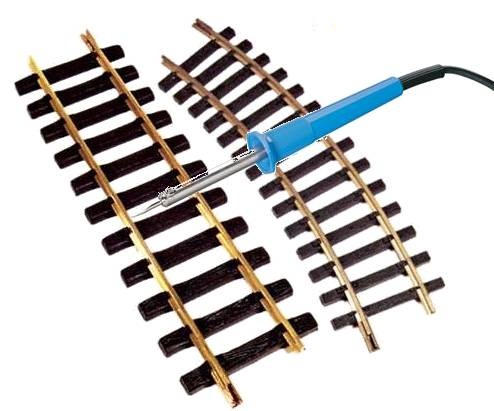
“I am new to soldering and wondered why my solder finish is kinda dull and even a bit grainy in appearance. Is that how it should be or am I doing something wrong?”
Send in your question to our volunteer Blog Moderator and have it published on this Blog. The link is directly below.
Should I use Code 75 or Code 100 Rails
Jacob from Ispwich in the UK wants to know:
“I am planning for OO gauge which I read is like HO overseas and want to know if I should go for code 100 or perhaps code 75 rails? Not sure?”
Submit your question to the Blog Moderator for publication by using one of the ASK A QUESTION links on this blog.
Online Model Train Club member Roger S asks readers:
“What would be the right distance between truck flanges in N scale?”
Submit your answer, or view the answers to Rogers question on flange distances by clicking the COMMENTS link underneath.
Submit your own question to the Blog Moderator for publication by using one of the many ASK A QUESTION links.
John asks:
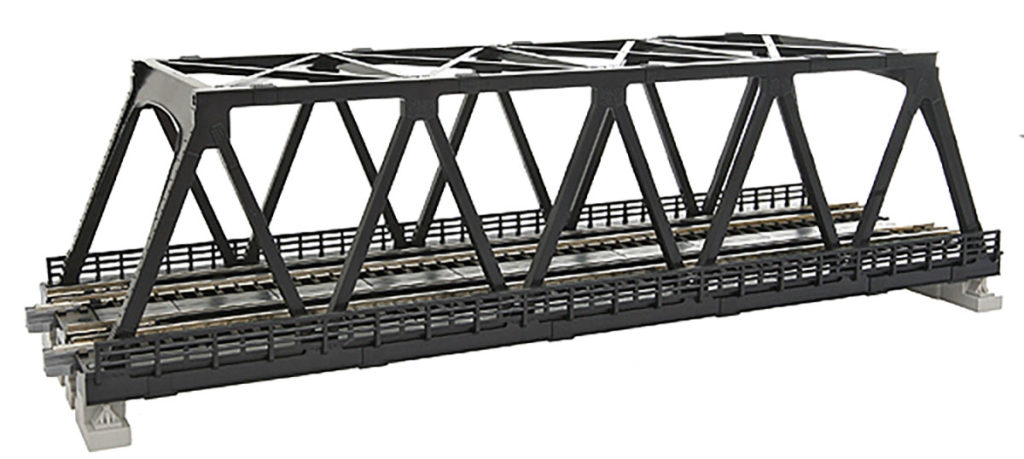
“Hi, Will an N gauge Kato double track girder bridge successfully mate to Atlas Code 80 track? Will I need to make any modifications to either bridge or track? Any help appreciated.”
Kevin is a beginner to the hobby and is looking for some guidance on mixing HO scale track brands:
“I have seen tracks under different names/sellers/makers, but do all tracks connect with each other?”
If you want to assist Kevin with his HO track connection question, just add your comment using the COMMENTS link below. The Blog Moderator approves most answers within a few hours depending on the time zones around the world.
Online Model Train Club Member Warren submitted this question for blog readers on connecting curved track:
“Derailments are my worst nightmare so am concerned with two curved HO sections of track that don’t want to connect neatly. Would like views on how to improve the join on the two curved pieces please?”
Send in your question to the Blog Moderator to have it published on this Blog. The link is below.
Also, you can read the answers, or post an answer to Warren’s curved track question by using the COMMENTS link below.
Bobby has only started in the hobby and sent in his first question about laying track hoping for feedback from experienced pros:
“Hi, I’m not flush with cash and thinking ahead I know I’ll need to buy/borrow tools to put down my first sections of track. What will I need to do this?
Click on the COMMENTS tag below this posting to view the track laying comments, or to add a comment or answer to help Bobby.
Mark is starting out in N scale and asks:
“I’m new to the hobby and looking to build my first layout and it will be going in my spare room. I was wanting to run a double main line layout in two (2) different level and was going to do it in a L-shaped design. My dimensions will be 116 x 36 along one wall and 72 x 36 on the short side of the L. I have 2 questions what height of the levels is everybody using on their layouts and will 36” be too wide? Thanks for your help and opinions.”
If you would like to assist Mark, you can post a comment, photo, or drawing by using the comments link under his post. By clicking the link you can also see suggestions from others after they have been approved by the Blog Moderator.
Josh sent in this question:
“I have read quite a bit on how to wire track etc., but still don’t know exactly which wires to use. Could someone guide me please?”
HO railroader Dan posted this question:
“I’m new to DCC and I’m building a new layout 12’ x 12’ with 3 levels. I understand Bus Wiring and Track Feeders and how to run the feeder wires to the bus line. I will only be running 4 to 5 engines at most. I plan on using a MRC system (not sure which one yet, however wireless seems the way to go) want to put the track on the MRC system and power the turnouts on a separate system. With my DCC wiring do I need to run a separate bus line for the turn outs?”
If you would like to supply an answer to Dan’s DDC wiring question, or just view the answers, then click on the ‘comments’ link below.
“Hi everyone, I am Karthik from India, I’m new to this hobby of rail road models, my question is that, there are a large number of manufacturers in model railroads. Is it possible that an N Scale KATO or MICRO TRAINS made locomotives and rolling stock can run on ATLAS or BACHMANN made N scale tracks or a Flexitrack?”