Everything on model trains, model railroads, model railways, locomotives, model train layouts, scenery, wiring, DCC and more. Enjoy the world's best hobby... model railroading!
These questions are all thoroughly answered in the online Model Train Club, however readers might like to offer some suggestions to help out.
Richard asks:
“I need to know how to of begin a layout so I can start mine. I need to see how I start, not with a piece flat plywood. I need something else.”
Bazza asks:
“Can someone please advise the best way to clean track and loco wheels? I am new to modeling my layout is oo uk dcc.”
Add your suggestions below.
Add any suggestion below.
Joaquim asks:
"I have 6 president choice sets made by Mechano - they are dc and I wish to convert to dcc. I would appreciate if someone could tell me how it is done, also using the simplest decoders."
Although this is not directly related to model railroading, my mind started to think about all the applications this technology could bring to the hobby. Imagine being able to replicate a rare locomotive or something like that. It would be interesting to hear what you think about this technology (let your imagination run wild) and see what applications you think it could be put to in the hobby. Add your suggestions below.
Bob asks others in the hobby for advice:
“I have n gauge track fastened to homosote board. the track contracts and expands with temp changes in my basement. Are there any suggestions on how to stop the track from moving please.”
Add your comment below.
Richard is hoping someone else in the hobby can help him:
“Are there any suggestions toward a slick, easier way to insert and set replacement miniature springs in the knuckles when the old spring has dissapeared and flown away into the great unknown (invisible to old eyes)?? So far my elder fingers have not been able to do this with any success. Haven’t found any effective literature on this topic and I would like to be able to salvage and use couplers that have gone spring-less making that coupler useless….piles of them.”
If you can advise Richard, then please add your suggestion below.
A reader asks:
“I am looking for a Military Train set steam locomotive World War II vantage. Does someone know where I can get one thanks?”
Add your suggestions below.
Chuck wants suggestions from others in the hobby:
“I would like to run a diesel locomotive that makes different train sounds to run on an analog controlled track. Everything I see requires a DCC controller, but I’m a novice just looking to get started, and want to keep things simple and inexpensive. I am not sure what I need to be looking for. Any and all suggestions from experienced hobbiests would be greatly appreciated.”
If you have some suggestions to help Chuck with train sounds, then please use the Comments link below.
John asks blog readers:
“I currently have a U shape layout and would like to add a drop down bridge or swing gate. Can someone advise me about plans I can use to built and wire the track.”
Add your suggestions below.
Mike has an unusual question to ask others in the hobby:
“I am working on a project for my club, a corner module actually. Would it be more believable to have Hobos rural around a secluded campfire with trees or trackside where they could be in view of the trains and where they could easily hop on and hop off?”
I’m sure everyone will have an opinion. Please add your thoughts below.
Paul asks readers for advice:
“How do you eliminate the ‘Slap, clack or buzz’ of HO peco switch motors when they throw the turnout. I prefer the steady grinding sound of tortoises but have to use Peco’s often.”
Add your suggestion below.
Joe asks readers for their opinion:
“I have a mth SD70ACE and I am using a digitrax DSC50. The problem is I can not get the ho dcc couplings to work. All other functions work. mth use’s sound pro3.0. and I can’t find any cv.s on that sound system. I would really like to use them. I hope some one can help me.”
Add your suggestion to help Joe below.
Gary asks readers for advice:
“How do I convert standered track power loco’s to battery power and RC control?”
Add your suggestions below.
Steven is seeking advice from others in the hobby and asks:
“Hi there, I am relatively new to model railroading and am building an HO Scale Railway. It is analogue. I need to wire up 4 turnouts, two left hand and two right hand meaning that the track comes off the mainline and then returns to it in two separate places. I need to know where to place the plastic track joiners and what are the best type of toggle switches to use. Also the type of wire that is ideal for model railroading. The track configuration is very straight forward, so am hoping that the wiring will be too.”
Add your comments below.
Jean is having problems installing decoders and asks readers:
“I have five Jouef locomotives in which I want to install decoders. However, I cannot open the place where the motors are located, and I am afraid to break something. For the steam engines, the motors are in the tenders. Does someone know of a safe way to open these things?”
To help Jean comment below.
Bob asks readers:
“I have reached the point on my layout where I have to install trestles. I need to construct a jig in order to build the bends, this appears to be an overwhelming task. If the luck I’ve had so far is any indicator. ;o) Any help appreciated.”
Add your suggestions or ideas below.
Ken asks readers for suggestions:
“I am moving and just sold my old layout. I am trying to decide what my next layout should look like. It will be a 4×8+2×6. I have a turntable I want to put it and a few station barns. I would like a main line with hills and a mountain for a tunnel. Does anyone have some suggestions please?”
Comment below.
Here’s another 3 tips from inside the member’s area of the online Model Train Club:
When you paint on the base-color of your concrete dust it lightly with a little baking soda applied directly on the wet paint. Test a sample patch first, but it should give the surface a bit of a textured look. And, when you come to weathering it you will find it has more depth.
Quick Box Car Weathering Tip:
You can use some Floquil’s Antique White and add a drop or maybe two of Box-Car Red for the base. Then dry brush rust streaks as required. Earth colors look good at the ground level and then add some grimy streaks, and some white color where calcium might have leached from any cracks.
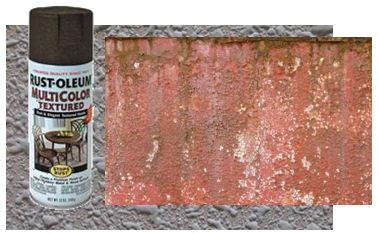
Quick Wall Surface Tip:
I spray on texture paint to paper/card. This makes some great looking walls if you are making your own scratch built buildings. You glue the textured paper on to the cardboard, or balsa wood, that you are building with.