Everything on model trains, model railroads, model railways, locomotives, model train layouts, scenery, wiring, DCC and more. Enjoy the world's best hobby... model railroading!
Stan has a question to test readers knowledge:
“When laying track curves what is meant by easements?”
I’m sure many of you will know the answer to that question, but you are welcome to add your comments and feedback below.
Model railroading (like any hobby) can be expensive, but there are lots of ways to save money. Making your own scenery props is a good example.
Making Ground Cover
If you want to avoid paying retail prices for commercially made ground cover, then have a go at making your own. Some inventive model railroaders use everything from coffee grounds, tea leaves, to ground-up fresh mulberry leaves. They use their microwave ovens to dry the leaves out, before putting them in a blender. They often combine different leaves to get the desired color and texture.
Sawdust is also an inexpensive material for making ground cover. Fabric dye (from the supermarket) can be used to color the sawdust. Mix up the dye, following the directions on the label, and carefully add it to your sawdust. You need to keep adding the sawdust until there is no more liquid. Pre heat the oven. Then put the colored sawdust on some baking paper (as it will stain anything it comes in contact with). Make sure it is spread out evenly and not just in a big pile. Put the baking dish in the warm oven, for an hour or so, to allow time for the sawdust to dry out. DO NOT cook the saw dust as it could catch fire. The oven should be warm enough to dry out the sawdust, not heat it up. You can bag the sawdust when it has dried out and cooled down. Use white PVA woodworkers glue to stick the colored sawdust to the ground or on tress etc.
I hope you found these model railroad tips useful.
Jeffrey wants to know where to buy some model train accessories and asks:
“Can anyone advise a manufacturer of a 00 ready to run GWR autocoach, or failing that, a kit maufacturer please?”
Add your suggestion or feedback below.
Keen model railroader Mike Williams contributes:
For those who are tired of the more traditional DC method of train operation, DCC Digital Command Control is always a viable option. DCC requires precise wiring, and it is a bit restrictive in some ways.
When building any train layout you will need to run wiring throughout your benchwork, and if you are not careful you will end up with your benchwork being immovable. For example, if you wire your table in such a way that the wires cannot be disconnected, or at least the circuit boards dismounted, you will have a bit of trouble taking your setup to a train show.
As far as your locomotives go, the first things you will need to take care of are the DCC decoder installations. Typically you will only be doing this on one train, but if you have more then you will need to make sure you have a DCC decoder for each of them. Most model trains will have the ability to be disassembled, and the decoder can be installed.
Mike is an enthusiatic model railroader who enjoys model trains and writing.
Mike Williams contributes:
It is important to ensure that you get the right DCC decoder for your train scale. It can be difficult to get a DCC N scale decoder. The problem with small trains is the lack of space within the locomotive shell to install the decoder. If you have steam locomotives, you could install the DCC N scale decoder in the tender behind the locomotive. The idea here is to install it without making it entirely obvious that it is installed. All model trains are different, and there can be a different installation method for each one of them.
If you are unsure of how to install your DCC Decoder, you can have your local hobby shop do it. They will give you the information you need to do it yourself the next time. Of course they might charge a fee for this service, but it will at least keep you from making any mistakes and ruining the decoder before you even get a chance to use it.
Installing switches throughout your track will ensure the continued operation, and if you don’t want to operate blindly, you can always install LCD monitors. There are actually software programs that you can use to control the movements of your train if you so desire. Many say that doing this takes the fun out of the hobby, but this is a rapidly evolving hobby and you may prefer to keep up.
When you are wiring DCC layouts, you need to do it carefully and consistently. Remember that you are dealing with electricity, and there will also be power flowing through the tracks. In other words, don’t put your tongue on the tracks. If you want to find more information on setting up your wiring layout, then you can ask around at hobby shops or even check out a book that has more detailed information. Wiring DCC layouts (or DC) can be a very difficult task, but if you can pull it off – your train set will create a very rewarding experience for you and everyone that comes to watch it in operation.
Mike is a keen model railroader and enjoys his DCC trains.
I’m sure most people will have heard the old saying “garbage in garbage out.”
Well, unfortunately we get lots of questions that fail to qualify for publication because they lack enough thought and/or details.
In order to maintain quality, we just won’t publish a question that says, for example, “need info on dcc.” Believe it or not, we get a lot of questions like that, and then we get follow-up complaints when the questions are not published.
The point is it is not fair to our readers who contribute answers. Often they take considerable time crafting a good quality answer and it is not fair to expect them to try and guess what the questioner wants to know. If the questioner doesn’t consider it important enough to construct a well thoughtout question with supporting details, then in our opinion they don’t really deserve an answer.
So, if you are submitting questions, please put some thought into what it is you are asking. All questions have to pass through a moderating process and only about 50% will get published.
Eric is having problems with his Hornby points and asks for assistance from readers:
“The Hornby Point motors I have tried do not seem to be man enough to operate the Hornby points in both directions. Has anyone else experienced this problem or am I doing something wrong?”
Add your feedback or suggestions below.
Mike Williams contributes this article:
A DCC controller system will create a major advantage for your model train system. Not only will you be able to control it with electricity, you will have complete control of the entire system, which is very impressive when you are dealing with model trains. Honestly, you can have a basic train set that goes around the track and occasionally switches tracks, but when you have a Digital Command Control system, you can make your scene really come to life!
You can actually create your own programs, and cause the trains to move realistically. This is great for train shows and public displays, and is a model train operator’s dream. There are a few different systems out there, some of them better than others, but since many people are just starting out with their DCC systems, so let’s do a DCC controller comparison, starting with the lowest end system out there.
Atlas Commander: For those who are novices in DCC operation, this will work great. Featuring eight function keys, this device can deal with seven cabs. You cannot program on the fly however, which will disappoint some people. Again though, this is for beginners and those who do not want to deal with a highly complicated system.
Zephyr: This is also a popular system, and quality is just what you will find in all Digitrax DCC decoders. It has two jump ports that allow DC power packs to be connected, which is something that many other DCC decoders lack. If you wish to use a computer, then you can connect it using LocoNet in conjunction with Locobuffer II.
Prodigy: The NCE Lite has a rating of 3.5 amps and has the ability to connect to another cab bus. Right now though you will only find one handheld controller for it. Luckily the system does have a cooling fan, unlike some. So let’s face it, we like building things, but needing to build a cooling fan for DCC is just irritating. This device comes with 19 functions keys.
To add to the realism it helps to have a DCC sound system. There are a few different types, some of which can include realistic sounds, and of course the standard train horn. Many of the sounds are recordings of trains in the real world, or even museum bound locomotives from ages past. If you are building a historical scene, there’s nothing better than having sounds reminiscent on a 1900’s locomotive barreling through town. Mind you if you are recreating a mid twentieth century setting, you may not have sound at all because citizens in Florida deemed the train horn to be a nuisance and without purpose. That however, is another story for another day, and an amusing one at that.
These are a few DCC systems available including Atlas Commander, Lenz systems, NCE Power Pro, Digitrax DCC systems, and you no doubt find one that suits your needs. Just remember to shop within your experience level, and of course keep your power requirements in mind. You can always upgrade later!
Mike writes on a variety of subjects. He is a keen model railroader and loves his model trains.
Sam is experiencing layout problems and reports his whole layout stops sometimes when crossing a switch. Can someone help Sam?
“How can I eleminate a short occuring when the locomotive crossing a switch stops the whole layout. I use code 100 atlas track and peco switches. Insulfrog also DCC layout. It happens mostly with 6 axle locomotives. I have deisel engines engines Atlas, Atheran and Broadway”
Add your feedback or suggestions below.
Mike writes:
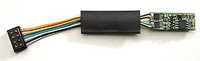
With digital command control (DCC) decoders are used to control each locomotive. A model railroader can set the decoders address and control speed, special effects and motor performance etc. Most manufacturers provide programming instructions.
Your DCC decoder may need quite a bit of work on your part if you want it to work properly. DCC decoders need to be programmed which some people find confusing.
The thing is that the systems can be very different. Unless you can build your own decoder you will be forced to use someone else’s settings and they may not work for you. Nonetheless, have a look at the DCC decoder schematic and see exactly what your DCC decoder can support.
Luckily there are some DCC decoders that come with the option of DCC decoder programming, such as the NCE and Wangrow systems. In some cases it can be a long and complicated process, but there are several.pdf files out there that will assist you in changing the command station manufacturer’s settings. Some people will find this to be a bit too complicated, but there are others that will actually welcome this complication for the chance to run their railroad in the way that they see fit.
The process of controlling the DCC decoder can be made a bit easier with software intended to control the DCC railroad. There is some software that you could pay up to fifty dollars for, and there is some software that will be completely free. One example of this would be the MRC Prodigy interface for DCC controlled trains.
For added control you can always include DCC accessory decoders, which provide more options than your standard DCC decoder. For the most part these are stationary, and while they are expensive, are quite worth having. Some of these have options for auto-return, lock-block, locked route control, system reset, smart default ops, and many other settings. There are a number of reasons why one might prefer to have one of these, aside from having a control complex.
For instance if you have your train on display and don’t want anyone else to be able to exercise control over it, then you can have the DCC accessory decoders set certain parameters into it. The ability to lock-block will be especially useful in this case.
The only thing you really need to note is that this is not going to be easy by any stretch of the imagination. In some cases you will need to be familiar with computer programming languages, and there are some model train enthusiasts that know more programming languages than some of the seasoned computer technicians. This is can be a big challenge, but it might just be one that you are willing to take on. Are you ready to exercise complete control over your model train set? If so, then prepare to be amazed by the advanced programming and the control of DCC accessory decoders.
The important thing is to be comfortable with the operating system you use. Do not let anyone else in the hobby pressure you into changing from DC to DCC. Some people are comfortable with what they are familiar with and see no need to change to a new system just because someone else raves about it. Both systems have there merits.
Mike writes on a variety of subjects from internet marketing to model trains. Mike is a keen model railroader and has his own model train layout.
Mike Williams writes:
So you have been operating model railroads for a while. Perhaps you have built the ultimate N scale scenery, or an HO layout, and captured a living world within a paper mache landscape. There is nothing quite like looking upon a scene like that frozen in time. Your train set might have people standing in a small rural town, or perhaps the image of people rushing to work in an urban community. No matter what you like, you can just make it better, even if you think that it can’t get any better than this. You would be wrong, because the hobby of model railroading has so much to offer.
DCC model railroading is something that most advanced modelers will inevitably pick up, especially if they enjoy extreme realism in their train sets. This is basically an electrified train system. We are talking about a system where electricity flows through the rails all the time, and you can use a digital control center to help you give orders to your train.
But it doesn’t stop there by any means. There are so many different things you can do with DCC decoder wiring. For example, you can attach a computer system to your setup so that you can control the train’s movement with some basic controls. You might often find things like this at train shows or even in train museums.
There is a common misconception that DCC model trains need to be different from standard model trains. This is not true. In fact, most model trains are sturdy enough to deal with the DCC system. The DCC decoder wiring involved installing the decoder within the train, and fortunately most trains have a universal frame or undercarriage these days. There was a time when they did not match up, but that was changed as the model railroad hobby grew in popularity.
Don’t forget that you can also add a DCC sound system to your train set. There are many sounds available, many of them taken directly from real trains or train museums. Choosing a sound system will be something you have to do on your own, but we do recommend choosing one of the highest quality.
When you are wiring your DCC model train system, you need to ensure that you make it so that you can break down the system easily and move the benchwork. Even if you are not planning to go to any train shows in the near future, it still helps to be able to move the entire setup. You could need to move it to the basement, or maybe you need to just put it in a better location. Either way, the wiring AND the benchwork need to be portable. You might also want to avoid putting the wiring blocks in an inconvenient location so that they don’t break as you drag the table.
We’ve just scratched the surface here regarding DCC trains. There is much more to learn, so head over to your local model shop today. Ask, inquire, buy e-books, whatever you have to do. Don’t be put off by complicated sounding terms like: DCC model train system, or digital control center… just try to learn a little each day and it will all make a lot more sense. There is a huge world of model railroading out there waiting for you. Enjoy it!
Mike writes on a range of subjects from business to real estate to model trains. Mike is a keen model railroader and enjoys sharing his model train tips.
Michael has a question for readers and asks:
“I have just purchased a box of Peco Code 75 track. My question is; are there any tips some one can let me have on laying the code 75 flex track, on corners.”
Add your feedback below.
Raymond has a question for knowledgeable model railroaders and asks:
“I,m working Dcc and using Peco OO Track SL100. Can a reader piont me into the right pionts to use, and should I use insulators on one side off the track before the pionts? I will have the NCE POWER CAB set up and NCE smart booster SB3a. I would not like to lay track then have to uplay to put isulators in. Regards Raymond. ps my locos are over 20years old and run OK with decoders tcs t1 on test track.”
Comment below.
Timothy doesn’t know where to look on the internet to buy these model train spares and is wanting guidance from experienced model railroaders who buy model train parts online. Here is Timothy’s question:
“I need traction tires for a #242 4-6-0 Mantua/Tyco Dixie-Belle Western Atlantic Steam Locomotive. I also need a “Knob” that raises and lowers a Tyco #932 Boom/Crane car. Where can I buy these parts on the internet?”
Add your feedback below.
Bob has an HO question for readers and asks:
“I would like to build speed controllers like they had in Boys Life about 30 years ago. Does anyone remember them?”
If you answered yes to that question, then perhaps you are able to help others by answering some of their model railroading questions on this blog? On the other hand, you could keep all your knowledge and experience to yourself and not share it with those who could really benefit from your thoughts and who would appreciate your suggestions. It is really your choice, but please remember this blog is operated as a free service and it does rely 100% on the contributions from people like you. We want to keep it free, but to do that we need regular contributors who are prepared to answer some of the many questions that get asked. The alternative is for us to pay someone to answer all the questions, but then we would have to charge a subscription to the blog and we don’t really want to do that.
So, if you can help by answering some of the questions on this model train blog, then please do.
Colin wants to hear from readers with any knowledge of valve gears and connecting rods:
“I am rebuilding several oo flying Scotsman chasis which is all new stuff. My problem is the valve gear and conrods. Fitting the valve gear into the pistons seems straight forward, and fitting the spacer bearing between the conrod and valve gear which is secured with a small screw into a brass stud which is located in the centre, driving wheel 4-6-2 seems not to difficult. Now the conrods and rivets which in turn fit into the front and rear wheel either side of the driving wheel. When all assembled it won’t turn freely. Now I have soldered the rivets into the conrods, could this be the problem? These rivets are not easy to solder in. I hope I have explained the problem well enough for someone to answer.”
Comment below.
John (not the one in the earlier post) has sent in this HO question for readers to hopefully answer. You can comment below.
“I am trying to wire an Atlas #200 snap relay for trackside signal lamps using red and green LED lamps. I have followed the directions in the package but I am not sure were to install the resistors. Also the LED need to have a positive and negative feed. How to you know on the AC side of the power pack which is positive and negative?”