DCC
Everything on model trains, model railroads, model railways, locomotives, model train layouts, scenery, wiring, DCC and more. Enjoy the world's best hobby... model railroading!

Henry has a question for readers:
“My old DC railroad is about 20 years old and is needing a facelift. Can it be changed to DCC without a lot of new wiring? I have several blocks so that I could control trains in different areas. Do I need to remove the blocks and make it all one block? Lastly, can my old engines be converted to DCC or do I have to buy new dcc equiped engines?”
Comment below.
Ed has a question for readers:
“I am looking for some help in choosing a power pack to start my model railroad. I have seen all of the features and eventually want to go to DCC and hand held but not now. So can someone suggest a reasonably priced power pack that will allow growth?”
To post your question use the link in the right hand column. To comment on this posting, click on the link in this posting.
 DCC or Digital Command Control sends signals to the locomotives through the rails. Multiple locomotives are independently controlled within the same block. Train operation depends on the decoder installed in each block. Programming is done to allow users to set the decoders address.
A programming track can be implemented in two ways. Program the track onto your workbench or build it into your layout. The former approach allows simple control and testing facilities. The latter approach incorporates the track into the layout and is easily moveable. It also allows programming a dead zone for track protection. For more information on dcc programming and other model railroading tips and ideas get the Model Train Techniques ebook available free with your first months membership to my online model train club.
 Reg wants to hear from someone who can advise him. If you think you can help, then please add your comments to this posting:
“How do you isolate the front and rear lights from grounding, also the body when you replace the four screws. I fitted a tcs decoder it worked fine until the body was replaced. It burnt out the decoder because of grounding of the lights. My scale is HO.”
Add your answer.
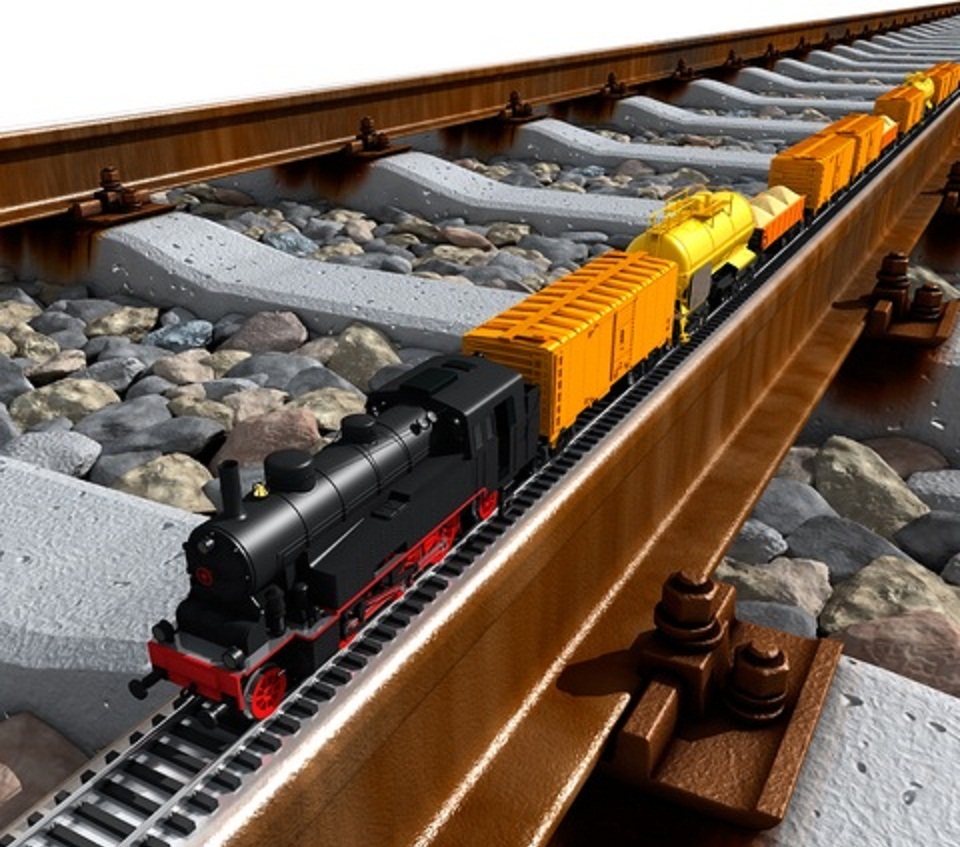 If you are new to model trains, consider investing in diesel locomotives as some in hobby claim they run better than similarly priced steam engine counter parts. Others in the hobby might disagree. You have the option of cargo and passenger cars, with complete kits available.
The rails come in various options, but many prefer nickel silver as it ensures better conductivity.
Scenery can be a big investment if you don’t make most of it yourself… it’s fun making scenery!
Always invest in the best engine as you can, and then go on to build the required landscape. The idea here is to create a perfectly running model railroad, otherwise all your efforts on creating a classic model might go in vain.
There are several excellent resources available for beginners (and experienced) hobbyists, including the “Best Selling” Model Train Help Ebook. Model train enthusiasts can also benefit greatly from access the numerous resources inside the online Model Train Club.
 If you have a model railroad question you would like answered, then use the link on this blog to submit your question. If you word your question carefully and provide some useful details, then chances are someone reading this blog will offer a solution. Only the best question will be published. Please spell check your question before submitting it to the blog moderator for approval.
The link to submit your question is on this page.
Please add your comment if you can advise Michael who asks:
“I have two HO Fleischmann deisel locos that have had decoders fitted from scratch. Both of the decoders have stopped working. How do I test to find out if the locos still work without taking the decoders out of the locos which were fitted by a friend about three months ago, who I do not see any more?”
Add your comment to this posting.
Frank has kindly sent in this contribution:
 If your layout is DCC operated, it has about 12 Volts AC on the rails all the time the power is on. If your layout is DC, there is only power to the rails when the controller is turned on and turned up, and carriage lights will be brighter at higher train speeds because higher voltage is being supplied to the rails. (I mention this because you may be operating DCC trains on a DC layout, as DCC locomotives will also run on DC layouts.)
If your lighting set has incandescent filament bulbs (plain old traditional light bulbs), the lights will be on whenever the power to the rails is on. If your lighting is LED, it must have a rectifier bridge (and a resistor) between the lights and the power pickup from the axle. (These may be included in the lighting units.)
Have you made sure your carriages have metal wheels ? Have you made sure that each wire of the lights is connected to a different rail? (On carriages designed to accept lighting, on each axle, the wheel on one side is insulated, either by a little plastic insert in the hub, or by a partly plastic axle.) If you have plastic wheels, it will be necessary to replace them with metal wheel sets.
If your lighting set itself is fully designed for DCC operation, it should be possible to switch the lights on and off from the controller. You may need to discover the DCC code for this if it is not part of the original equipment. If yo have a little electronic knowledge, it would be possible to run wires from the loco to the carriages to a circuit that switches the lights on and off.
Ryan has put together this helpful tutorial for avoiding derailments on a model train layout. The video includes some excellent layout scenes. Feel free to pass it on to friends. Enjoy!
Anil asks readers:
“WI would like to know whether two dcc systems can be used on the same layout of same make or different? For example, a layout using digitrax can Bachman be added? Can two bachman EZ dcc system or for digtitrax be used on the same layout?”
Dick would like advise from anyone in the hobby who can help:

“I have searched and searched, but have been unable to find a definitive answer (or a solution) to programming Bachmann DCC turnouts with the Dynamis system. I can get them to respond, but the programming does not hold. I was able to get them programmed with the Bachmann base DCC system (E-Z?), but not the Dynamis. Can someone help? Also, I am trying to figure out the configuration for wiring a double cross-over with Bachmann’s reversing loop modules. Thanks!”
Horst asks others in the hobby for advice:
“I am installing a Peco Double Crossover Turnouts with electro frogs in my N-Scale Digitrax DCC layout without a reversing loop. (Parallel tracks only). My plan is to use two or four servo motors with decoders to operate the turnouts. Which components do I need to achieve a flawless operation including to electrify the two frogs alternately for the correct polarity?”
Steve would like some advice from DCC railroaders:
“Hi, I brought an HO Roco train and carriages set which is dcc. I put Roco interior lights in the train set. It has wire going to the axle but no light seem to be working. Would I have to program them into my dcc unit? Any help would be great. Thank you”
To add your answer to help Steve, simply click on the title link “DCC Interior Lights” above this posting, and you’ll be redirected to the comments page.
Francis wants advice from anyone with DCC experience and asks:
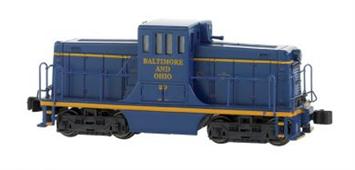
1. How do I start an HO DCC setup lets say for a 16x 8 ft layout?
2. How many boosters and transformers do I need?
3. What brand of locos can be combined to run on the same tracks?
4. Can Marklin, Atlas and Bachmann locos run on the same tracks?
Click on the BLUE title of this post to add your answer(s) to help Francis.

Norbert has a question for N gauge enthusiasts:
Are there instructions for installation of a micro-Tsunami digital sound decoder TSU-750 in a Model Power N-gauge 4-6-2 semi-streamline steam engine (No 87428)? I have checked their website with no success.
Answer below.
Charles has a question for those experienced with DCC:
“I have two E-7 units both with DCC. They are linked up in consist. When I run them the lead engine’s start to blink. I think this is an over heating condition. I am not pulling any cars at this point. Any ideas?”
Add your suggestions below.
The results of the recent poll revealed 51% of the 1047 model railroaders surveyed operate DCC. I actually thought the figure might have been a little higher than that (38% operate DC and 9% didn’t have a layout yet).
There are definite advantages for both systems, and I would never try and push anyone into DCC if they are already comfortable with DC and don’t want to change. That said; I would recommend DCC operation for anyone starting off in the hobby as the system is very versatile and fast becoming the norm. Whichever system you operate, always remember the whole idea is to have fun and enjoy what you are doing!
Charles would like to hear from experienced hobbyists:
“I need information on installing DCC decoder in Mantua 4-6-2 Steam engine or disassembling the engine.”
Add your suggestion below.