Tips & Resources
Everything on model trains, model railroads, model railways, locomotives, model train layouts, scenery, wiring, DCC and more. Enjoy the world's best hobby... model railroading!

A scale is the ratio of model trains to real trains. It can also be expressed as millimeters per foot or fractions of an inch per foot. A gauge is the distance between tracks. The standard distance is 1435mm (4 foot 8-1/2 inches) or the equivalent distance ratio. Any measurement less than this is called a narrow gauge and any measurement greater than this is called wide gauge.
|
Scale |
Ratio |
Gauge (mm) |
| HO Scale | 1:87 | 16.5 |
| OO Scale | 1:76 | 16.5 |
| O Scale | 1:43 | 32 |
| S scale | 1:64 | 16.5 |
| N Scale | 1:160 | 9 |
| G scale | 1:22 | 45 |
John sent in this helpful suggestion and also has a question he is hoping someone can answer for him:
We know that 4×8′ (HO) and 2×4′ (N) tables are basics for smaller model train layouts, as most tables and plywood come in 2×8′ and 2×4′ sizes. This size is a good starting point for beginners, and many of today’s great modelers started and learned with smaller layouts. But there is one problem.
Using N-Scale as an example, the 2×4′ table is great if you use 9-3/4″ radius curves in making a basic oval, but trouble arises when you try to make a two-train set-up using 11″ curves outside the 9-3/4″ loop. The larger curved radius brings the track right to the edge of the table, leaving the train where it could easily fall or be knocked onto the floor. But a way around this does exist, as the outside of the train board can be increased an inch or so on each side. The outer track would then stay on the solid board, while the added edges can be used for scenery such as rocks, trees, lichen, or building flats.
Many possibilities can be used to make these edges, such as wood, extruded insulation board, or plastic. There is one substance that I’m not able to remember the name – it’s something like pipe-wrap with an opening all along one end, but is plastic and a lot sturdier. I believe this material is used on trim wood for paneling. Does someone know the name of this product please?
We are looking for someone who is highly skilled with DCC to write some informative articles.
If you think this is something you could do; simply use the “Click To Add A Comment” link under this posting to submit your details (and maybe a sample). The blog moderator will be in touch via email. The articles will be used to help others in the hobby learn more about setting up and operating a DCC system. There will be payment for your work.
You might even know someone who might be interested. Please refer them to this blog posting.
The techniques used for achieving good looking and reliable solder joints are not difficult to master. Yes, it will require some practice, but anyone can do it.
There key points for creating high quality solder joints on track are:
1. Keep your works surfaces and tools clean.
2. Use acid based solder paste flux.
3. Purchase a good quality soldering iron (with a replaceable tip). A small diameter solder – a .020 inch or smaller works best.
5. For soldering track a 35W to 45W pencil type iron works well.

Smooth operation is critical for the efficiency and profitability of real railroads. Applying these techniques can also make the hobby of model railroading even more enjoyable.
Article supplied courtesy of the online Model Train Club.
Whether you are operating your model railroad just casually for fun, or whether you are trying to replicate actual operations of a real railroad, there are various factors to consider. After all, there is no point in just having trains backed-up with nowhere to go. A real railroad would come to a standstill (and soon go broke) without properly managed train operations. Even on a model railroad, complete disorder and confusion and quickly develop without properly organized train movements. Factors to take into account include:
Line Capacity:
Yard Capacity:
Equipment Capacity:
Crew Capacity:
Although most railroads would like to operate at 100% capacity (to maximize profits), it is not usually feasible or economic to do so. A target of 70% to 80% is usually more realistic. In fact; industry practices generally require standards to ensure fluidity of operations and to avoid major operational issues at track choke-points.
Various factors can influence efficiency and the practicality of running a line at full capacity including:
To try and increase the operational capacity above an effective level can be problematic. It could be achieved by deferring maintenance, but this could affect future capacity if there is a signal breakdown or derailment that could have been prevented with regular maintenance. It could reduce the railroad’s ability to react to a situation and/or increase the recovery time following a delay or stoppage. This could affect reliability, customer satisfaction, and potentially impact the profitability and reputation of the railroad.
Efficient train operation therefore needs to (among other things) :
These are the kinds of day to day challenges facing a normal real-sized railroad, so why not apply similar conditions to your model railroad layout? Replicating real life conditions can add considerable operational interest to a layout and make the hobby so much more enjoyable!
Article supplied courtesy of the online Model Train Club.
 The further away you stand from an object in the real life, the duller (or grayer) and less clear it appears. The viewing distance for models doesn’t usually vary much with their scale, so the smaller the scale, the duller the colors need to be. You can achieve this scale effect by mixing colors (full-strength) with varying amounts of light gray, white, or gray-blue.
Keep a note of any special paint mixes you make up. This is really helpful if you think you might need the exact same color again. You can do this by spraying or painting the color onto a scrap of white card and recording the details alongside.
There are more scenery ideas in the members area of the online Model Train Club.
Andrew sent in this hobby tip:
“Perfecting your soldering skill is essential to own a stunning model rail network because spotless work not only looks good but also provides adequate grip and a flawless running platform for your engines and cars. You need a 100W gun and resistance soldering tools for the jobs such as installing etched metal kits while rosin core solder will help you to do a fantastic job. You also need a sanding block to clean the parts before the solder job and the joints must be cleaned after the job as well.It works for me.”
 Even though many of us a reasonably experienced in the hobby, getting started can be confusing. Beginners hear all kinds of new terms and have a lot to learn. This steep learning curve can be intimidating and will put many off venturing further into the hobby. This is why it is so important we all help and encourage others.
DCC or Digital Command Control uses rails to send digital commands to the locomotives in such a way that multiple locomotives are independently controlled within the same block. A DCC system consists of the following components.
Command Station – controls all other parts of the DCC and determines the type of throttle controls that can be incorporated.
Throttle or Cab – acts as hub of the whole system, primarily used for controlling the train.
Booster – amplifies command signals so that enough power is generated for operating the tracks.
Power Supply – supplies power to the entire model as an AC transformer or DC power source.
Decoder – incorporated into each locomotive to provide power to the track, only when it has been addressed.
For lots more information of DCC operation check out the members area inside the Model Train Club. New content is added every month.
 Regular contributor John has once again supplied a wonderfully informative article for publication. On behalf of all readers I would like to thank John for the excellent contribution he is making to the hobby. I know it is really appreciated.
No matter what size model railroad you have or are building, it’s important to have the right curved track for the kind of locomotives you may own. Just like making sure all the track is kink-free with clean rails, using the correct curves can make your train run realistically as long as the track is clear. On the other hand, a locomotive running on too-small curves can not only look bad, but can cause derailments and collisions if the operator is not careful.
A real railroad uses easements to bring a train into a turn, meaning that the track has the largest curve at its starting points and gradually goes into smaller curves between these points. Easements can be used and look great on model railroads, but take up a lot of space on smaller projects.
As related to diesels, a four-axle locomotive, such as an ALCO RS and C-400 series, the EMD F or GP, and the GE B-series, are usually shorter than the six-axle locomotives like the ALCO C-600 series, the EMD SD, or the GE C-units. For N-Scale railroads, the minimum curve to use is the 9-3/4” Radius, which can handle a four-axle locomotive pretty well. Six-axle locomotives will run on 9-3/4” curved track, but look and run better on a minimum 11” Radius to handle the longer diesels. In HO, which is almost twice the size of N, the minimum track curves should be 18” Radius for four-axle diesels and 22” Radius for six-axle diesels.
If you run a train with passenger cars on your railroad, use the largest curves possible. Passenger cars can be longer than freight cars, and need the larger curves to make turns. Also use this principle if you model the modern era, because some of today’s huge engines and bigger freight cars need the larger radii.
A problem arises when modeling a smaller railroad. The plywood boards in home improvement stores are usually cut to a 4×8-foot size, or in half to 4×2. These sizes do not support the larger curves. A 22” Radius (HO) on a 4×8 or 11” Radius (N) on a 2×4 can fit on the plywood, but the track is too close to the edge. Get around this by using smaller curved track and go with four-axle diesels.
Comment below.

Use an eye dropper to achieve more accuracy and avoid damaging other parts of your railroad.
Ballasting Track can be quite tricky and it takes at most patience and effort to get it looking right. Ballast is laid between the tracks and sometimes on the sidings of the sleepers such that one can in a realistic effect there are different techniques for laying down Ballasting Track.
If you are using cork it is important that you stand the edges of the slope first so that the smaller stones will obey better. Use almost 70% isopropyl alcohol spray as the wetting agent instead of plain water.
With the help of an eyedropper you can do a better job and avoid spraying on the scenery. To soak the Ballasting components use a mixture of white glue and alcohol in 50-50 proportion. These tips will help you do your job perfectly.
You’ll get a more detailed guide to step by step ballasting in the members area at the online Model Train Club.

Code 100 track
Each model train track comes with various codes or sizes for each scale. These codes are identified with numbers which translate into the height of the rail track in inches. For example: Code 100 – gives you 0.1 inch height and 156lb rail. In the same way, Code 83 – gives you 0.083 inch height and 132 lb. rail.
When it comes to creating a prototype track, the main lines are made with heavier rails and the branches or deviations are made with lighter rails. The roadbed and the space between ties of these codes vary as well. For example if the mainline needs 24 ties/39 foot rails, it comes down to 11 1/2 inches between each tie. With this in mind, use heavy code rail for the mainline and smaller code for the sidings.
If you are looking to rebuild your railroad model form scratch, then you’ll have to remove decals off the train. Follow the steps below to achieve a neat look.
The sole purpose of real life railway networks is to transport people and goods from place to place but most model trains simply circuit on a loop. If you are a purist, consider adding a model railroad waybill system to your network. A waybill system is used to identify the coach, its transport time and stops. You can use ready-made or custom made waybill systems to operate your railroad network like railroads did in the past before the age of computerization.
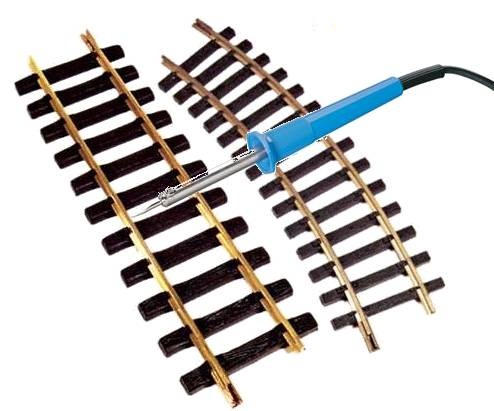 A damp sponge and soldering stand are must have accessories in model rail soldering because overheated irons and unclean ends will give more trouble than good. Do not use acid core solder because acid can cause metal corrosion and your railroad components may eventually get damaged. Avoid lead core as well and try sticking to rosin core solder as it usually gives clean soldered ends. You also need flux to make your soldering jobs easier.
 A model railroad interchange can be built simply for the visual appeal or it can offer great functionality on larger model railroad layouts. Whatever the reason is; you have different options to try here. Some modelers build interchanges with lines fading into the terrain, suggesting that the interchange fades into the horizon.
Practical version of railroad interchanges can include staging yards to mange heavy traffic. Staging yard can help you to store coaches and it can be used to represent destinations that are not covered in your map!
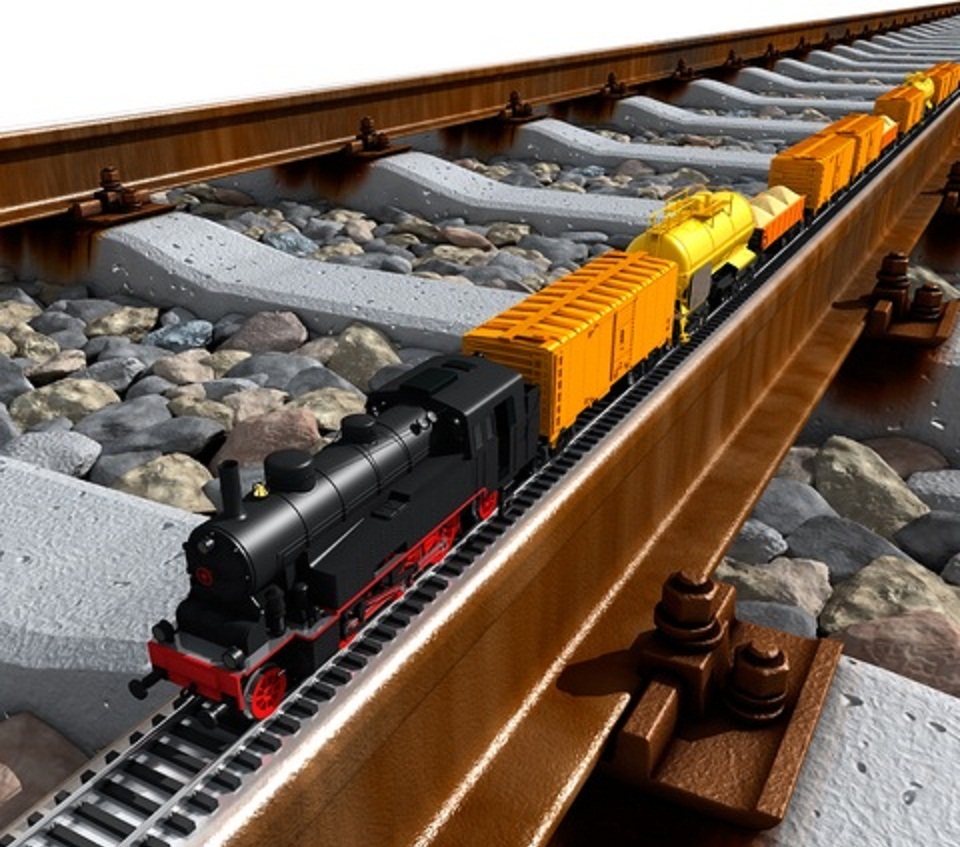 If you are new to model trains, consider investing in diesel locomotives as some in hobby claim they run better than similarly priced steam engine counter parts. Others in the hobby might disagree. You have the option of cargo and passenger cars, with complete kits available.
The rails come in various options, but many prefer nickel silver as it ensures better conductivity.
Scenery can be a big investment if you don’t make most of it yourself… it’s fun making scenery!
Always invest in the best engine as you can, and then go on to build the required landscape. The idea here is to create a perfectly running model railroad, otherwise all your efforts on creating a classic model might go in vain.
There are several excellent resources available for beginners (and experienced) hobbyists, including the “Best Selling” Model Train Help Ebook. Model train enthusiasts can also benefit greatly from access the numerous resources inside the online Model Train Club.
 If you have a model railroad question you would like answered, then use the link on this blog to submit your question. If you word your question carefully and provide some useful details, then chances are someone reading this blog will offer a solution. Only the best question will be published. Please spell check your question before submitting it to the blog moderator for approval.
The link to submit your question is on this page.