Trackage
Everything on model trains, model railroads, model railways, locomotives, model train layouts, scenery, wiring, DCC and more. Enjoy the world's best hobby... model railroading!

Ian sent in this tip to share:
For code 100 or smaller track, use a solder iron with a conical type tip. The end of the tip will be unplated iron. This is the area that gets coated with solder. The rest of the iron tip will be copper plated with iron, nickel and chrome. The chrome stops the solder from adhering to the body. For larger rails than code 100, you might want use a screwdriver shaped tip instead.
Add your comment.
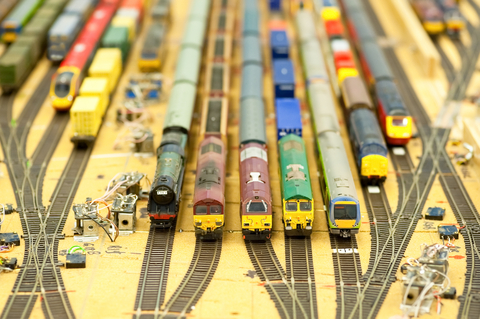 Switching tracks direct the train from one track to another. This is achieved by points which are moveable rails, lying outside the main track.
Crossover: A crossover switch lets trains on one track to continue in a straight path or diverge onto an adjacent track. When both tracks diverge onto each other, a double crossover track is formed.
Three-Way: A three way track splits a track into three different directions.
Wye: A wye track allows the train to change directions. The train can go both right and left through a single track.
Double Slip: A double switch guides the train on four different routes. Two tracks combine with four points to achieve this.
 Paul needs advice from readers and asks:
“I am trying wire a double gaugemaster OO track cleaner. Do I wire it directly to the track or not? Someone please help me.”
Add your comment.
Louis has a question for experienced model railroaders and asks:
“Dear Fellow Train Modelers, I currently have two Bachmann N SCALE old west train sets. The track is Bachmann E Z track. I would like to join Flex track to my layout to make it appear more realistic. Questions, Kindly suggest the best manufacturers Flex track and code # I should use with the Bachmann e z track. Also,what should I use to mate the EZ and Flex track together. ex. cork? Thanks for any help you can render.”
Add your comment.
 Don has a question for readers:
“I am still planning my N scale layout, but I picked up 1000 track screws on eBay for around $30. So far I haven’t read of anybody using them but they should hopefully be easier to remove than track nails or glue. Does anybody have any comments on the use of these screws?”
Add your comments to Don’s posting.
Lou needs advice from others in the hobby and asks:
“I am just starting back into HO and have been buying my track from Ebay. I want to start my layout right away. Is there a problem with mixing Brass and Nickel silver track? I will eventually use all nickel silver. Thank you.”
Add your comment
Gary has a question for others in the hobby:
“I have two HO radius pieces that I cannot connect perfectly and I am concerned that my cars might derail upon moving over that connection. Any suggestions to join those two pieces better?”
John would like to hear opinions on Kato #4 Switches:
I don’t know if Kato N-Scale Unitrack is available where you happen to be, but I have found it to be very good, above manufacturers of other roadbed track such as Atlas and Bachmann. However, I have trouble with Kato’s #4 Switches, and I was wondering if others have had trouble with them. #4’s are good to save some space on a small layout or a yard, but the short straight sections that come with the switch to make the track fit bring it out longer, almost to #6 size. The #4 configuration on the back end of the switch can be confusing, and it seems like the modeler has to put power sections all over the place or the engine will stop. #6 switches are power routing but run much better, and can be used on some small layouts.
Add your comment.
Jack has a question for fellow model railroaders:
“I need to adjust the wheel gauge on an O-Scale 2-track truck. Any suggestions how to accomplish this? The wheels are too close together.”
Add your comment.
Lee is having a problem with rusty O scale track and asks:
“One of my tracks goes through the wall of the game room out into the garage. I live at the coast (NC) and I am having a hard time keeping this track clean. As in rust. HELP PLEASE!”
Add your comments.
Louis asks readers for advice:
“I currently have a Bachmann (n scale) E Z Track. I would like to join Atlas flex track to the e z track. Which Atlas flex track would be best to use? Would Atlas code 80 be correct? Any assistance would be appreciated.”
Add your suggestions.
Shane sent in this brief article to share:
A runaround track allows a train to move in front or at the back of another train or locomotive. It is usually used at the terminal of a branch line to prevent the train from reversing direction.
A runaround track easily switches between carriages. Switches are installed at both ends, allowing a locomotive to push another car into a point facing spur by going around it in parallel. This is useful when trains return from a trip and drop off cargo. Using engines at both ends of a train eliminates the need of ‘running around’.
Andrew has a question for others in the hobby:
“Can someone help. I am looking for plans of Rail Trucks or photos.”
Add your suggestions.
John sent in this helpful suggestion and also has a question he is hoping someone can answer for him:
We know that 4×8′ (HO) and 2×4′ (N) tables are basics for smaller model train layouts, as most tables and plywood come in 2×8′ and 2×4′ sizes. This size is a good starting point for beginners, and many of today’s great modelers started and learned with smaller layouts. But there is one problem.
Using N-Scale as an example, the 2×4′ table is great if you use 9-3/4″ radius curves in making a basic oval, but trouble arises when you try to make a two-train set-up using 11″ curves outside the 9-3/4″ loop. The larger curved radius brings the track right to the edge of the table, leaving the train where it could easily fall or be knocked onto the floor. But a way around this does exist, as the outside of the train board can be increased an inch or so on each side. The outer track would then stay on the solid board, while the added edges can be used for scenery such as rocks, trees, lichen, or building flats.
Many possibilities can be used to make these edges, such as wood, extruded insulation board, or plastic. There is one substance that I’m not able to remember the name – it’s something like pipe-wrap with an opening all along one end, but is plastic and a lot sturdier. I believe this material is used on trim wood for paneling. Does someone know the name of this product please?
Fred sent in this suggestion:
“It seems I Hopefully corrected my derailment issues if any old school guys out there are still using the old style track. My one suggestion is to use ceiling tiles so you can push the nails down with a flathead screwdriver and also secure your joiners snugly to prevent derailments using flex track your best bet is to use it on long stretches of plywood layouts so that way there are two chances for derailments a slim one and poor on.”
We are looking for someone who is highly skilled with DCC to write some informative articles.
If you think this is something you could do; simply use the “Click To Add A Comment” link under this posting to submit your details (and maybe a sample). The blog moderator will be in touch via email. The articles will be used to help others in the hobby learn more about setting up and operating a DCC system. There will be payment for your work.
You might even know someone who might be interested. Please refer them to this blog posting.
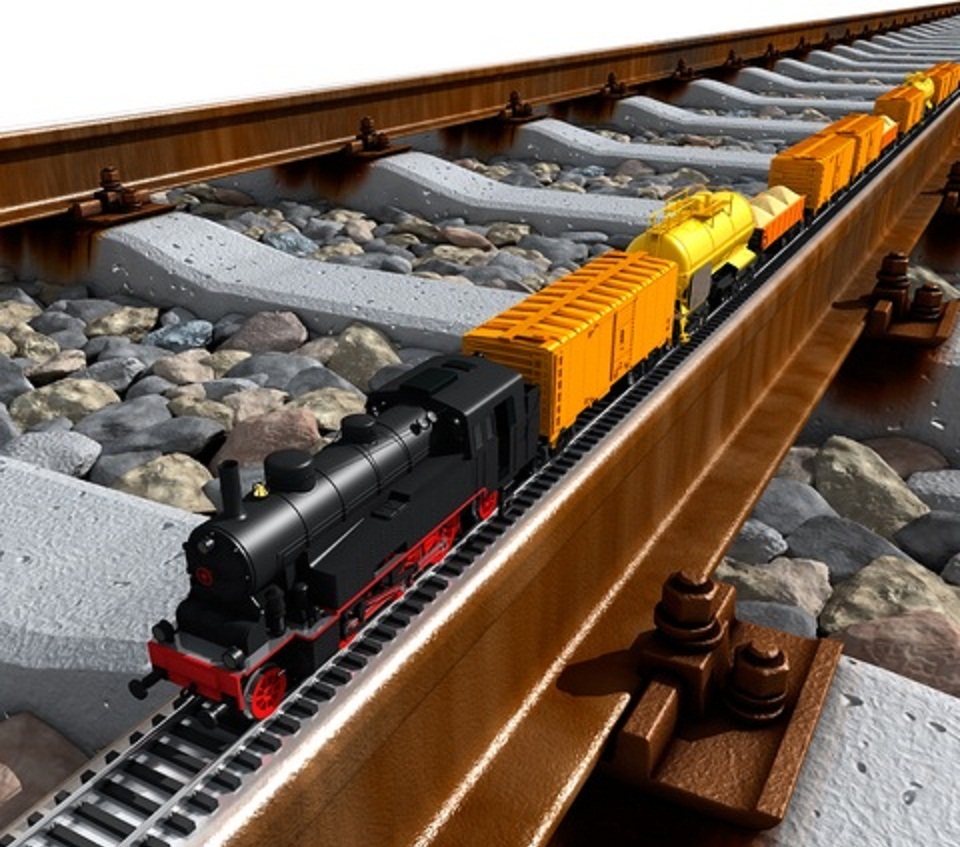 If you are new to model trains, consider investing in diesel locomotives as some in hobby claim they run better than similarly priced steam engine counter parts. Others in the hobby might disagree. You have the option of cargo and passenger cars, with complete kits available.
The rails come in various options, but many prefer nickel silver as it ensures better conductivity.
Scenery can be a big investment if you don’t make most of it yourself… it’s fun making scenery!
Always invest in the best engine as you can, and then go on to build the required landscape. The idea here is to create a perfectly running model railroad, otherwise all your efforts on creating a classic model might go in vain.
There are several excellent resources available for beginners (and experienced) hobbyists, including the “Best Selling” Model Train Help Ebook. Model train enthusiasts can also benefit greatly from access the numerous resources inside the online Model Train Club.