Everything on model trains, model railroads, model railways, locomotives, model train layouts, scenery, wiring, DCC and more. Enjoy the world's best hobby... model railroading!
A double yard has both ends connected to the main track. This is accomplished with a ladder that guides the train onto one of the many tracks in the yard. The components of an ideal yard should include a runaround track, one arriving and one departing track, thoroughfare that connects ladders in a yard, classification tracks and drill track. The following points must be followed.
 There are many small details that can be added to model railroads to improve the design. The following ones are ideas for any layout for it to depict a real railroad system.
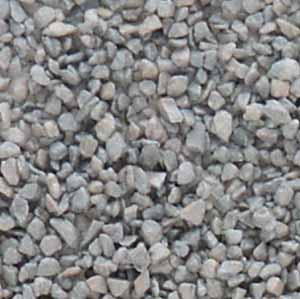
Track ballast will vary in color depending on its age and usage. If the track has had trains sitting regularly in one spot the ballast might for example have oil stains where the locomotives have been.
Roger P sent in this short article for publication:
Your railroad can showcase track weathering as a result of poorer care on the spurs and sidings. You may find more rust on these sidings which usually is light gray or grayish brown, whereas the mainline will reflect a good condition with dark brown or black in color.
When it comes to track weathering you might find very little ballast on the siding but you’re more likely to find cylinders. The mainline on the other hand will have regular purchased ballast from specific quarries. It is best to use granite or limestone as ballast on the railroad wherever possible. If you could consider these details as you create your prototype you can end up with a very realistic and well crafted railroad.
Click the link to post your comments on Rogers posting.
The sole purpose of real life railway networks is to transport people and goods from place to place but most model trains simply circuit on a loop. If you are a purist, consider adding a model railroad waybill system to your network. A waybill system is used to identify the coach, its transport time and stops. You can use ready-made or custom made waybill systems to operate your railroad network like railroads did in the past before the age of computerization.
 Models trains are much older than most people think, with a history dating back to almost two centuries! The first model train, Birmingham Dribbler, was built in 1840s and used a real steam engine to run. These early models were fascinating except for the downside that they were running without any rails!
Some people outside the hobby get confused between model railways and miniature railways. Although the principle is the same, they are completely different in that the latter can actually carry real humans and are powered by powerful engines. So if you get asked the difference, then that is the simple answer.
Damien kindly sent in this tip:
Years ago my father explained to me the advantages of building a grid vs. flat layout when it comes to grades. The grid layout offers both + and – grades. What is advantageous here is that if your trains have bridge or other types of over crossings, then the grade angles can be cut in half. The over crossing could be a +1.5%, where as the under crossing could at – 1.5%. Effectively this equates to a 3% grade on a flat top layout. The distances leading up to and going away from the crossing is now a shorter distance for both the over and under crossing tracks.
This works really well as the gauges go up in size. Just think of O gauges crossings and the clearance you need to clear the trains at the crossing. By cutting the distances to and from the crossings you get more bang for the buck in layout size. And the 1.5% grade sure is easier on the motors too. Of course the grades could be increased to 3% for over and under crossings, and would still be reasonable for the motors, while decreasing to and from distances even more.
Add your comment to this posting.
John has a question for knowledgeable readers:
“I recently purchased two Traing engines on e-bay, which included smoke units, and purchased the smoke fluid. Unfortunately I am not having any luck producing smoke. Possibly the heaters are not working. They are old engines so I am unable to get replacements. Any ideas from readers for where I can get any advice or help would be appreciated please.”
Click to add your comment or answer to John’s posting.
 Collecting antique model trains helps you to build an exclusive collection of trains that no one else have but it is not as easy as collecting brand new trains. Do not collect antique trains randomly but choose something that has historical importance to add value to your collection.
In many instances, it is difficult to find antique model trains with a fair price quoted but be aware of the fact that paying too much for a train with the idea of re-selling them is not smart because you can’t predict the future but what you can predict is the present and whether the price quoted is appropriate or not.
 Attention to detail and determination can work wonders in creating model railroad scenes and a good example is using automobiles and people on roads. Avoid keeping empty cars, buses and vans on roads but take the extra effort of decorating them with custom painted figurines. There is nothing more unrealistic than ghost driven automobiles on a street!
The same way, try to paint the missed details on automobiles, streets, sign boards and roads to bring realistic effects. Using advertising banners and hoardings can add to the beauty of model railroad scenes.
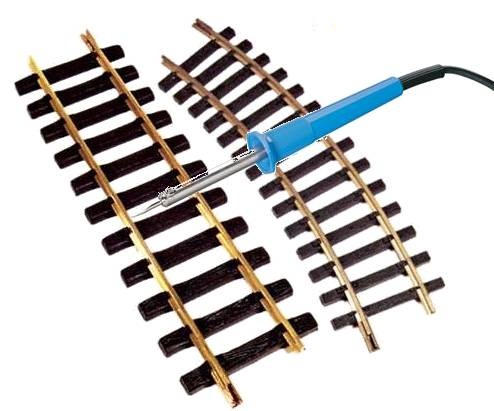 A damp sponge and soldering stand are must have accessories in model rail soldering because overheated irons and unclean ends will give more trouble than good. Do not use acid core solder because acid can cause metal corrosion and your railroad components may eventually get damaged. Avoid lead core as well and try sticking to rosin core solder as it usually gives clean soldered ends. You also need flux to make your soldering jobs easier.
Wayne from the UK sent in this tip to share:
“Track wiring for model trains must be done with appropriate gauges to expand the lifespan of your rails as well as locomotives. To avoid wiring related issues, follow the track gauge recommendations. 22-24 gauge wires are best suited for lights and the same gauge can also be used for track turnouts. However, you should use the same gauge for track feeders but stick to 19-20 for best results. Track power bus on the other hand only need gauges of 14-16. Stick to these specifications for better conductivity and power output on your railroad.”
Click the link to comment on Wayne suggestions.
This contribution from club member Harry who suggests:
“A reverse loop on your model railroad should be carefully done because faulty reverse loop can damage the locomotive and the entire wiring setup in worse cases. A reverse loop, as the name suggests, doubles back on itself so it’s important to give an electrical block for the reverse loop. You need to use an SPST switch to run power to the extended loop, which can be bought online. The DPDT switch will be used to control the power flow on the loop so that you can move your locomotive forward and backward when needed.”
Click the link to comment on this posting from Harry.
Regular re ader Ted has been involved in the hobby for 31 years and sent in this tip:
“In my opinion the gears are the most important parts of your model train mechanics and must be inspected from time to time to identify missing tooth, poor lubrication and damage. I recommend oiling the wheels lightly at least twice in a year but you can oil the wheels whenever the running noise of your train increases. Avoid oil spreading to the traction tires because oil will reduce the grip of traction tires, resulting in the overturning of the coach. And remember oil attracts dust and dirt so you don’t want too much oil anywhere. Use an electronic track cleaner to keep your tracks clean so that tracks can maintain its conductivity. When you lubricate gears use a plastic compatible grease, because oil will simply get thrown off the gears when at high revs, and it will cover everything, whereas the grease will remain in place. However, never over lubricate the gears! Labelle make a lubricant or you could use AJ’s Magic Grease #0197 which is a non-petroleum based lubricant with Teflon. AJ’s Magic Grease works well and sticks okay to plastic surfaces.”
Click on the link to add your comments.
 Although, desert layout scenery for model railroads can be bought online, you can build better layouts with a little bit of DIY knowledge. Deserts around the globe are dramatically different in color schemes and landscapes, and this should be taken into consideration while working on a plan.
It is imperative knowing the different between warm and cool colors: cool colors will make your landscape feel farther while warm colors will make it look closer. Deserts usually have warm colors, so it is a great idea to add Sky detail or other scenery elements in cool colors to make your desert layout scenery bigger than it actually is!
This scene features the dry Australia outback.
It is a shame William didn’t build his HO layout in modules as he has struck a common problem. Click the link to add your comments to this posting if you can offer some suggestions for William:
“I started with a basic figure 8. But we put our home on the market, and will be moving soon. So I stopped adding to my layout. My problem now is what or is the best way to take it down for the move??”
There are lots of excellent tips in the ebook for building modular layouts at http://www.modeltrainclub.org/club.html
Larry has a question for others in the hobby and asks:
“Recently I was given an HO DCC F7 engine (Bachmann item # 60135). All of my other engines are DC. Can I run DCC on a layout that is set up for DC? (I was a modeler many years ago. After many moves, two kids and other reasons, I am starting back into the hobby and plan on DC operation for now.)”
Add your comment or answer to this post.
 A model railroad interchange can be built simply for the visual appeal or it can offer great functionality on larger model railroad layouts. Whatever the reason is; you have different options to try here. Some modelers build interchanges with lines fading into the terrain, suggesting that the interchange fades into the horizon.
Practical version of railroad interchanges can include staging yards to mange heavy traffic. Staging yard can help you to store coaches and it can be used to represent destinations that are not covered in your map!
 Our dads and granddads built model railroads with fewer resources and technology than we have access to and this shows how lucky we are. It is much easier to build a stunning model railroad terrain nowadays than the past because there are quite a few ways to find an inspiration.
Start browsing stock photography sites like Shutter Stock for inspiring landscape pictures and try to find a high resolution version of them on the internet. There is also Google Earth to get an aerial view of rail yards. Combine a few landscapes and draw a map to plan how to design your entire railroad and execute your ideas with the right materials (and WOW! what selection of materials there is today when compared to days gone by).