Everything on model trains, model railroads, model railways, locomotives, model train layouts, scenery, wiring, DCC and more. Enjoy the world's best hobby... model railroading!
Denise asks readers:
“How do I keep my HO trains from uncoupling? Also how can he keep the cars from jumping the track?”
Add your answer below.
Tim asks readers for ideas:
“I have a 2-10- 4 stean engine that jumps track even on a perfect flat , straight area. Front two wheels jump track imeditatly. My others don’t. Any idea hat to look for?”
Here are a three tips sent in by members of my online Model Train Club:
Bernard says:
“My tip is about planning a layout. We spend hundreds (probably thousands) of hours at our layouts so we need to be comfortable. I mean the right height off the floor, easy to reach access to all sections of the layout. I have a high bar stool handy to sit on and I’ve added foam padding to make it more comfortable. Also my power pack is close to the electrical wall socket so I don’t need to run miles of cords (or try and hide them).”
Daniel says:
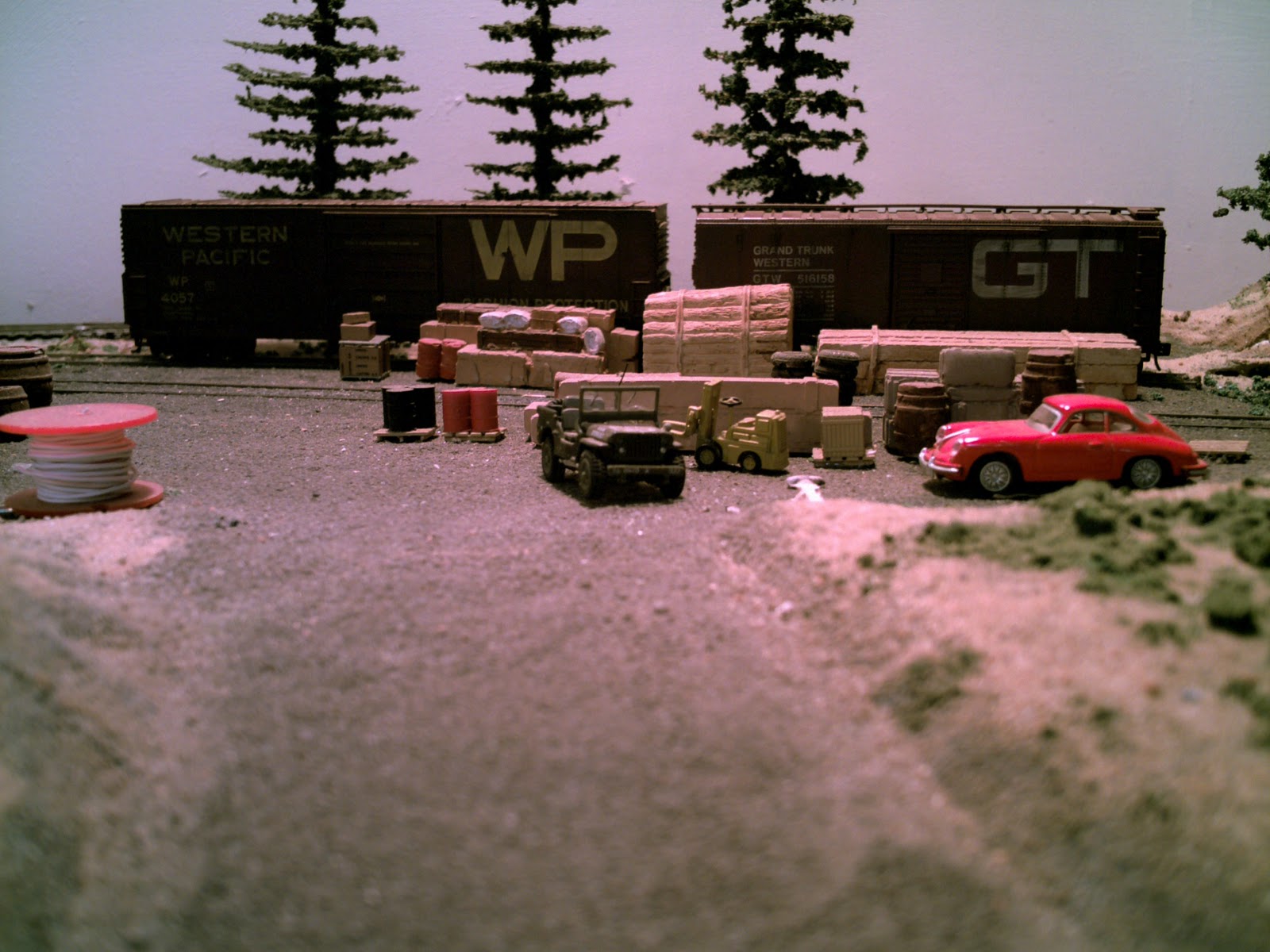
“I think it’s best to start with a 4 × 8 foot bench. You can always add another 4 × 8 foot bench at the end to form an L shape, or add another at the other end to form a U shape. I use screws and glue (not nails), as nails tend to work loose with vibrations from trains. Brace the legs for extra strength (your layout will get heavy with mountains, buildings etc) and stability.”
Robert adds:
Sometimes it is better to build a layout in modules, or work on just half of the layout to start with. A half-sized layout is not only quicker to build, it will provide you with a good guide to the costs and time involved.
More tips are available inside the members area of the Online Model Train Club.
Bruce says:
“Because I have a bad back I made my bench 42 inches off the floor… no bending. The only problem is I find it difficult to reach the rear of my layout as I can’t stretch my hand as far at that height. My advice is around 3 foot off the floor for most people. Put a piece of plywood at that height and test out reach-ability (if there’s such a word) before screwing your bench together. My trains look good higher up, but little kids can’t see (or touch!).”
Michael asks readers:
“I want to put on my HO layout a double track upper level. My question is; what is the distance from the lower board to the bottom of the upper board, for clearance of trains running under the board.”
Add your answer below.
Rich asks readers:
“Does anyone know what kind of dcc sound decoder is compatible, with Athearn eight pin plug,and also a mth eight pin. Thanks for your help.”
Add your answer below.
Jay asks readers:
“Hi, just starting to build my first layout and was wondering if anybody has tried the Woodland Scenics River Pass ST1484 layout. I would love to hear all comments good/bad and where is best place to get one. Thanks Jay”
Sal asks readers:
“How do I wire Rail King O crossing gates to Gragraves track? The instructions only talk about Rail King track.”
Comment below.
Comment below.
Jack kindly sent in this idea:
"Most people buy the white or red grapes to snack on. They are a healthy snack. However they are more. Be careful pulling them from the stem. Dry the stems (usually 24 hrs is enough) put some school glue, hot glue or almost any adhesive and apply the 'moss' available in most any craft or mega stores for very few dollars. The trees look natural and no two are alike."
Jonty has been a member of my online Model Train Club for 7 months now posted this idea in the members area:
I prefer grass carpet which is a simulated grass with a paper backing. It is hard-wearing and easy to apply to large areas. However too much of it can look a little too perfect (like a golfing green). What I do is weather it in places with a little bleach (watered down). Depending on how strong the bleach concentration is, the grass carpet with turn whitish, or a browny, or yellowy color. These colors can be effective on steeper slopes with little vegetation.
I have also used the Woodlands Scenic scatter grass and also make my own from a recipe that seems to change every time I make it. I often combine the above two techniques (bleached grass carpet with scatter grass) to get a very natural looking scene.
Here is just one of the hundreds of useful tips inside the members area of my online Model Train Club. This one is supplied by Samuel who has been a member for 10 months.
Over the past 6 years I have done a lot of scratchbuilding of houses and buildings. I have tried using cardboard, balsa-wood and even styrene. Although I like working with balsa it is not always as strong as I would like it to be.
A friend gave me some double-sided printed-circuit board and it was perfect. I cut it using a guillotine as it was so strong. It was easy to solder pieces together. He gave me heaps of offcuts for free. I could still incorporate some balsa as it easily glued to the circuit board. I used my soldering iron to add some stonework effects. The buildings I now make with circuit board are almost indestructible.
Lots of very experienced model railroaders are members of the online club and share their ideas with other members. If you are not already a member – Join the online model train club today.
Chris is a keen member of my online Model Train Club and sent in this tip.
I use building construction foam that’s normally for expansion joints to build retaining walls on my layout. There are a couple of different types of this product and one has a cover you peel away leaving a very sticky surface. To imitate rocks I have used a variety of materials including crushed slate, aquarium stones and crushed brick which I apply to the sticky surface. I then add some grout between the stones. You could use this technique for roads or paths too.
There are hundreds more useful tips for registered members to access inside the club area.
Andre has some grand ideas for his planned layout and would like feedback from others. Comment below.
Here are questions from four blog readers who are wanting some advice. Perhaps you can help one of them.
John asks readers:
Baseboard Scatter
"Can anyone suggest a scatter material for a 6 foot x 4 foot baseboard which is reasonably priced?"
Alan asks:
Lighted Trees
"I am looking for either a place to buy, or a way to make, some lighted Christmas tress for my O Gauge layout. I was thinking of adding a larger type tree to my town park area and would like the effect of having it lit. Does anyone know of a supplier of pre-made lit trees that can be wired into my layout?
Vincent asks:
Making Smoke
"How do I make smoke (not from an engine) in a burning building? Thank you."
John asks readers:
Rotex Scale Model Trains
"Does anyone know of ROTEX small scale model trains sets? If so,is there a club or group that has special interest in Rotex trains? Thanks."
Add your comments or suggestions below.
Here are 5 of the hundreds of useful model train tips available to members inside the Online Model Train Club. If you join before Christmas you will qualify for the extra bonus Christmas gift, but time is fast running out. Read about the other bonuses here.
Rob’s ideas: I mix window cleaner (Windex) to thin my acrylic paints when using an airbrush. It dries quickly, but be careful the window cleaner brand doesn’t contain harmful chemicals like ammonia as they might damage some plastics.

Pat’s idea: I haven’t got an airbrush so I uses brushes to apply paint, but they can leave brush strokes. To get a really smooth surface I apply several coats and use fine wet/dry sandpaper between coats. I also thin the paint slightly between each coat and use a finer grade of sandpaper as I come to the end of the process. I also use rubbing compounds on some jobs.
Cedric’s idea: I use white spirit instead for those expensive thinners from art shops. Each time when washing brushes I keep the dirty old used thinner and pour it in an old jar. After a while the paint sinks to the bottom of the jar and the thinner is relatively clear again. I reuse it.
Noel another keen member of the online Model Train Club suggests…
From my days in the retail trade we like to add movement to our window displays to attract interest. A local retired electrician use to wire up little electric motors to make things move. I have used the same idea on my railroad. I have a little figurine of a man with a chain saw cutting through a log and a boat in the water rocking gently. It only takes a little electric or battery motor mounted under the benchwork with the shaft of the motor attached to the the object that needs to move. You need to be a little ingenious, but the effect can be very interesting.
There are hundreds more great ideas inside the online Model Train Club like this one…
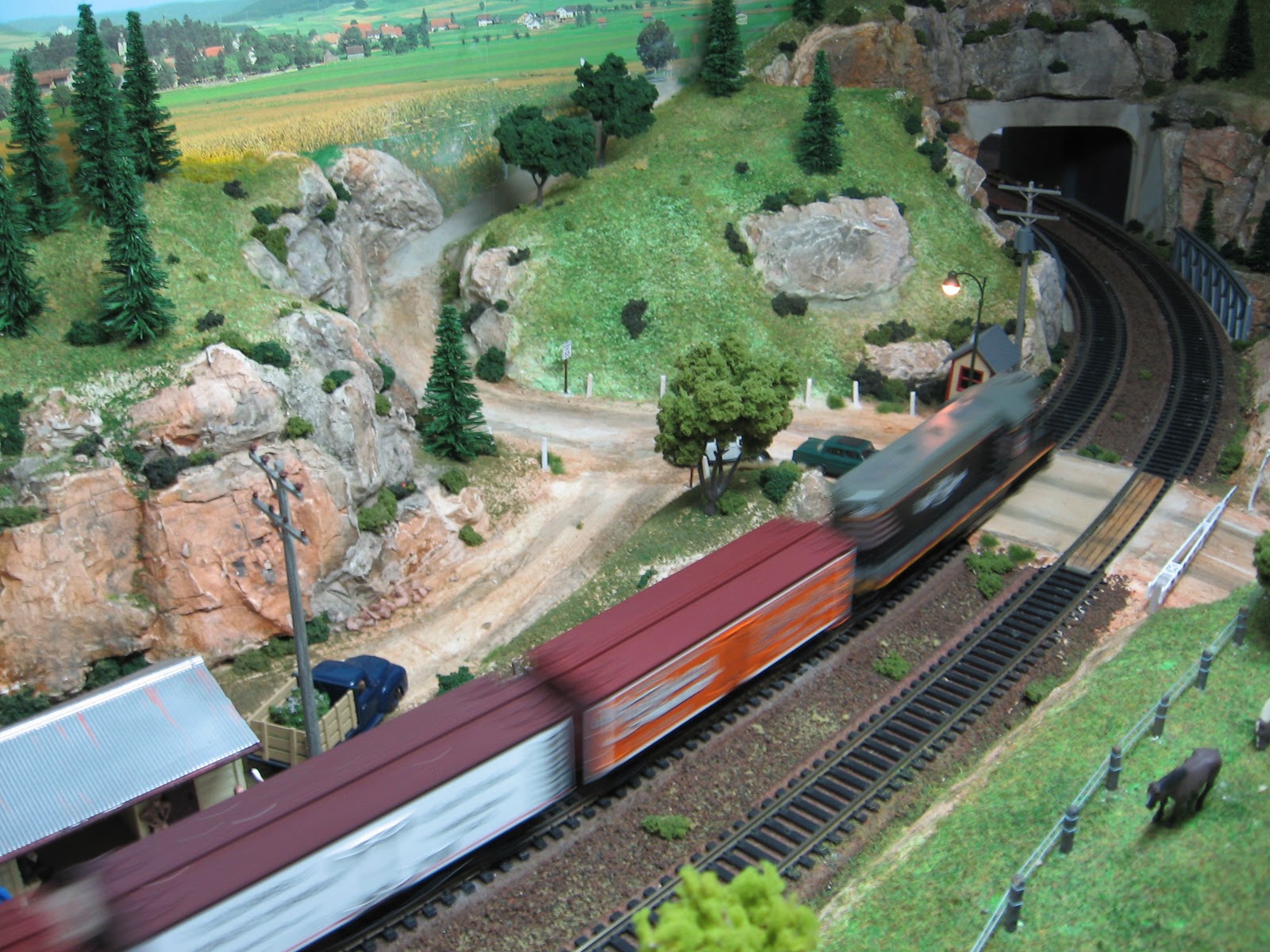
Peter’s idea: A road disappearing into the distance can look impressive when done well. It can also look strange if it hits a wall and stops abruptly. To overcome this I bend the end of the roadway material up and twist it towards a point to the side. I then add some greenery on either side to hide it a little and give the appearance of the road weaving off into the distance.
A reader asks others in the hobby for advice:
“I do a lot of scratch building of HO scale rolling stock. One of the problems that I have is finding eyepins for my old time tank cars. I use 60mm wire for the hand rails and I am looking for eyepins (for stanchions) that are about 1″ – 1 1/4″ long with a 62 or 63mm hole to accomadate the handrails.”
Add your comments below.
Comment below.