Everything on model trains, model railroads, model railways, locomotives, model train layouts, scenery, wiring, DCC and more. Enjoy the world's best hobby... model railroading!

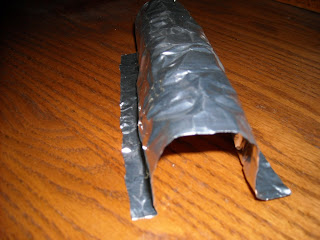
Max has a question for those who know about voltages and asks:
“I’m building a z scale layout and need to know if Maklin locomotives and Micotrains or AZL locomotives should run on different voltage? If so, what voltage should I use, and what would happen if I use the wrong voltage?”
Add your comments by using the green Comments link below Max’s posting. After clicking the link you need to register (if you haven’t yet done so). It is quick and easy (takes about 2 minutes), and then you can participate in future model train discussions.
Nick has a question for those who have experience wiring and asks:
“If a wire in any ho scale locomotive falls off, can I reattach it to where it belongs so the train runs again? What do I use to reattach the wire?”
It is a shame Nick hasn’t supplied more details to help those who are trying to help him.
Nick you can supply more details by using the green Comments link below your posting to add more info.
Others can use the same comments link to add a comment or possible answer. Note: after clicking the Comments link you will need to register (if you haven’t yet done so. It only takes about 2 minutes and then you can participate in future model train discussions.
Candis emailed asking me to publish news of a train show in Maryland.
The Great Scale Model Train Show & Railroad Marketplace will be held at Maryland State Fairgrounds, Timonium, Maryland on Saturday October 10 9AM-4PM and Sunday, October 11 between 10AM-4PM.
If you can, then do visit The Great Scale Model Train Show & Railroad Marketplace will be held at Maryland State Fairgrounds, Timonium, Maryland.
Hopefully Candis will be kind enough to send in a couple of photos for publication after the event.
John has kindly sent in these ideas to share with others in the hobby:

Mike has a technical question for those in the know and asks:
“Can anyone tell me how to wire a Tomar drumhead kit using a resistor instead of diodes and a ballast bulb? What ohm resister do I need?”
Add you comments or suggestions using the green Comments link below.
William is hoping someone with experience of making steam engines smoke will be able to help him. Unfortunately William hasn’t given any details of what he has tried so I imagine any answers from readers will be guess work.
“I would like to know why some steam engines smoke really well and mine do not. Both the steam and the diesel do smoke but not like real steam.”
William if you can provide more details it may help you get a more accurate answer. Use the Comments link to add your comments.
Carol has a question about wiring lights on a layout and is hoping some kind reader will give some advice:
“I have purchased street lights, outside house lights and lights that are put inside houses, close to the floor. NOW … how do I wire them to work (safely)?? “
Carol, it might be helpful for others if you used the green Comments link below to add some more details to your question. It is often hard for others to give a good answer without knowing all the facts – especially when safety is involved.
Reader Rob sent in this train memory:
In 1955 it was Lead switching in the class yard in snow and the rain. Feeling a tug on my coat one winter night while checking the skates in the bowl yard…it was a flat car rolling silently by…snow covered and all but invisible. Bucking the extra board w/8 hours off and lucking out getting a 11:45 pm transfer…beats lead switching. Having to pull a little waste from a journal to start the fire in the stove for the foreman after making up a train in the eastbound yard.
Doubling over tracks to make up a westbound in the departure yard…with all the cold and snow and sleet…I really don’t miss it all that much.
Phil has a memorable train journey to share with others and writes:
My most unusual train experience occurred west of Omaha, Nebraska on the Rio Grande. I had been reading about trains and the importance of a slow start until the slack was taken out of the couplers. At each station I could feel a jerk as the wooden coach I was in started. I wondered whether the engineer was in too big a hurry. Sure enough two stations later we started with a jerk and stopped. After a long wait the conductor told us that we were waiting for a coupler to be repaired.
Ron is asking for help from others in the hobby and asks:
“I am having trouble finding examples of how to layout a multi train layout. I would a layout of three of more trains. Can someone help me please?”
Add your comments below.
Rick has sent in his memories of the Grand Trunk Western car ferries:
I was lucky enough when I was growing up to have my grandmother be employeed with the Grand Trunk Western as a matron on their car ferries. It always amazed me how the engineer had to work the loading and unloading of the cars from the ship to keep the rail in line. This of course was to keep the factor of derailment out of the picture and also keep the ship from capsize.
The train crew had to know the weight of every car in the consist along with order. But the work they had to go thru with every car once it was on the ship was unbelievable, every cars brakes had to be set plus every single car had to be latched to the rail front and rear. This was all a simple safty requirement due to the fact that if the ship should hit waves the cars could and or would bounce or slide on the rail that could create a great mess crossing Lake Michigan.
This was of great interest and enjoyment to watch as a child, but I believe I would have great difficulty copying it in n-scale!
Nick wants to hear from any reader who has constructed a helix and asks:
“I want to build a helix, but am having difficulty getting comprehensive information. I have, however, discovered it will need to be a minimum diameter of 5 feet. I have also discovered that hardboard (subfloor sheeting) is the prefered substance to use. There are several schools of thought as to shape, risers, etc. So, the question is – Are there any plans for the construction, or will it BE, mostly trial & error?”
Add your comments below using the green Comments link. Then register if you haven’t yet done so. It is easy and takes just 2 minutes. Then you can participate in future train discussions for free.
Leo has a question for experienced readers and asks:
“I have kato track with a doublecrossover switch. I’m trying to run 2 trains in different directions. How would I wire this track up so the two trains would go in two different directions. Someone please help me solve this problem.”
Add your comments below.
“I am thinking about going with DCC instead of DC and I would like to know which DCC system is favored for someone just getting into DCC. My layout will be 27′ X 17′ HO with upper and lower levels. What DCC system would others who use DCC recommend?”
John has a question for those experienced in DCC operation and asks:
“It is possible to wire the rail such that, when selected to do so, a train approaching a station will automatically slow down and stop. Does anyone know where to buy circuit diagrams for this action, or any other ‘special’ action for DCC control can be found? NB. I am a 69 year old retired electronics technician new to this wonderful hobby, designing my first and last 10 steam loco layout.”
Add your comments using the green Comments link below John’s posting. Then Register (if you haven’t yet done so). You can then participate in future model train discussions for free.
Skip has a question for fellow railroaders and asks:
“In a lost/misplaced issue of CLASSIC TOY TRAINS, there was an article depicting the Lionel Disappearing Train layout. I believe that it was a dealer display with a Scout set. The article went on to show not only the track plan, but also listed the required track pieces and the basic directions to re-create this amusing layout. Could someone please provide, or at least direct me to a source for this plan? I’m sure that I could manage to figure this out through trial and error, but I want it to be done CORRECTLY THE FIRST TIME. Any and all help would be greatly appreciated. Thank you in advance for anyone’s assistance in this matter.”