Technical
Everything on model trains, model railroads, model railways, locomotives, model train layouts, scenery, wiring, DCC and more. Enjoy the world's best hobby... model railroading!

Club member Albert asks readers:
“Can someone enlighten me as to the right weight for an HO wagon so that it will on the track especially around curves and on turnouts? I guess what I am asking is – 30 foot = total ounces of car – 40 foot = total ounces of car – 50 foot = total ounces of car. I am hoping someone can help. Thanks.”
Jim asks readers:
“I have a DC HO layout after redoing part of the layout a short has developed which only allows me to power up to about 1/3. If I go beyond this I get a short. If I back down the power the train will slowly start to run. I have already checked over the layout for shorts. My question – could a turn out be causing the problem?”
Doug from Northern Australia asks readers:
“Hi, I run HO DCC (NCE 5 amp) and am trying to wire up an MRC auto reverse module. I have a simple loop running back onto a main line, through a set of left hand points (switch) and each time I set the points to the left it shorts out. I have isolated all ends of points, but still the same. I am using insulfrog points. If I run the loco around the leave the points straight ahead the diesel has enough weight to run through the points (downwards) without derailing (carriages would not do so).”
Jan asks readers:
“How do I wire a Peco SL-E 190 double slip? I have wired each point motor shifting the polarity of the crossing point most close to it. The slip works beautifully as a normal diamond crossing. But, if I activate the second point motor in the travelling direction in order to go to a siding a short circuit occurs when the locomotive reaches the second crossing point due to incorrect polarity. Of course the same problem happens when entering from the opposite direction.”
Bucky asks readers:
“My Lionel switches have a low resistance (~13 Ohms) between the middle and side rails. The MTH switches have very high resistance. The switches work normally. Why is this? Thanks.”
Shaun asks readers:
“Hi there, I’m wiring for twin cab control and would like led indication. If I wire across the switches how do I stop the leds from burning out?
Rowan asks readers:
“I would appreciate some advice with selecting a power pack for my model railway. I have read the various features and will eventually head towards DCC and a hand held, but I’m not ready for that just yet. Can an experienced railroader recommend a not too expensive power pack that will be suitable for the future growth in my layout?
Dick asks readers for advice:
“I have Atlas remote turnout switches that I need AC power for. Don’t want them to be run by the controller. How can this be resolved? Is the voltage 120 or 12 VAC and watt wattage? I have a separate 12, 5 and 3 VDC power supply for my LED’s.I have a 12 VDC cigarette lighter inverter, can this be used. If so,does it need any modification.”
Shaun asks readers:
“Hi people – do tethered throttles carry the track current thru the coiled phone cord?
I’m going to have two tethered cabs and the coiled phone cable looks ideal.”
Julie asks readers:
“Has anyone used EL wire for banks of florescent lighting? It sounds like a good idea from the outside but I would like to know about good or bad reasons about using it.”
Article kindly supplied by Kevin C:
When I have completed drawing the full-size layout track plans I want to use and before I lay out the track, I will generally decide the signal and switching locations. I’ll mark them on a plan. I’m planning road crossings so I’ll need to have the crossing light switching at the right location. Then, I’ll draw the wiring circuits onto the plan using different colors, as it is not hard to miss a connection or two when laying out the track.
Recently I was kindly given some computer data cable with four pairs in these color… Continue reading article and view full-size diagrams

 Julie has a question for experienced model railroaders and asks:
“Does anyone have experience with Electro-Luminescent Wire (EL wire) to simulate things like banks of florescent lighting, or shop signs? Do you recommend for or against?”
Add your comment to help.
Richard asks readers:
“I have a whole bunch of older style HO scale cars which I want to change over with automatic couplers. My question is what kind is best and will it be a difficult and time consuming process? Does someone who has done the conversion know?”
The most common wiring mistake on a model railroad is doing too much without testing, such as, wiring ten turnouts and all the track, only to find it doesn’t work. Where do you start to fix such a problem? I would say, start over.
If you are new to the hobby, start small, such as an oval. With the power pack turned off and unplugged, connect two wires, one to each rail and to the terminals marked “Variable Track 0 To 12 Volts DC.” If in doubt read the instructions. Now plug in the power pack. if no smoke or sparks, turn the power pack on. Still nothing advance the throttle speed control. Still nothing, GOOD, turn the speed control off and place a locomotive on the tracks, making sure ALL the wheels are properly on the track. Advance the throttle and the locomotive should move. If not it may need a SLIGHT nudge. If it moves, stop it, move the “Direction” button, and try it in reverse. If the locomotive runs in both directions add some cars and play trains. Yes, I said play, because model railroading is to be FUN.
Now you have an operating model railroad that you can add to, one item at a time and test. As you gain experience you will have more confidence and become braver.
Add your comment.
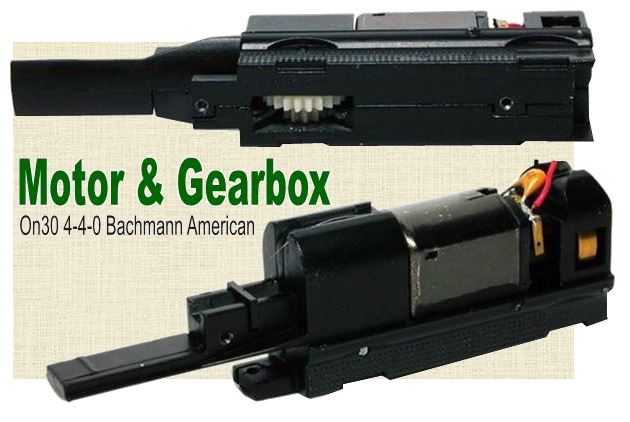
Electric motors need gears to reduce the speed of the motor and align it to gears mounted on the axles of the locomotive. To reduce the speed of the motor a small gear is mounted to the motor shaft and a large gear to the drive wheels. Because of wear, the smaller gear is usually brass, and the larger gear, plastic.
The drivers of a steam locomotive are usually large enough to allow a plastic gear large enough to make the speed reduction with a single set of gears. The gear is only on a single axle because, like the real locomotives, the side rods transmit the power to the other drivers.
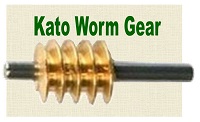 A model diesel locomotive has smaller wheels mounted in trucks at opposite ends of the unit. Therefore diesel models usually have motor with shafts out each end, leading to a set of several gears mounted in a tower above each truck.
Dirt, lint, and cat hair are bad for any gear set. Too much oil or grease on the gears attracts those contaminants to the axles, as well as the gear sets. Be sure any cleaning solution or lube is intended for use on plastic gears.
Add your comment.
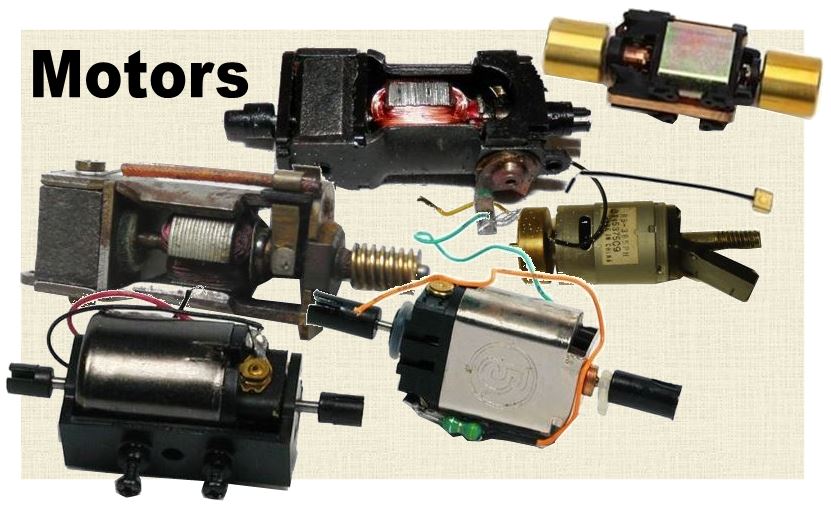
Until the recent development of can motors, the electric motors in our locomotives had an open frame. In an open frame motor, all the internal parts are visible, the magnets, armature, and brushes.
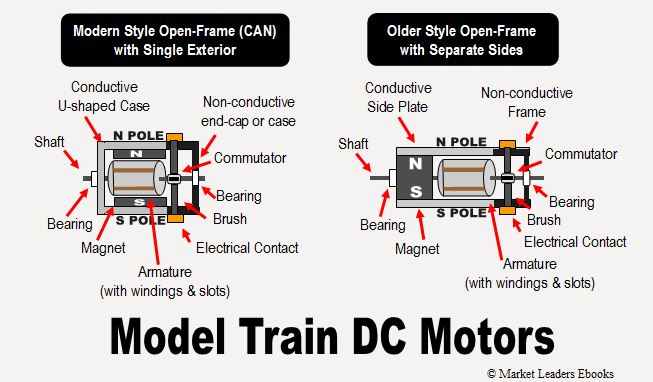
Bushes come in pairs one plus +, and one minus -, depending on the chosen polarity, and rub on the commutator to transmit current to the armature, making the motor turn. Brushes are made of a carbon substance, quite small, usually round, and held in place by a light spring wire or leaf. As they wear the face of the brush takes the shape of the commutator. This wear sometimes causes the carbon to eventually fill the tiny grooves on the commutator, and require cleaning.
Add your comment
The motor armature is made up of the windings and commutator, mounted on the motor shaft, which is supported by bearings. The armature is located so the windings are within the permanent magnet, and the commutator remains exposed for contact with the motor brushes.
Outside of a tiny drop of oil for the bearings, and possibly cleaning the carbon from the grooves of the commutator, there is little to be done.
Add your comment.
Brent from the UK sent in this tip:
I have a roll of magnet wire I use for rewiring locomotives and on rolling stock. This type of wire is normally used in the coils for twin solenoid switch machines and in motors. You will need to scrape away the enamel coating prior to using it. I find that small flexible wires are best on rolling stock.
Add your comments.