Tips & Resources
Everything on model trains, model railroads, model railways, locomotives, model train layouts, scenery, wiring, DCC and more. Enjoy the world's best hobby... model railroading!

Here is a tip that Richard a member of the online model train club) shared with other club members:

Throw away plastic wheels and buy metal replacements if included in a kit. Metal wheels will generally run truer and with less resistance than injection molded mass produced plastic wheels. The price of metal wheels has dropped significantly in the last decade. Some of the grunge you have to clean from the rails is plastic residue from plastic wheels, metal wheels stay cleaner longer as does the rail.
Definitely avoid oiling track if you use plastic wheels even the famous Wahl Hair Clipper Oil… this will actually increase the amount of cleaning as the plastic wheels are affected by incompatible oil until the plastic wheel crumbles of course… there are plastic compatible oils made by LaBelle but I still would not recommend it as a practice.
When I started out the second time in the hobby, every time I bought a freight car kit I bought a set of kadees and metal wheels straight away. It can seem a hardship to have to buy 100 to 200 Kadees and 200 to 400 metal wheels all at once to upgrade your small freight car fleet. Buying them as you go is much easier especially your wallet. Remember, model railroaders always have many more locos and freight cars than they can actually run on their layouts at any one time.

If you drop screws and parts on the floor you’re not the only one. The problem with working on a loco or the electrical system is that as we get older the parts seem to get smaller. Here is a simple solution to stop those small part dropping on the floor or you might even want to store some parts using this method. Like anything, it is not perfect, but it is an idea that could work for many in the hobby.
Get some 3 inch wide masking tape. Simply fold an inch or so back onto itself. This will provide a non sticky area for you to write or label the parts. You then stick the screws and/or parts to the masking tape. You then have a low-cost device to stop parts rolling onto the floor or you could use it as a storage system or small parts.
If your steam or diesel locomotive frequently stops or reduces speed in the same track area then here are four possible fixes to try:
1. The first thing would be to thoroughly clean the section of track
2. Also inspect for dead spots, a bad track connector, or maybe some glue from scenery that might be disrupting the power flow
3. Another possibility is that the track could be too large when considering the size of transformer.
4. It is a good idea to run your trains daily if you can. This will help to keep the rails clean and prevent many problems in the first place.
There are other possible causes and solutions. The above tips are just a few from the online Model Train Club members area.

Here is a tip sent in by Andrew (he is a member of my online model train club).
“As some will have discovered the hard way, laying ballast around pointwork needs to be done really carefully. You don’t want the mechanism seizing when the glue gets added. I apply a film of locomotive oil around all moving parts of each point. This will stop the glue sticking to the moving parts of the point. I then use a hand water mister to dampen the ballast to help the glue flow between the grains of ballast. It also stops the ballast from moving when applying the glue.
Comment below.
Barry has an HO DCC system and a NSW class steamer with sound. He wants to hear what others think he should do about filling his tender (where the sound is) with coal:
"I have recently completed a NSW 29 class steamer. It is a New Zealand made kit, with Sound. The speaker is in the Tender. My question to everyone is: What is the best way to fill tender with coal? I would think fill it with coal and add diluted white glue. However, I worry the water from the diluted glue MIGHT find a way through to the Tender and cause rust or, worse, effect the speaker. Perhaps I need a base of grease-proof paper? Has anyone got any suggestions?"
Add your thoughts below.
Comment below.
Michael asks readers for help:
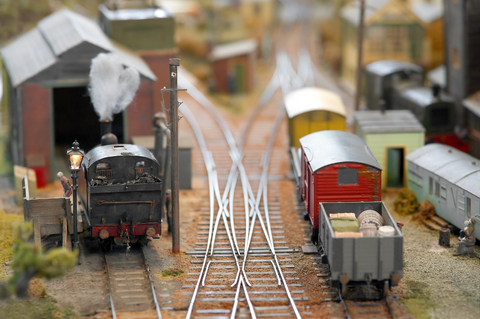
“What is the best way to clean my railway track for dcc running on OO scale.Any help? What is the best way to clean the train wheels, buy a cleaner or use what?
Comment below.
Fred asks readers for help:
"What is the correct way to figure scale? I have used three methods, and get different answers. I would like to get the correct answer. What is the correct height of a six foot fence post in ho 1.87 scale."
Comment below.

We would like to hear from you if you think you might be interested in supplying content (words, photos and/or videos) for a new model train web site project. There will be payment for quality contributions from anyone experienced in one or more areas of the hobby. Contact here.
I have been very busy over the past year or two working on two new e-books for the model railroading community. They are now finished and are a natural follow-on to my popular Model Train Help e-book.
If you are planning to build a model train layout, or plan to work on your existing layout over the next few months, then you’ll find these e-books really helpful and inspirational. Have a look at http://www.model-train-layouts.net/
If you haven’t already got the Model Train Help e-book, then grab that first so you’ll register on my customer database. These two new e-books are totally different and are not a replacement. They are a natural follow-on to Model Train Help.
Michael has a question for readers:
“I started with a G scale set but have now realised there are a lot more (accesories) and trains for HO modules. There are some Bachmann and Marklin set I’m interested in buying. My question is can they be interchanged as they are both HO scales?”
Comment below.
Remember if you see something you like on this blog and you would like to share it with friends in the hobby then your welcome to use the facebook and twitter buttons bellow each posting.
Also if you have a website you make like to add the RSS feed in the top right hand column. To add a live feed of this blog to your own model train website.
Mike wants some guidance on lubricating model trains and asks:
“I have some older trains(N/HO). Is there a basic diagram I can follow: Where to oil and lube (what parts of the engine and cars?).”
Add your suggestions below.
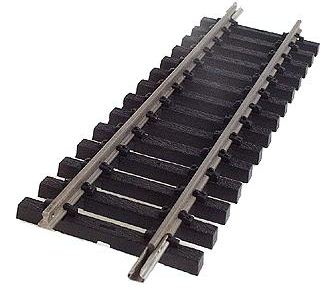
For the mainline, you can have straight parallel tracks quite close. On a mainline less distance between parallel tracks might cause problems if a train on one track derails – it is more likely to foul the adjoining track and cause any trains running on the adjoining track to derail. In yards and industrial areas it is an advantage to have a little more space between sidings and spurs to allow the removal of cars with your hands without knocking cars on other tracks.
Share this posting with your friends using the Twitter or Facebook links below.